Introduction
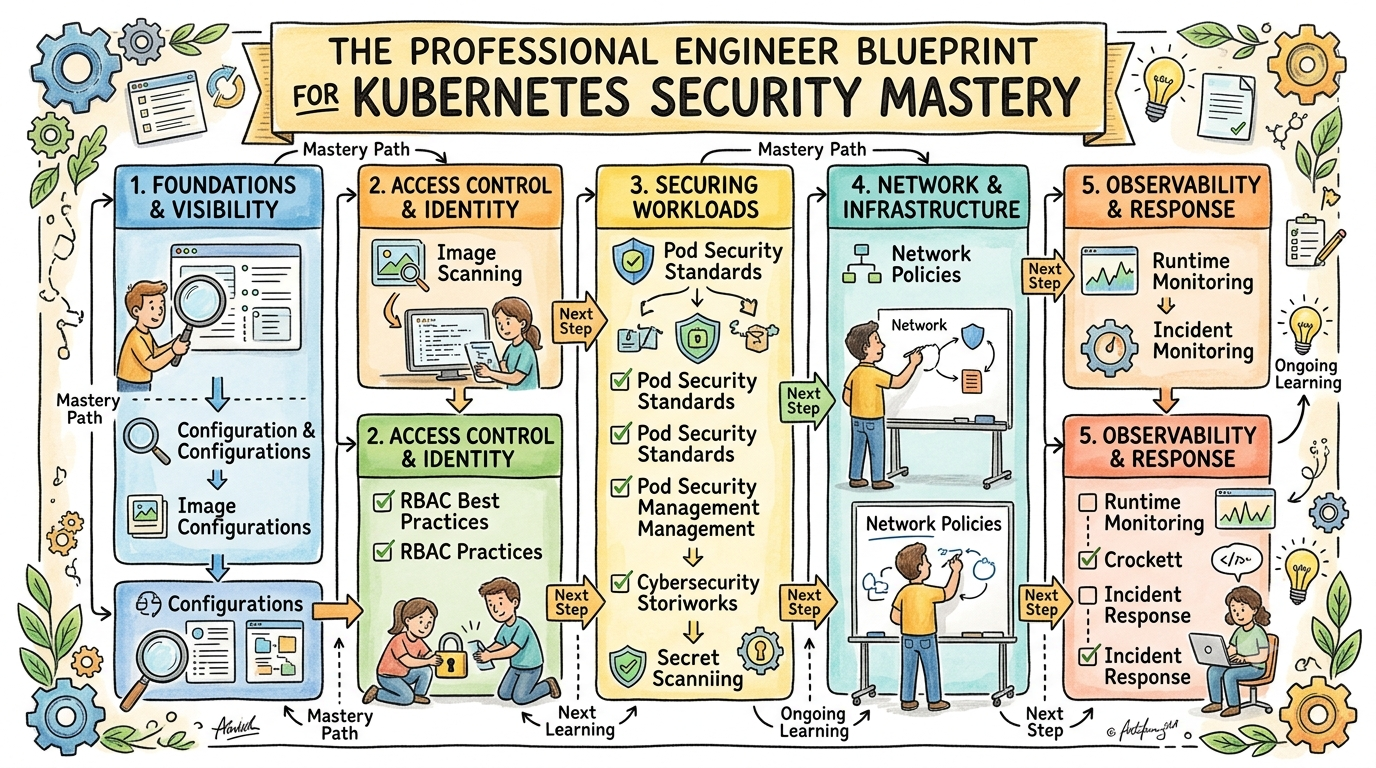
Securing complex container orchestration platforms is no longer a luxury but a fundamental necessity for modern software delivery. This guide is tailored for experienced engineers, architects, and security professionals who are tasked with maintaining the integrity of production Kubernetes clusters. By diving into the nuances of this certification, you will gain a clearer understanding of how to protect sensitive data and infrastructure from evolving threats. It is designed to assist you in making informed career decisions that align with current industry demands. Understanding this landscape ensures that you remain a vital asset in any platform engineering or security-focused organization.
What is the Certified Kubernetes Security Specialist (CKS)?
The Certified Kubernetes Security Specialist represents a performance-based assessment that tests a candidate’s ability to secure Kubernetes clusters in real-world scenarios. It focuses on the practical application of security principles rather than theoretical knowledge, requiring candidates to solve problems directly in a live terminal environment. This certification exists to bridge the gap between standard cloud administration and specialized security operations. It aligns perfectly with enterprise practices where hardening the cluster configuration is just as critical as deploying applications. By mastering these competencies, engineers demonstrate their capability to handle the high-stakes environment of production-grade container management.
Who Should Pursue Certified Kubernetes Security Specialist (CKS)?
This certification is designed for professionals who already have a strong foundation in Kubernetes administration and want to specialize in the security domain. It is highly beneficial for DevOps engineers, Site Reliability Engineers, and dedicated Cloud Security specialists who handle daily operations. Engineering managers and technical leaders who oversee infrastructure teams will also find this knowledge essential for setting security policies and standards. Whether you are working in global markets or local tech hubs, the focus on cluster hardening, policy management, and supply chain security provides universal value. It empowers professionals to move beyond basic maintenance and into the role of a proactive infrastructure defender.
Why Certified Kubernetes Security Specialist (CKS)
In an era where infrastructure is defined as code, the ability to secure that code is a high-demand skill that commands respect across the industry. This certification proves that an engineer can identify vulnerabilities, implement network policies, and manage secrets effectively in a fast-paced environment. Because it is vendor-neutral and highly practical, it remains relevant even as specific toolsets shift or evolve. Professionals who hold this credential demonstrate a commitment to best practices, which translates into higher confidence from stakeholders and better career longevity. Investing time in this certification provides a strong return by positioning you at the forefront of the secure cloud-native revolution.
Certified Kubernetes Security Specialist (CKS) Certification Overview
The program for this certification is delivered via and is hosted on devopsschool. It is built to simulate real-world challenges, forcing candidates to interact with clusters to resolve security misconfigurations. The assessment is notoriously hands-on, requiring deep familiarity with the Linux command line, YAML configurations, and standard security tooling. By completing this training, you transition from someone who can operate a cluster to someone who can rigorously defend one. It is a validation of your technical maturity in high-pressure production environments.
Certified Kubernetes Security Specialist (CKS) Certification Tracks & Levels
The certification journey often begins with foundational knowledge of container orchestration before moving into advanced security implementation. While the CKS sits at the advanced tier, it is often structured alongside tracks focused on general DevOps principles, SRE reliability, and FinOps cost management. These tracks allow professionals to build a layered skill set that spans from infrastructure deployment to advanced threat mitigation. By following a structured approach, you can align your learning path with your specific career goals, whether that involves managing large-scale platforms or building secure developer workflows. Each level serves as a stepping stone to higher technical authority.
Complete Certified Kubernetes Security Specialist (CKS) Certification Table
| Track | Level | Who it’s for | Prerequisites | Skills Covered | Recommended Order |
| Security | Advanced | Security Engineers | CKAD/CKA | Cluster Hardening, Policy | Third |
| DevOps | Professional | DevOps Engineers | CKA | Image Security, CI/CD | Second |
| Operations | Foundational | SysAdmins | Linux Basics | Basic Networking | First |
Detailed Guide for Each Certified Kubernetes Security Specialist (CKS) Certification
Certified Kubernetes Security Specialist (CKS) – Security Professional
What it is
This certification validates the advanced capability to secure containerized applications and Kubernetes platforms during build, deployment, and runtime.
Who should take it
Experienced engineers who have already mastered Kubernetes administration and are looking to formalize their security skill set.
Skills you’ll gain
- Implementing Pod Security Standards.
- Managing Kubernetes Secrets and encryption at rest.
- Monitoring and logging for security events.
- Configuring network policies for cluster isolation.
Real-world projects you should be able to do
- Hardening a cluster against unauthorized API access.
- Implementing a supply chain security framework for container images.
- Setting up automated vulnerability scanning in a CI pipeline.
Preparation plan
- 7–14 days: Deep dive into official Kubernetes documentation regarding security policies and RBAC.
- 30 days: Set up multiple lab environments to practice breaking and then fixing cluster security configurations.
- 60 days: Conduct mock exams that focus on speed and command-line accuracy under time constraints.
Common mistakes
- Neglecting to practice command-line efficiency within a restricted terminal environment.
- Overlooking the nuances of RBAC and network policy syntax.
- Spending too much time on theory instead of hands-on troubleshooting.
Best next certification after this
- Same-track: Certified Kubernetes Security Expert or specialized Cloud Security Professional.
- Cross-track: SRE Professional to understand reliability-security trade-offs.
- Leadership: Certified Cloud Architect to guide security strategy at an organizational level.
Choose Your Learning Path
DevOps Path
The DevOps path focuses on integrating security seamlessly into the software development life cycle. You will learn to automate security checks within CI/CD pipelines to catch vulnerabilities early. This path ensures that security does not become a bottleneck but rather an inherent part of the development process.
DevSecOps Path
The DevSecOps path is a deeper dive into the intersection of security and development operations. You will focus on infrastructure as code, automated compliance, and threat modeling for cloud-native applications. It is the natural progression for those who want to own the end-to-end security of the software delivery process.
SRE Path
The SRE path balances security requirements with the need for high system availability and performance. You will learn how to monitor for security anomalies without triggering false alerts that degrade reliability. It is crucial for engineers who manage large-scale systems where uptime and security are equally prioritized.
AIOps Path
The AIOps path integrates artificial intelligence into the operational and security management of clusters. You will learn to use automated analytics to detect patterns that indicate security breaches or operational inefficiencies. This is ideal for those managing massive, complex datasets in a cloud-native ecosystem.
MLOps Path
The MLOps path focuses specifically on the security of machine learning pipelines within Kubernetes. You will learn how to protect model training data and inference services from unauthorized access and tampering. This path is vital for teams operating high-stakes AI models in production.
DataOps Path
The DataOps path emphasizes the security and integrity of data pipelines moving through a Kubernetes cluster. You will focus on secure data ingestion, storage, and processing, ensuring that sensitive information remains protected throughout its lifecycle. This path is essential for data-heavy infrastructure roles.
Role → Recommended Certified Kubernetes Security Specialist (CKS) Certifications
| Role | Recommended Certifications |
| DevOps Engineer | CKA, CKS |
| SRE | CKA, CKS, SRE Practitioner |
| Platform Engineer | CKA, CKS, Certified Kubernetes Architect |
| Cloud Engineer | CKA, CKS, Cloud Security Specialty |
| Security Engineer | CKS, Cloud Security Specialty |
| Data Engineer | CKA, DataOps Specialist |
| FinOps Practitioner | CKA, FinOps Certified Practitioner |
| Engineering Manager | CKA, CKS, Agile Leadership |
Next Certifications to Take After Certified Kubernetes Security Specialist (CKS)
Same Track Progression
Once you have achieved mastery in security, you can pursue advanced architect-level certifications that deal with multi-cluster management and hybrid cloud environments. This helps you maintain technical depth while handling more complex infrastructures that involve global scale and distributed systems.
Cross-Track Expansion
Expanding into tracks like FinOps or DataOps allows you to understand the financial and analytical implications of your security decisions. This creates a well-rounded profile that can bridge the gap between infrastructure costs, data integrity, and overall platform security.
Leadership & Management Track
Moving into leadership requires shifting focus from individual task execution to organizational strategy and team management. Certifications in agile management or cloud architecture strategy help you guide technical teams in adopting robust security standards and operational excellence.
Training & Certification Support Providers for Certified Kubernetes Security Specialist (CKS)
DevOpsSchool offers comprehensive training programs that emphasize real-world application, ensuring that engineers are prepared for the intense, hands-on nature of the actual certification exam through rigorous lab-based modules.
Cotocus provides specialized workshops that focus on deep-dive technical scenarios, helping candidates understand the intricate security configurations required for production clusters in highly regulated enterprise environments.
Scmgalaxy delivers expert-led instruction that bridges the gap between basic administration and advanced security implementation, making it an excellent resource for professionals looking to transition their skill sets effectively.
BestDevOps focuses on delivering high-quality learning materials that align with industry best practices, helping engineers gain the practical knowledge needed to pass certification exams and excel in their daily technical roles.
devsecopsschool offers a dedicated track for security-focused engineering, providing the specific tools and policy knowledge required to harden cloud-native infrastructure against modern threats and vulnerabilities.
sreschool provides essential training on balancing security with site reliability, ensuring that the clusters you secure remain performant and available for high-traffic applications in production environments.
aiopsschool teaches the integration of automated analytics into cluster security, helping engineers use data-driven insights to proactively identify and mitigate risks within their Kubernetes ecosystems.
dataopsschool focuses on securing the flow of data through containerized pipelines, providing the necessary skills to protect sensitive information during ingestion, processing, and storage stages.
finopsschool offers insights into the cost implications of security tools, helping engineers implement robust protective measures while maintaining financial efficiency and transparency in cloud-native operations.
Frequently Asked Questions (General)
- What is the difficulty level of this certification?This certification is considered advanced and highly challenging due to the performance-based nature of the exam, which requires real-world troubleshooting skills.
- How much time is typically needed to prepare?Most professionals dedicate between four to eight weeks of intensive, hands-on practice depending on their existing experience with Linux and Kubernetes administration.
- Are there any mandatory prerequisites for this exam?While not strictly mandatory, it is highly recommended to have passed the CKA certification first, as a solid grasp of Kubernetes internals is required to handle security tasks.
- Does this certification expire after a certain period?Yes, most industry-standard certifications require renewal every two to three years to ensure that your skills remain current with rapidly evolving technology and security threats.
- Is this certification recognized globally by employers?This certification is highly regarded worldwide and serves as a benchmark for professional competency in securing containerized infrastructure at large-scale enterprises.
- Will this certification help me in a management role?It provides technical credibility that allows managers to make better-informed decisions regarding infrastructure security, policy implementation, and team hiring strategies.
- How does this certification impact my salary expectations?Achieving this level of specialization often leads to higher compensation due to the rarity of engineers who can effectively bridge the gap between operations and security.
- Can I use my own resources during the exam?The exam environment is restricted, but you are typically allowed access to official documentation, which makes knowing where to find information just as important as memorization.
- What is the best way to practice for the exam?The most effective approach is building your own lab environment, breaking your cluster configurations on purpose, and practicing the steps to remediate those issues within time limits.
- How do I maintain my certification status?Maintaining certification involves engaging in continuous learning, keeping up with updates to Kubernetes security standards, and potentially retaking the exam or completing continuing education credits.
- Is the exam conducted online or in person?The exam is typically conducted online via a secure proctoring service, which requires a stable internet connection and a quiet, controlled environment for testing.
- Does this certification cover cloud-specific security tools?It focuses primarily on the Kubernetes-native security layer, but the principles learned are applicable across various cloud providers like AWS, Azure, and Google Cloud.
FAQs on Certified Kubernetes Security Specialist (CKS)
- What specific topics are most critical for the exam?Cluster hardening, minimizing microservice vulnerabilities, supply chain security, and monitoring/logging are the most heavily weighted areas in the assessment.
- How do I handle the time limit during the exam?Prioritize tasks based on point values, skip questions you cannot immediately solve, and ensure your YAML syntax and command-line speed are optimized.
- Are networking policies covered in the exam?Yes, designing and implementing network policies to enforce least-privilege access between pods is a core component of the certification.
- Should I focus on security tools like Falco?Understanding runtime security tools is highly beneficial as they are often required to satisfy monitoring and threat detection requirements in the exam.
- Is the exam updated to reflect new versions of Kubernetes?Yes, the exam content is regularly reviewed and updated to align with the latest stable releases of Kubernetes and current industry security standards.
- How much of the exam is command-line based?The entire exam is practically 100 percent command-line based, requiring you to interact directly with the cluster to perform all security tasks.
- Can I use automated scripts during the exam?You must write your own configurations and commands on the fly, so relying on pre-written scripts is not a viable strategy for success.
- What if I fail the first attempt?Most certification providers allow for a retake, but it is important to analyze your weak points in the score report before attempting the exam again.
Final Thoughts: Is Certified Kubernetes Security Specialist (CKS) Worth It?
If you are committed to a career in cloud-native infrastructure, this certification is absolutely worth the effort. It moves you past the “tutorial phase” and proves that you can handle the complexities of protecting real production clusters. The value lies not just in the certificate itself, but in the intense, hands-on learning process you undergo to achieve it. As organizations continue to adopt Kubernetes, the need for professionals who understand how to secure these environments will only grow. Treat this as a milestone in your professional development, and focus on the practical skills that will make you a better, more confident engineer every single day.
