Introduction
Few places in the world capture the imagination quite like Jaipur. The capital of Rajasthan, affectionately known as the Pink City, is a mesmerizing blend of historical grandeur and vibrant modern life. For travelers mapping out their next adventure, choosing the right destination can be tricky. While some tropical getaways offer a relaxing mix of sun and coastline, Jaipur delivers something completely different. It swaps coastal sands for breathtaking desert heritage, offering an incredible tapestry of deep culture, stunning nature, delicious food, high-energy adventure, architectural marvels, and peaceful local experiences.
Whether you are mapping out a detailed Jaipur trip planning strategy or just browsing a Jaipur travel guide for inspiration, this city has a unique way of charming every kind of explorer. From grand fortresses cutting across the rugged Aravalli hills to hidden culinary corners in the chaotic old bazaars, Jaipur is a destination that demands to be explored rather than just visited.
This comprehensive guide is designed to help you navigate the very best places to visit in Jaipur. We will break down exactly how to experience this historic royal hub in a practical, budget-friendly, and genuinely rewarding way—ensuring your trip is nothing short of unforgettable.
Why Jaipur is a Must-Visit City
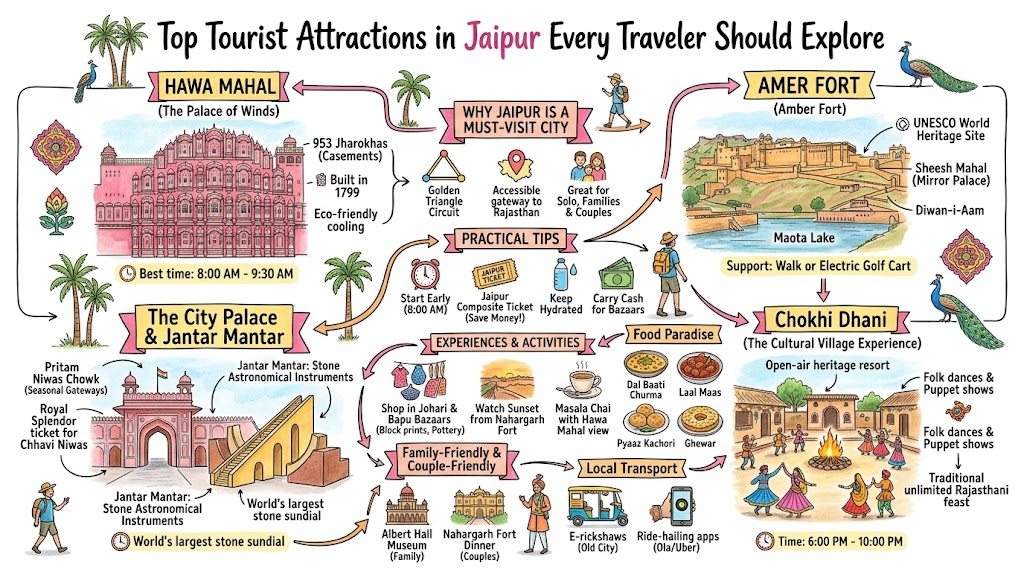
Jaipur is a cornerstone of India’s famous Golden Triangle tourist circuit for good reason. It serves as an accessible gateway to the majestic state of Rajasthan, making it uniquely practical for all kinds of travelers. If you are a solo backpacker, you will find highly affordable hostels, simple street food, and an incredibly social, easy-to-navigate atmosphere. Families and multi-generational groups will love the structured, highly comfortable guided fort tours, well-maintained palace gardens, and accessible city transport.
For couples, the city transforms effortlessly into a deeply romantic backdrop, filled with stunning sunset viewpoints, intimate candlelit dining spaces overlooking illuminated palaces, and luxurious heritage stays. Even if you are a fast-paced weekend traveler arriving from nearby cities like Delhi or Agra, Jaipur’s geographic layout is remarkably compact. The primary historical attractions are clustered closely together, allowing you to experience an immersive dose of royal history, vibrant textile shopping, and authentic culinary indulgence without feeling rushed or overwhelmed.
Comprehensive Overview of Jaipur Tourism
Best places to visit
The core of your itinerary will revolve around the magnificent trio of structural marvels: Amer Fort, Hawa Mahal, and the City Palace. To truly appreciate the city’s diversity, you should balance these highly popular spots with quieter locations like the royal cenotaphs of Gaitore or the peaceful temple complex of Galtaji.
Things to do
- Climb up the ancient watchtowers of Amer Fort for sweeping panoramic views.
- Shop for authentic block-printed textiles and blue pottery in the historic Johari and Bapu Bazaars.
- Watch a stunning sunset from the high ramparts of Nahargarh Fort.
- Sip hot masala chai in a busy street-side cafe while looking out over the intricate facade of Hawa Mahal.
Entry fees if applicable
Most major monuments charge separate entry fees for domestic and international tourists, ranging from ₹50 to ₹600.
Money-Saving Tip: If you plan on visiting multiple historical sites over two days, skip the individual tickets and purchase the Jaipur Composite Ticket. It costs roughly ₹300 for domestic visitors and ₹1000 for international travelers, covering major landmarks like Amer Fort, Albert Hall Museum, Hawa Mahal, Jantar Mantar, and Nahargarh Fort.
Travel tips
Always start your sightseeing early in the morning—ideally by 8:00 AM. This allows you to beat the intense midday heat and explore the most popular tourist hubs before large tour buses arrive.
Nearby attractions
If you have an extra day or two to spare, consider taking a short trip out of the city center. You can explore the historic stepwells of Abhaneri, visit the holy town of Pushkar, or check out Sambhar Salt Lake, which offers stunning, wide-open views and incredible photography opportunities.
Food options
Jaipur is an absolute paradise for food lovers. You can dive into a traditional, multi-course Rajasthani thali featuring iconic local dishes like Dal Baati Churma, Laal Maas (a fiery mutton curry), and Pyaaz Kachori. For dessert, don’t miss out on sweet treats like Ghewar and Mawa Kachori.
Budget planning
Jaipur caters beautifully to all spending styles. Budget backpackers can easily manage on ₹1,500 to ₹2,000 per day by staying in highly rated local hostels, eating street food, and using public transit. Mid-range travelers can expect to spend around ₹4,000 to ₹7,000 per day for comfortable boutique heritage hotels, private auto-rickshaws, and sit-down dinners.
Safety tips
Jaipur is generally a safe and welcoming city for travelers. However, like any major tourist destination, it is smart to stay aware of common travel scams. Be cautious of overly friendly drivers who insist on taking you to specific, high-commission handicraft factories or jewelry shops. Always clarify and agree on transport fares before stepping into an unmetered vehicle.
Local transport options
The city offers plenty of reliable ways to get around. E-rickshaws and auto-rickshaws are perfect for short hops through the narrow lanes of the old city. For longer journeys out to distant forts, ride-hailing apps like Uber and Ola provide transparent, fixed pricing and air-conditioned comfort.
Family-friendly suggestions
If you are traveling with kids, make sure to add the Albert Hall Museum to your list—they will love seeing its fascinating eclectic collection, which even includes an authentic Egyptian mummy. Another great option is taking a dedicated day trip to an elephant sanctuary focused on ethical care and interaction.
Couple-friendly suggestions
For a memorable date night, book an outdoor table at one of the upscale restaurants located inside Nahargarh Fort. Enjoying a quiet dinner while watching the entire city glow under the night sky is an incredible experience.
Hidden or less-crowded options
If you want to escape the busy tourist crowds, head out to Panna Meena Ka Kund early in the morning. It is a beautifully restored 16th-century stepwell that offers a peaceful, quiet atmosphere away from the standard sightseeing routes.
Best Places or Experiences Related to the Topic
1. Hawa Mahal (The Palace of Winds)
Location
Hawa Mahal Road, Badi Choupad, J.D.A. Market, Pink City, Jaipur.
- Why it is worth visiting: Built in 1799 by Maharaja Sawai Pratap Singh, this stunning five-story pyramid-shaped structure features 953 small, intricately carved casements (jharokhas). The clever architectural design allowed royal women to observe the vibrant, daily street life below without being seen themselves. It also created a natural cooling effect through the building, functioning like an early form of eco-friendly air conditioning.
- Best things to do: Walk through the narrow, sun-drenched internal corridors, climb up to the top floor for an incredible panoramic view of the City Palace and Jantar Mantar, and take great photos from the rooftop cafes located directly across the street.
- Best time to visit: Early morning, right around 8:00 AM to 9:30 AM. This is when the golden morning sunlight hits the front pink sandstone facade beautifully, and the surrounding streets are still relatively quiet.
- Ideal for whom: Architecture enthusiasts, photography lovers, history buffs, and first-time international travelers.
- Travel tip: The grand front facade is best viewed and photographed from the street outside or the rooftop cafes directly opposite. The actual entrance to go inside the building is located around the back of the complex.
2. Amer Fort (Amber Fort)
Location
Devisinghpura, Amer, Jaipur (roughly 11 kilometers north of the main city center).
- Why it is worth visiting: Perched high on a rugged hill overlooking Maota Lake, this massive UNESCO World Heritage site is an incredible blend of traditional Rajput and Mughal architecture. The fort is built from warm yellow and pink sandstone and bright white marble, featuring expansive courtyards, grand halls, and beautifully detailed structural carvings.
- Best things to do: Explore the jaw-dropping Sheesh Mahal (Mirror Palace), where the walls and ceilings are covered in thousands of tiny, glittering convex mirrors. You can also walk through the grand Diwan-i-Aam (Hall of Public Audience) and catch the spectacular evening Light and Sound Show that brings the fort’s rich history to life.
- Best time to visit: Between 9:00 AM and 11:30 AM for standard daytime exploring, or return after 6:30 PM to experience the beautifully illuminated “Amer by Night” tour when temperatures are much cooler.
- Ideal for whom: Families, couples, solo backpackers, and anyone interested in immersive military and royal history.
- Travel tip: Skip the traditional elephant rides up the fort ramparts to support animal welfare. Instead, opt for a pleasant morning walk up the stone pathway or take an official electric golf cart/taxi directly to the main courtyard entrance.
3. The City Palace & Jantar Mantar
Location
Tulsi Marg, Gangori Bazaar, J.D.A. Market, Pink City, Jaipur.
- Why it is worth visiting: Located right in the heart of the old walled city, the City Palace is a sprawling, active royal residence that beautifully showcases generations of history. Right next door sits Jantar Mantar, an extraordinary collection of nineteen architectural astronomical instruments built in 1734. It features the world’s largest stone sundial and stands as a remarkable testament to ancient scientific innovation.
- Best things to do: Admire the incredibly detailed, colorful seasonal motifs on the four famous doorways inside the Pritam Niwas Chowk (including the iconic Peacock Gate). Afterward, explore the palace museum’s collection of royal clothing and weaponry, then head next door to Jantar Mantar to see how these massive stone instruments still track time with incredible accuracy.
- Best time to visit: Late morning, around 11:00 AM to 1:30 PM. This is a great time to explore the indoor palace galleries and covered museum spaces during the warmest part of the day.
- Ideal for whom: Science and astronomy fans, history buffs, families with school-aged children, and design lovers.
- Travel tip: If you want to see the exclusive, private upper floors of the palace (including the iconic, bright blue Chhavi Niwas), you will need to buy a premium Royal Splendor ticket. For Jantar Mantar, hiring a certified local guide is highly recommended to explain exactly how the stone instruments work.
4. Chokhi Dhani (The Cultural Village Experience)
Location
12 Miles, Tonk Road, Via Vatika, Sitapura, Jaipur.
- Why it is worth visiting: This famous open-air heritage resort brings the rich, rustic charm of rural Rajasthan to life. It gives travelers a fun, immersive look at traditional village culture, folk art, and regional customs all in one lively evening destination.
- Best things to do: Watch energetic live folk dance performances like Ghoomar and Kalbelya, enjoy traditional puppet shows, see local acrobats, and sit down for an authentic, unlimited Rajasthani feast served with warm, traditional hospitality.
- Best time to visit: 6:00 PM to 10:00 PM. The resort operates exclusively in the evening to offer a vibrant, night-market atmosphere complete with oil lamps and bonfires.
- Ideal for whom: Food lovers, families traveling with children, and travelers looking for an immersive cultural experience.
- Travel tip: Arrive with a completely empty stomach! The traditional dining experience involves a continuous, generous serving of rich, ghee-laden local dishes, and the local hosts take great pride in making sure you eat well.
Travel Planning Tips for Jaipur
To make sure your journey runs smoothly, here are some practical, feet-on-the-ground tips for smart Jaipur trip planning:
- Book stays early during peak season: The ideal travel window runs from October to March. Heritage boutique hotels and popular local hostels fill up months in advance, so secure your bookings early.
- Rent transport with proper documents: If you choose to rent a scooter or motor vehicle to explore areas outside the main city center, always make sure you carry a valid driver’s license and official vehicle registration papers. Always wear a helmet.
- Keep hydrated and sun-protected: Even during the winter months, the afternoon sun can be surprisingly strong. Always carry a reusable water bottle, wear polarized sunglasses, and apply a good sunscreen before heading out for a day of exploring.
- Carry cash for local markets: While digital payment options like UPI and major credit cards are widely accepted in modern stores and restaurants, carrying physical cash is essential for paying auto-rickshaw drivers and bargaining in the old city bazaars.
- Respect local culture and environment: Dress respectfully when visiting active religious spaces like the Govind Dev Ji Temple or Galtaji. This means keeping your shoulders and knees covered, and always remembering to remove your shoes before entering.
- Keep historical sites clean: Do your part to preserve these incredible monuments. Avoid littering, use designated waste bins, and avoid touching or defacing historic frescoed walls.
Common Mistakes to Avoid
- Packing too much into a single day: Trying to see Amer Fort, Jaigarh Fort, Nahargarh Fort, City Palace, and Hawa Mahal all in one day is a recipe for travel exhaustion. Give yourself time to slow down and enjoy each location.
- Falling for the gemstone or carpet factory scam: Be wary if an auto-rickshaw or taxi driver insists that a certain market is closed and offers to take you to a special, one-day-only government handicraft exhibition instead. These are high-pressure sales environments with inflated prices.
- Skipping the local street food: Many travelers miss out on iconic culinary spots like Rawat Mishtan Bhandar for kachoris or LMB in Johari Bazaar because they worry about getting sick. Stick to busy stalls with high local turnover, and you will get to experience some of the best food the city has to offer.
- Overpaying for local rentals: Always negotiate and fix a firm price with auto-rickshaw drivers before getting into the vehicle, or simply stick to ride-hailing apps to ensure transparent pricing.
- Ignoring the city’s natural viewpoints: Don’t just focus on the architecture! Missing out on a quiet sunrise climb up Patrika Gate or skipping the sunset views from Nahargarh means missing some of the most beautiful perspectives of the city.
Suggested Jaipur Itinerary Angle
Here is how you can easily structure your time in the Pink City based on the length of your stay:
1-Day Express Plan
Focus your time entirely on the historic walled city center. Start your morning early at Hawa Mahal for photos, then head straight over to explore the City Palace and the stone instruments at Jantar Mantar. Spend your afternoon shopping for textiles and crafts in Johari Bazaar, and wrap up your day with a traditional dinner in the old town.
2-Day Cultural Plan
- Day 1: Follow the 1-Day Express Plan above to cover the core historic city highlights.
- Day 2: Head out of the center to explore the massive hill forts. Spend your morning at Amer Fort, check out the giant cannon at Jaigarh Fort, and catch the sunset over the city from Nahargarh Fort.
Weekend Travel Plan
- Day 1 (Core Heritage): Explore Hawa Mahal, City Palace, and Jantar Mantar. Spend your evening enjoying the arts, crafts, and food at the Albert Hall Museum and its surrounding gardens.
- Day 2 (Fort Explorations): Visit Amer Fort and the Panna Meena Ka Kund stepwell in the morning. Head over to Nahargarh Fort for sunset views.
- Day 3 (Local Hidden Gems): Take a quiet morning trip to the peaceful Galtaji Monkey Temple, spend your afternoon picking up souvenirs at Bapu Bazaar, and finish your weekend with a fun, festive cultural dinner at Chokhi Dhani.
FAQs
1. What is the best time of year to plan a trip to Jaipur?
The absolute best time to visit is during the winter months, from October to March. The daytime weather is sunny and pleasant (ranging from 15°C to 25°C), making it ideal for walking around and exploring monuments without having to deal with intense heat.
2. How many days are honestly needed to see the main sights in Jaipur?
While you can see the absolute core highlights in a fast-paced 24 to 48 hours, a 3-day stay is ideal. This gives you enough time to explore the major palaces, visit all three historic hill forts, enjoy local street food, and shop in the bazaars without feeling rushed.
3. Is the Jaipur Composite Ticket really worth buying?
Yes, absolutely! If you plan on visiting at least three major historical sites (like Amer Fort, Hawa Mahal, and Albert Hall Museum), the composite ticket saves you significant money and allows you to bypass the main ticket lines at each individual monument.
4. What is the most reliable way to get around Jaipur on a budget?
For short trips within the old city, e-rickshaws and auto-rickshaws are incredibly cheap and convenient. For longer distances or trips out to the hill forts, using ride-hailing apps like Uber or Ola is your best bet for fixed, hassle-free pricing.
5. Can you actually go inside the Hawa Mahal?
Yes, you can! While the famous front facade with its tiny windows is what most people see from the street, there is a rear entrance that leads into a fascinating interior complex of courtyards, narrow ramps, and top-floor viewpoints.
6. What should I pack to wear when exploring Jaipur?
Opt for lightweight, breathable cotton clothing that keeps you cool while providing good sun protection. It is important to dress modestly when visiting local temples and heritage sites, so make sure to pack clothing that covers your shoulders and knees.
7. Is Jaipur a safe destination for solo female travelers?
Yes, Jaipur is generally considered a safe city for solo female travelers. Stick to well-lit, busy public areas, use reputable ride-hailing apps for transport at night, and consider staying in highly rated social hostels to meet fellow travelers.
8. What are the absolute must-buy souvenirs from the local bazaars?
Jaipur is world-famous for its traditional blue pottery, authentic hand-block printed textiles (like quilts and bedsheets), beautiful silver jewelry, and traditional leather shoes (juttis).
9. Where can I find the best authentic Rajasthani food in the city?
For an iconic, traditional sit-down meal, check out LMB (Laxmi Mishthan Bhandar) in the old city or Rawat Mishtan Bhandar. For an immersive cultural evening paired with a traditional buffet feast, make sure to plan an evening at Chokhi Dhani.
10. Do I need to hire a local guide for the major forts?
While it isn’t strictly necessary, hiring an approved, certified local guide or using the official audio guides at sites like Amer Fort and Jantar Mantar adds immense value. They bring the fascinating history and hidden architectural details of these monuments to life.
Conclusion
Jaipur is a city that beautifully balances its proud royal history with the energy of a bustling modern capital. By planning ahead, using smart local transit, and stepping away from just the standard tourist crowds, you can discover a deeply authentic side of the Pink City. Whether you are climbing the rugged stone ramparts of ancient forts or exploring the vibrant, textile-filled alleyways of its old markets, Jaipur rewards curious travelers with unforgettable experiences.
As you start sketching out your upcoming travel plans, let Jaipurorbit.com serve as your go-to local digital resource. We provide up-to-date, practical insider guides, true destination insights, and actionable tips to help you make smart travel decisions and experience the absolute best of Jaipur.
