Introduction
While modern travelers often find themselves trapped in the bland, homogenized resort buffets of overcrowded tourist circuits, Jaipur offers an entirely different sensory encounter. In the historic capital of Rajasthan, culinary traditions run as deep as the sandstone foundations of its regal citadels. Pure vegetarian dining is not an afterthought or an alternative lifestyle choice here; it is the celebrated heartbeat of Rajput hospitality and Marwari heritage.
Every simmering copper pot and clay tandoor tells a story of aridity mastered through culinary genius. Desert spices, slow-churned desi ghee, curd-based gravies, and sun-dried beans come together to create a tapestry of plant-based cooking found nowhere else on earth. Stepping away from standard vacation hubs to immerse yourself in the Pink City’s dining halls connects you with centuries of mindful eating, spiritual reverence, and unforgettable royal decadence.
Why Jaipur is a must-visit city
Jaipur anchors the globally celebrated Golden Triangle, holding monumental weight not just for its UNESCO-inscribed architecture, but for its role as the cultural and culinary capital of Western India. Historically shielded by rugged Aravalli ridges and guided by the astronomical precision of Maharaja Sawai Jai Singh II, the city cultivated unique agricultural preservation methods that turned simple desert grains into gastronomic masterpieces. Today, its wide avenues, walled bazaars, and palace quarters welcome millions of travelers seeking both royal majesty and street-level soul.
The travel circuit effortlessly accommodates diverse voyagers, thanks to seamless infrastructure. The Delhi-Mumbai Expressway connects the capital to New Delhi in roughly three hours, while Jaipur International Airport and the extensive North Western Railway network link the city to every major Indian metropolis. From backpackers searching for steaming pyaaz kachori on bustling street corners to connoisseurs dining under gold leaf canopies in restored havelis, the Pink City delivers world-class vegetarian dining across every price point.
| Key Travel Dimension | Crucial Details |
| Geographic Location | Eastern Rajasthan, Aravalli Mountain Foothills |
| Best Travel Period | October to March (Pleasant daytime temperatures of 18°C to 26°C) |
| Nearest Transport Hubs | Jaipur International Airport (JAI), Jaipur Junction (JP) |
| Culinary Identity | Heritage Rajasthani, Marwari, Royal Sattvic, Pure Vegetarian |
| Recommended Stay Length | 3 to 4 Days for a comprehensive heritage and culinary tour |
Best Places or Experiences
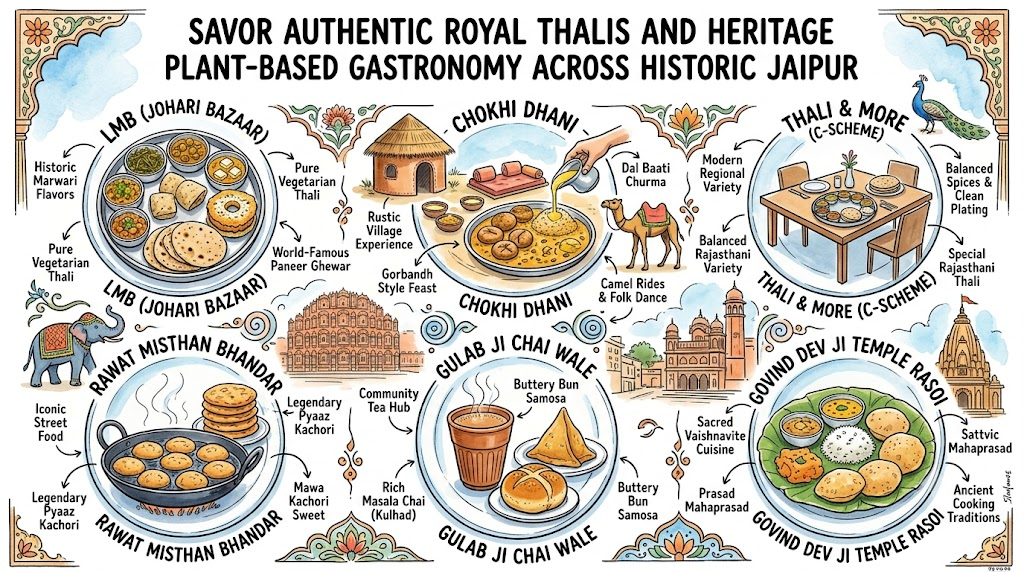
Laxmi Mishthan Bhandar (LMB)
Established in 1727 alongside the founding of Jaipur, Laxmi Mishthan Bhandar—fondly known across the subcontinent as LMB—sits in the busy heart of Johari Bazaar. Stepping through its brass doors transports diners from the chaotic market into an iconic dining hall where generations of jewel merchants and royal courtiers have savored authentic Marwari flavors. The atmosphere buzzes with nostalgia, marked by vintage glass display cases filled with mounds of glistening sweets and seasoned waiters carrying steaming metal platters.
The kitchen serves as the gold standard for authentic Rajasthani cooking, completely free from garlic and onion in its most traditional royal preparations. Their traditional thali presents a multi-course masterclass in desert gastronomy, highlighting slow-simmered ker sangri made from wild desert beans, alongside velvety gatte ki sabzi soaked in tempered yogurt gravy. Dining here is an unmissable cultural ritual that captures the living soul of the historic walled city.
- Location: Johari Bazaar, Pink City Core, roughly 4.5 km from Jaipur Junction Railway Station.
- Why it is worth visiting: It is one of the oldest operating vegetarian restaurants in India, globally renowned for inventing the modern Paneer Ghewar.
- Best things to do: Order the grand Rajasthani Royal Thali, sample the world-famous golden Paneer Ghewar, and pick up boxed sohan halwa for your travels.
- Best time to visit: Arrive between 12:30 PM and 1:30 PM for fresh lunch services, or around 5:00 PM for freshly fried afternoon savories.
- Ideal for whom: Culinary historians, multi-generational families, and dedicated food lovers.
- Travel tip: The restaurant has a strict no-reservation policy during peak tourist season; visit on weekday afternoons to bypass the lengthy waiting line outside.
Chokhi Dhani
Sprawling across several acres on the southern outskirts of Jaipur, Chokhi Dhani is an immersive village resort that celebrates the folk heritage, performing arts, and cuisine of rural Rajasthan. The dining spaces are designed as traditional earthen huts decorated with hand-painted mud walls, flickering brass oil lamps, and low-slung wooden furniture. The experience takes diners far beyond a standard sit-down meal, placing them inside a lively celebration filled with fire dancers, acrobatics, and puppet shows.
Guests dine seated cross-legged on plush floor cushions, served in the traditional chaupal style on leaf platters called pattals. Attentive hosts dressed in colorful turbans and traditional kurtas pour ladles of warm, golden desi ghee over hand-crushed baati, pairing it with spicy panchmel dal and sweet jaggery churma. This celebratory dining feast captures the true spirit of traditional Rajasthani hospitality.
- Location: 12 Miles, Tonk Road, approximately 18 km south of the Jaipur city center.
- Why it is worth visiting: An all-in-one cultural village that pairs an authentic rustic feast with world-class Rajasthani folk performances.
- Best things to do: Enjoy the traditional floor-seating feast (Gorbandh style), ride a decorated camel across the village grounds, and watch the legendary Kalbelia serpent dance.
- Best time to visit: October to February, arriving right at 5:30 PM to enjoy the outdoor shows before sitting down for dinner around 8:00 PM.
- Ideal for whom: Families with young children, culture enthusiasts, and first-time travelers to Rajasthan.
- Travel tip: Skip lunch or eat very lightly during the day; the traditional village meal is rich, filling, and comes with unlimited servings of ghee and sweets.
Thali & More
Located along the leafy, upscale avenues of C-Scheme, Thali & More bridges the gap between cherished regional recipes and modern dining comforts. The restaurant features clean architectural lines, warm wooden tables, contemporary lighting, and large windows that fill the dining space with gentle daylight. It caters to travelers who want the deep, complex flavors of classic Indian cuisine served within an inviting, modern setting.
While the name highlights their curated thalis, the kitchen is celebrated for its balanced take on North Indian, Rajasthani, and fusion vegetarian cooking. The chefs use cold-pressed oils alongside pure butter to prepare lighter interpretations of heavy classics without losing authentic depth. Their platters let visitors sample multiple regional curries, seasonal flatbreads, and aromatic rice dishes in one sitting.
- Location: Sarojini Marg, C-Scheme, roughly 3 km from the central railway hub.
- Why it is worth visiting: Unmatched regional variety with a focus on balanced spices, clean plating, and modern hospitality.
- Best things to do: Order the signature Special Rajasthani Thali, try their freshly baked multigrain missi roti, and finish with their seasonal saffron-infused desserts.
- Best time to visit: 1:00 PM to 3:00 PM for a relaxed lunch, or 8:00 PM for dinner.
- Ideal for whom: Solo travelers, couples, and health-conscious food lovers looking for light, balanced spices.
- Travel tip: Parking on Sarojini Marg can be tricky during peak dinner hours; use app-based cabs or auto-rickshaws to reach the door smoothly.
Rawat Mishthan Bhandar
Operating since the mid-twentieth century near the main railway terminus, Rawat Mishthan Bhandar is a bustling culinary landmark that defines Jaipur’s street food culture. The ground floor stays packed with locals and travelers around large fryers, where golden kachoris sizzle in smoking vats of oil. Upstairs, a family dining hall serves hearty vegetarian dishes and fresh tandoori breads throughout the day.
Rawat is famous for perfecting the Pyaaz Kachori—a crispy, flaky pastry filled with a fragrant mixture of spiced onions, crushed coriander seeds, and tangy mango powder. The kitchen fries thousands of these pastries daily to keep up with demand. Pairing this hot, flaky delicacy with a glass of cool sweet lassi is one of Jaipur’s ultimate food traditions.
- Location: Station Road, Sindhi Camp, less than 1 km from Jaipur Junction.
- Why it is worth visiting: The undeniable birthplace and gold standard of Rajasthan’s legendary Pyaaz Kachori and Mawa Kachori.
- Best things to do: Eat a freshly fried Pyaaz Kachori straight from the counter, enjoy a bowl of spiced chole bhature in the dining room, and pack a box of syrup-soaked Mawa Kachoris.
- Best time to visit: Early morning between 7:30 AM and 9:30 AM for hot breakfast pastries fresh from the first frying batch.
- Ideal for whom: Street food explorers, budget backpackers, and travelers catching morning trains.
- Travel tip: Kachoris bought for train rides or flights stay crisp for up to 24 hours if kept in ventilated paper bags instead of sealed plastic.
Gulab Ji Chai Wale
Situated opposite Ganpati Plaza on MI Road, Gulab Ji Chai Wale is a cherished street-side tea stall that has brought city residents together across all walks of life for decades. Founded by the late Gulab Singh Ji, this modest roadside shop is famous for making rich, aromatic chai in large brass pots, alongside an enduring tradition of providing free morning tea and bread to the destitute. The open sidewalk creates a warm, welcoming community hub where business leaders and rickshaw drivers stand side by side.
The tea here is simmered with whole buffalo milk, freshly crushed green cardamom, dried ginger, and a proprietary spice blend that delivers a smooth, spicy kick. Pair your cup with their signature bun muska—a fresh, fluffy bun slathered with generous layers of salted white butter—or a spiced samosa tucked directly inside the buttered bun for the ultimate morning breakfast.
- Location: Mirza Ismail (MI) Road, Central Jaipur, 2 km east of the railway station.
- Why it is worth visiting: An authentic community gathering spot serving what many consider the finest spiced masala chai in Rajasthan.
- Best things to do: Order the classic Masala Chai in an earthen kulhad, try the buttery Bun Samosa, and experience the lively morning banter of local residents.
- Best time to visit: 6:30 AM to 8:30 AM when the morning air is crisp and the tea is brewed fresh in front of you.
- Ideal for whom: Morning walkers, budget travelers, and photographers looking to capture everyday street life.
- Travel tip: There is minimal seating; be ready to stand around the sidewalk counter with the friendly morning crowd.
Govind Dev Ji Temple Rasoi & Mahaprasad
Set inside the historic City Palace complex, the Govind Dev Ji Temple is the spiritual center of Jaipur, dedicated to Lord Krishna. The temple features an immense column-free ceiling that echoes with morning bhajans and rhythmic chants. Just off the main prayer hall is the temple kitchen, which prepares sacred vegetarian Mahaprasad every day following ancient Vaishnavite traditions.
The food is prepared without onion, garlic, or chemical additives, honoring ancient sattvic cooking principles that preserve the natural energy of each ingredient. Devotees receive simple earthen leaf bowls filled with fragrant rice, tempered lentils, sweet halwa, and crisp wheat puris. Enjoying this humble meal in the peaceful temple courtyards offers a grounding, soulful contrast to the city’s opulent palaces.
- Location: Jalebi Chowk, City Palace Complex, central walled city.
- Why it is worth visiting: A rare chance to taste authentic Vaishnavite culinary heritage inside an active 18th-century temple.
- Best things to do: Attend the morning Mangala or Shringar Aarti, sit quietly in the marble hall, and receive blessed prasad alongside resident devotees.
- Best time to visit: 4:30 AM for early morning prayers, or between 8:00 AM and 10:30 AM during morning prasad distribution.
- Ideal for whom: Spiritual seekers, heritage lovers, and travelers interested in sacred cooking traditions.
- Travel tip: Remove your shoes at the outer courtyard gates, dress modestly with shoulders and knees covered, and carry small cash notes for temple donations.
Offbeat Exploration: Hidden Gems Tourists Miss
Natraj at Panch Batti
While out-of-town visitors crowd into modern cafe chains along the outer ring roads, informed locals head toward Natraj Restaurant near Panch Batti on MI Road. Operating since the 1970s, this unpretentious dining room serves some of the finest home-style food in Jaipur, highlighted by their buttery dal makhani, crisp tandoori parathas, and light cottage-cheese curries. The service is fast, the booths are cozy, and the recipes have remained unchanged for over four decades.
Jagannath Sharma Pakodi Wale
Tucked into the narrow, winding lanes of Tripolia Bazaar, this modest shop has spent generations perfecting deep-fried snacks. Using batter made from stone-ground gram flour flavored with wild carom seeds and dried pomegranate powder, the cooks fry fresh cauliflower, green chilies, and paneer cubes into golden treats. Served hot on recycled leaf plates with a tart mint-coriander chutney, these pakodis are an authentic slice of old-city street food.
Mahaveer Rabri Bhandar
Located at Mishra Rajaji Ka Rasta inside the old city, this historic dairy shop is renowned for rustic comfort sweets. Their signature dish is Rabri, prepared by slowly simmering creamy buffalo milk in wide iron pans over slow-burning wood fires until it thickens into rich, caramel-colored layers. They also serve hot, crisp bejad ki roti paired with fiery garlic-free chutney, creating an authentic desert flavor profile that flashy city restaurants rarely match.
Local Food Secret: Always look for sweet shops and street stalls that boil milk in thick iron cauldrons (kadhai). The slow reduction over low heat creates a subtle, nutty caramel flavor that modern stainless-steel equipment cannot replicate.
Detailed Practical Guidance for Travelers
| Destination | Standard Entry Fee | General Timings | Best Local Food Options Nearby | Recommended Nearby Attractions |
| LMB (Johari Bazaar) | Free Entry (₹800–₹1,200 for two) | 8:00 AM – 11:00 PM | Doodh Mishthan Bhandar (Lassi), Street kulfi carts | Hawa Mahal, Jantar Mantar, City Palace |
| Chokhi Dhani | ₹900 – ₹1,600 (Includes village entry & dining) | 5:00 PM – 11:00 PM | On-site village feast, Bajre ki Roti with white butter | Jain Mandir Sanganer, Alice Garg Seashell Museum |
| Thali & More | Free Entry (₹700–₹1,000 for two) | 11:00 AM – 11:00 PM | Anokhi Cafe (Organic Desserts), Brown Sugar Patisserie | Central Park, Birla Auditorium, Albert Hall Museum |
| Rawat Mishthan Bhandar | Free Entry (₹300–₹600 for two) | 6:00 AM – 10:30 PM | Kanji Sweets (Khatta Dhokla), Lassiwala (MI Road) | Hathroi Fort, Bapu Bazaar, Raj Mandir Cinema |
| Gulab Ji Chai Wale | Free Entry (₹50–₹150 for two) | 6:00 AM – 9:00 PM | Surya Mahal (Snacks), Natraj Dining Hall | Raj Mandir Cinema, MI Road Shopping Arcades |
| Govind Dev Ji Temple | Free Entry (Prasad donations optional) | 4:30 AM – 12:00 PM & 5:00 PM – 9:00 PM | Local Jalebi stalls at Jalebi Chowk, LMB Sweets | Chandra Mahal, City Palace Courtyards, Hawa Mahal |
Logistics & On-Ground Navigation
Local Transport Options
- Jaipur Metro (Pink Line): An affordable, air-conditioned transit system connecting Mansarovar to Badi Chaupar, dropping passengers steps from old-city eateries like LMB and Govind Dev Ji Temple.
- Auto-Rickshaws & E-Rickshaws: The most practical way to navigate the bustling alleys of the walled city. E-rickshaws are quiet, budget-friendly, and fit easily through tight bazaar gates.
- App-Based Taxis (Uber & Ola): Readily available across the city. Ideal for traveling out to Chokhi Dhani, Amber Fort, or crossing town between modern neighborhoods like C-Scheme and Malviya Nagar.
- Self-Drive & Private Chauffeur Rentals: Hiring a private air-conditioned car with a local driver for an 8-hour block (typically ₹1,800 to ₹2,500) provides total flexibility for custom culinary and heritage tours.
Budget Planning
- Backpacker / Street Explorer Tier: ₹1,000 to ₹1,800 per day. Covers dorm beds in cozy heritage hostels, transport via metro and e-rickshaws, roadside breakfasts of kachori and tea, and casual dinner thalis at historic mess halls.
- Comfort / Connoisseur Tier: ₹4,000 to ₹8,500 per day. Covers private boutique haveli stays, private car hires, fine heritage thali dinners at spots like LMB, cultural evening excursions to Chokhi Dhani, and artisanal sweet shopping.
Safety and Inclusivity Tips
- For Families: Stick to well-established, busy dining halls for midday meals, and request milder spice levels (kam teekha) for young children when ordering curries.
- For Couples: Take advantage of evening dinners at outdoor terrace restaurants in C-Scheme, or enjoy peaceful tea-tasting sessions in restored garden havelis.
- General Safety & Hygiene: Always drink bottled or double-filtered water, choose busy stalls where snacks are fried fresh in front of you, and carry pocket hand sanitizer when exploring street markets.
Strategic Travel Planning Guardrails
Travel Planning Tips for Jaipur
- Book Peak Winter Dates Early: Hotels, heritage home-stays, and premium restaurant tables fill up fast from November through January; reserve rooms at least two months ahead.
- Keep Small Cash Notes Handy: While major restaurants and boutique cafes gladly accept UPI digital payments and international cards, roadside tea stalls and sweet counters run mainly on small cash.
- Respect Sacred Temple Customs: Remove all footwear, store leather belts or bags outside, and dress modestly with covered shoulders and knees when visiting sacred temple kitchens.
- Pace Rich, Ghee-Laden Meals: Authentic Rajasthani recipes use plenty of desi ghee and warming spices; balance rich dinners with lighter morning meals of fresh fruit or mild poha.
- Plan Around Midday Market Closures: Historic bazaars and smaller family-owned sweet shops often take a brief afternoon break between 2:00 PM and 4:00 PM.
Common Mistakes to Avoid
- Over-Packing Single-Day Itineraries: Trying to visit three distant mountain forts and multiple dining spots across town on the same afternoon leads to hours stuck in traffic.
- Drinking Unfiltered Tap Water: Always choose bottled or reverse-osmosis filtered water, even when dining at mid-range restaurants, to keep your stomach happy.
- Skipping Street Food Entirely: Passing on local street food out of general caution means missing the true soul of Jaipur’s culinary heritage; stick to busy stalls with high customer turnover.
- Assuming All Rajasthani Food is Overly Fiery: Authentic royal cooking balances complex spices, nuts, and yogurt rather than relying on pure chili heat; talk with your servers about spice levels before ordering.
- Ignoring the Modern Neighborhoods: Limiting your trip exclusively to the walled city means missing out on the thriving, creative cafe culture in contemporary quarters like C-Scheme and Malviya Nagar.
Suggested Itinerary Blueprints
Day Quick Dash (The Express Heritage Feast)
- Target Audience: Travelers on tight layovers or quick one-day visits from New Delhi.
- Morning: Grab a hot breakfast of pyaaz kachori and sweet lassi at Rawat Mishthan Bhandar near the station before taking photos outside Hawa Mahal.
- Midday: Walk through Johari Bazaar to enjoy the classic Rajasthani Thali lunch at Laxmi Mishthan Bhandar (LMB).
- Late Afternoon & Evening: Tour the City Palace courtyards, stop for hot masala chai at Gulab Ji Chai Wale, and catch an evening express train back home.
Day Deep-Dive (The Royal & Rustic Trail)
- Target Audience: Food and culture lovers spending a complete weekend in the Pink City.
- Day 1: Start with early morning prayers and sweet prasad at Govind Dev Ji Temple. Spend your morning touring the City Palace and Jantar Mantar, followed by lunch at LMB. Browse Bapu Bazaar for souvenirs in the afternoon, and enjoy a relaxed dinner at Thali & More in C-Scheme.
- Day 2: Head north early to explore the sandstone ramparts of Amber Fort and the geometric stepwell at Panna Meena Ka Kund. Return to town for lunch at Natraj Restaurant, spend the afternoon shopping for block prints, and travel south to Chokhi Dhani for an evening village feast.
Complete Weekend Travel Plan (The Grand Pink City Epicurean Loop)
- Friday: Arrive in the afternoon, check into a restored heritage haveli, and enjoy fresh chai and buns at Gulab Ji Chai Wale. Spend the evening browsing MI Road before a relaxed dinner at Thali & More.
- Saturday: Enjoy a morning breakfast at Rawat Mishthan Bhandar, then head out for a half-day exploration of Amber Fort and Jaigarh. Return to the walled city for a mid-afternoon thali at LMB, watch the sunset over the Aravallis from Nahargarh Fort, and savor dinner in the quiet courtyards of C-Scheme.
- Sunday: Wake up early for the morning aarti and sacred breakfast at Govind Dev Ji Temple. Spend the late morning walking through the flower and spice stalls of the old bazaars, picking up boxed ghewar from LMB, and enjoying a quiet late lunch at Natraj before heading to the airport.
Common Tourist Mistakes to Avoid
Geographic Blunders
Visitors often try to combine morning visits to northern mountain forts like Amber or Nahargarh with afternoon plans in southern districts like Mansarovar or Sitapura on the same day. Jaipur’s central traffic bottlenecks can easily turn this into two hours of frustrating travel, wasting precious sightseeing time. Group your visits logically by region: spend northern days focusing on the forts and Amber road, and dedicate separate days to exploring the central walled city or the southern outer districts.
Commercial Traps
Many travelers waste valuable vacation hours inside generic, air-conditioned shopping malls or guided tourist souvenir showrooms that pay commissions to drivers. These venues often charge three times the fair price for mass-produced goods, while lacking the authenticity and charm of the historic bazaars. Spend your shopping hours exploring historic markets like Johari Bazaar for handcrafted jewelry or Kishanpole Bazaar for traditional wood carvings and textiles.
Neglecting Modern/Alternative Zones
First-time visitors often focus entirely on the historic walled city, completely missing Jaipur’s thriving contemporary neighborhoods. Districts like C-Scheme and Civil Lines feature quiet, tree-lined streets filled with art galleries, artisanal roasteries, and modern vegetarian bistros that reimagine regional ingredients. Balancing your time between old-world markets and these modern creative spaces provides a well-rounded look at today’s Jaipur.
Transport Overpayment
Hailing unmetered auto-rickshaws directly outside high-traffic tourist sites like the City Palace or Amber Fort often leads to steep fares. Drivers may quote prices two to three times higher than the actual trip value. To avoid overpaying, check prices on ride-hailing apps like Uber or Ola first to establish the going market rate, or consider paying a small booking convenience fee through the app to secure a car or auto with clear, upfront pricing.
Luxury Dining Bias
Relying entirely on luxury hotel dining rooms often shields travelers from the vibrant food culture that makes Jaipur unique. While high-end hotel restaurants offer comfortable, elegant dining, their menus are frequently toned down to suit generic tastes, losing the punchy garlic-clove chutneys, tart yogurt reductions, and wood-fired textures of authentic Rajasthani cooking. Stepping out to explore busy local restaurants and street counters lets you experience the true culinary heart of the city.
Frequently Asked Questions
1. What makes authentic Rajasthani vegetarian food distinct from other North Indian cuisines?
Rajasthani vegetarian cuisine developed out of necessity in an arid desert climate, relying heavily on yogurt, buttermilk, clarified butter, and dried native lentils rather than fresh water and green leafy vegetables. Common staples include chickpea flour, dried wild beans like ker and sangri, and fragrant spices like dried mango powder, producing rich, preserved flavors.
2. Is it safe for international travelers to eat street food at local Jaipur stalls?
Yes, sampling street food in Jaipur is enjoyable and safe when you exercise sensible precautions. Choose busy, high-turnover stalls where snacks like kachoris and pakodis are fried fresh in boiling oil right in front of you. Avoid raw, cut salads, drink sealed bottled water, and carry pocket hand sanitizer for peace of mind.
3. Which area in Jaipur is best for staying close to iconic vegetarian eateries?
The C-Scheme and MI Road neighborhoods are ideal bases for food lovers visiting Jaipur. These central, upscale districts sit right between the historic walled city and modern residential quarters, offering quiet tree-lined avenues alongside quick access to legendary spots like LMB, Rawat Mishthan Bhandar, Gulab Ji Chai Wale, and modern cafes.
4. What is the traditional etiquette when enjoying a Rajasthani thali meal?
Traditional Rajasthani dining celebrates warmth, hospitality, and respect for food. Diners wash their hands thoroughly before eating with their right fingers, breaking crisp baatis and mixing them with lentils, churma, and a spoonful of clarified butter. Hosts pride themselves on offering seconds, so politely wave your hand over your plate when completely full.
5. Are traditional restaurants in Jaipur accommodating to vegan travelers?
Traditional Rajasthani restaurants cater exceptionally well to vegetarians, but vegans should practice clear communication because clarified butter (ghee), yogurt, and paneer are key ingredients in desert cooking. Travelers can easily request dairy-free alternatives by asking for simple lentil dishes, dry vegetable curries, and steamed wheat flatbreads prepared without butter (bina ghee ke).
6. What is the most famous sweet in Jaipur, and where can I find it?
The most iconic sweet in Jaipur is Ghewar, a disc-shaped honeycomb cake made from flour and clarified butter, soaked in sugar syrup, and topped with rich mawa and silver foil. Laxmi Mishthan Bhandar (LMB) in Johari Bazaar is globally renowned for inventing and perfecting the delicate, rich Paneer Ghewar.
7. Can travelers easily find onion- and garlic-free (Jain or Sattvic) dining options in the city?
Jaipur is one of the most welcoming cities in the world for Jain and Sattvic dining. Given the large, influential local Marwari and Jain trading communities, almost every heritage eatery, thali house, and fine-dining restaurant maintains separate kitchen sections and clear menu markers for dishes prepared without root vegetables, garlic, or onions.
8. What is the ideal budget for enjoying food in Jaipur across three full days?
A realistic culinary budget ranges between ₹800 and ₹1,500 per day for budget backpackers exploring street stalls and casual dining halls. Travelers seeking a mix of mid-range thali restaurants, historic breakfast counters, upscale cafes, and a village dining experience at Chokhi Dhani should budget approximately ₹2,500 to ₹4,000 per day.
9. How do I get to Chokhi Dhani from central Jaipur, and is late-night travel safe?
Chokhi Dhani sits along the southern Tonk Road highway, roughly 45 minutes from central Jaipur by car. The easiest and safest way to travel is by booking an app-based taxi or hiring a private driver for a round-trip evening package. Drivers wait comfortably in the designated resort parking area while you dine.
10. What are the must-try savory breakfast dishes for travelers waking up early in Jaipur?
The essential Jaipur morning breakfast begins with steaming pyaaz kachoris or sweet mawa kachoris from Rawat Mishthan Bhandar, paired with a glass of creamy lassi served in an earthen clay cup. Another cherished tradition is soft buttered bun muska and spiced cardamom tea enjoyed curbside at Gulab Ji Chai Wale on MI Road.
11. Is tipping expected in local Jaipur restaurants and roadside tea stalls?
Tipping is customary and appreciated in casual sit-down and fine-dining restaurants across Jaipur, with 7% to 10% being standard for attentive service if a service charge is not included on the bill. At small street counters, sweet shops, and tea stalls, rounding up small change is common practice.
12. When is the best time of year to visit Jaipur specifically for culinary exploration?
The winter months from October to March provide the best weather for walking between street markets, old-city sweet shops, and outdoor restaurants. Cool daytime temperatures make rich dishes like dal baati churma and hot, syrup-soaked jalebis comfortable to enjoy, while the pleasant evenings are perfect for open-air garden dinners.
Conclusion
Setting out on a dedicated vegetarian culinary journey through Jaipur rewards travelers with an experience that goes far beyond ordinary sightseeing. In the Pink City, cooking remains a sacred cultural art form, shaped by centuries of regal patronage and refined desert ingenuity. Every meal invites you to slow down, honor ancient traditions, and savor the unforgettable warmth of true Rajasthani hospitality.
