Introduction
While standard travel itineraries herd visitors toward sterile air-conditioned shopping malls and overpriced tourist showrooms, the true pulse of Rajasthan beats along the terracotta-pink arcades of Old Jaipur. Stepping through the historic arched gateways of the Walled City unveils a living, breathing sensory universe where centuries-old craftsmanship thrives on open street fronts.
Walking these historic avenues connects you directly to generations of master artisans who still practice their crafts using time-honored traditional techniques. The real magic of Jaipur lies in navigating these labyrinthine bazaars, where bargaining is a warm social exchange and every alleyway holds hand-carved heritage treasures.
Why Jaipur is a must-visit city
Jaipur stands as a crowning jewel in India’s cultural geography, serving as the gateway to Rajasthan’s royal heritage and artistic legacy. Founded in 1727 by Maharaja Sawai Jai Singh II, it was India’s first planned city, built on rigorous Vastu Shastra principles with dedicated quarters for distinct craft guilds. Today, high-speed rail links, expressways, and an international airport make accessing this UNESCO World Heritage city seamless for backpackers and luxury travelers alike.
The city anchors the famous Golden Triangle tourist circuit alongside Delhi and Agra, offering an unmatched entry point into North Indian royal culture. Its historic commercial core remains unmatched across South Asia for its sheer concentration of living heritage arts.
| Key Metric | Details |
| Best Travel Season | October to March (Cool, pleasant weather) |
| Nearest Airport | Jaipur International Airport (JAI), Sanganer (13 km from city center) |
| Primary Transit Hub | Jaipur Junction Railway Station & Sindhi Camp Bus Stand |
| UNESCO Heritage Status | Jaipur City (Inscribed 2019) |
| Key Craft Specialties | Kundan/Meenakari Jewelry, Block Print Textiles, Mojris, Blue Pottery |
Johari Bazaar historic streetscape.
Bapu Bazaar traditional textile stalls.
Tripolia Bazaar craft displays.
Chandpole Bazaar marble carving alley.
Best Markets in Jaipur for Budget Shopping
Johari Bazaar
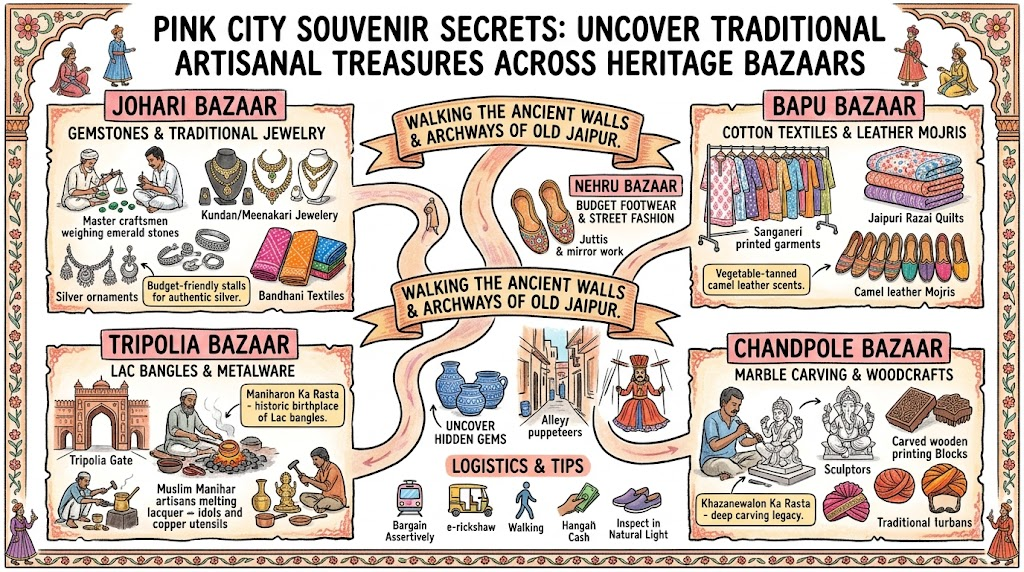
Stretching between Sabi Badi Chopar and Badi Chopar inside the Old City, Johari Bazaar is world-renowned as the beating heart of Jaipur’s gemstone and jewelry trade. The name itself translates to “Jeweler’s Market,” reflecting its centuries-old reputation as the premier destination for precious gems, semi-precious beads, and traditional silver ornaments. Walking down its covered arcades, you will see master craftsmen weighing emeralds, stringing ruby beads, and setting stones using traditional Kundan methods right before your eyes.
Beyond high-end gold and enamel work, the street lanes are packed with budget-friendly stalls selling authentic silver jewelry, tribal neckpieces, and colorful Meenakari trinkets. The market also houses famous textile alleys like Gopalji Ka Rasta, making it an ideal one-stop stop for authentic Rajasthani attire and artisanal embellishments.
- Location: Old City, near Hawa Mahal (approx. 5 km from Jaipur Junction Railway Station)
- Why it is worth visiting: Unmatched historical legacy for precious stones, silver jewelry, and traditional Kundan-Meenakari craftsmanship at wholesale prices.
- Best things to do: Hunt for vintage silver trinkets in Gopalji Ka Rasta, watch gem cutters at work in narrow side alleys, and pick up authentic Bandhani sarees.
- Best time to visit: 11:00 AM to 4:00 PM on weekdays to avoid peak evening crowds.
- Ideal for whom: Jewelry lovers, bargain hunters, culture enthusiasts, and bridal shoppers.
- Travel tip: Always check for official silver hallmarks when buying items sold by weight, and bargain assertively at street stalls.
Bapu Bazaar
Bapu Bazaar is the ultimate paradise for street shoppers seeking authentic Rajasthani handicrafts, footwear, and casual textiles without breaking the bank. Located between Sanguine Gate and New Gate, this market is famous for its uniform pink-hued shops stocking thousands of vibrant handcrafted items. The air is filled with the rich scent of vegetable-tanned camel leather originating from the famous Mojri shoe stalls lining the main corridor.
Here, you can browse through endless racks of block-printed cotton Jaipuri quilts (Jaipuri Razai), breathable Sanganeri printed kurtas, and embroidered cushion covers. The energetic vibe, straightforward layout, and budget price points make it an absolute favorite for travelers looking to bulk-buy gifts and local fashion.
- Location: Located between Sanganer Gate and New Gate (approx. 4.5 km from Jaipur Junction)
- Why it is worth visiting: The best single market for budget Mojri leather shoes, Jaipuri Razai quilts, and block-printed cotton garments.
- Best things to do: Try on hand-stitched leather Mojris, buy ultra-lightweight cotton quilts, and shop for colorful Bandhej dupattas.
- Best time to visit: Late afternoon around 4:30 PM when shopkeepers are eager to make steady evening sales.
- Ideal for whom: Budget travelers, fashion students, backpackers, and souvenir collectors.
- Travel tip: Check Mojri soles carefully to ensure genuine stitched leather rather than glued synthetic materials.
Tripolia Bazaar
Positioned between Chhoti Chopar and Manak Chowk, Tripolia Bazaar is celebrated for its historic lacquer bangle workshops and traditional metalware shops. The market takes its name from the magnificent three-arched gateway, Tripolia Gate, which leads directly into the City Palace complex. Walking along this market reveals a sensory feast of hammering metals, glittering glass bangles, and vibrant brass utensils.
The legendary Maniharon Ka Rasta, a narrow street branching off Tripolia, is where traditional Muslim artisans (Manihars) melt raw lacquer over hot coals to craft custom-fitted bangles studded with glass beads. Tripolia is also the go-to spot for buying heavy brass idols, copperware, wrought-iron home decor, and hand-woven carpets at wholesale rates.
- Location: Central Old City, adjacent to City Palace (approx. 4 km from Jaipur Junction)
- Why it is worth visiting: Home to Maniharon Ka Rasta, the historical birthplace of authentic Rajasthani lacquer bangle craftsmanship.
- Best things to do: Watch Lac bangles being melted and shaped to your exact wrist size, browse traditional brass kitchenware, and buy hand-knotted rugs.
- Best time to visit: 12:00 PM to 5:00 PM for the best artisan demonstrations.
- Ideal for whom: Culture hunters, home decor enthusiasts, collectors, and photographers.
- Travel tip: Lac bangles expand with heat; ask the artisan to custom-size them on the spot for a perfect fit.
Chandpole Bazaar
Extending from the historic Chandpole Gate to Chhoti Chopar, Chandpole Bazaar offers a deeply authentic glimpse into Jaipur’s traditional stone-carving and marble-sculpting legacy. Unlike the heavily commercial textile markets, Chandpole retains a distinct blue-collar craft energy where master stonemasons carve intricate marble statues along Khazanewalon Ka Rasta. The sound of chisels against marble creates a timeless rhythm along the street.
In addition to magnificent marble deity idols and decorative stone crafts, Chandpole is fantastic for budget shopping for wooden toys, hand-carved block stamps, and traditional turbans. It remains significantly less commercialized than Johari or Bapu Bazaar, making it ideal for peaceful cultural exploration.
- Location: Western edge of the Walled City, starting at Chandpole Gate (approx. 3 km from Jaipur Junction)
- Why it is worth visiting: World-renowned center for hand-carved marble sculptures, stone artwork, and traditional woodcrafts.
- Best things to do: Observe master sculptors at work in Khazanewalon Ka Rasta, pick up carved wooden printing blocks as stamps, and sample traditional sweets.
- Best time to visit: Morning between 10:30 AM and 1:30 PM to catch artisans working in natural light.
- Ideal for whom: Art lovers, architecture enthusiasts, offbeat travelers, and solo explorers.
- Travel tip: Wooden printing blocks make ultra-affordable souvenirs and cost as little as ₹50 to ₹100 each.
Nehru Bazaar
Located adjacent to Bapu Bazaar along the southern wall of the Pink City, Nehru Bazaar is a bustling open-air market beloved by local shoppers for affordable footwear and everyday fashion. Constructed in the classic Rajasthani architectural style with arcade walkways, it provides shade while you browse rows of vibrant stalls. The market is particularly famous for its vast array of colorful Juttis and Mojris in modern, embroidered, and mirror-work designs.
Budget-conscious shoppers flock here for ready-to-wear Rajasthani attire, printed skirts, mirror-work bags, and home textiles. It offers a slightly more local, less touristy environment than neighboring Bapu Bazaar, making prices naturally competitive.
- Location: Near Ajmeri Gate, southern perimeter of Old City (approx. 4 km from Jaipur Junction)
- Why it is worth visiting: Excellent variety of budget embroidered Juttis, trinkets, and colorful Rajasthani street fashion.
- Best things to do: Shop for mirror-work tote bags, bargain for daily wear embroidered Juttis, and enjoy local street snacks.
- Best time to visit: 5:00 PM to 8:00 PM when the market lights up with lively evening energy.
- Ideal for whom: Solo female travelers, college students, budget shoppers, and footwear collectors.
- Travel tip: Start bargaining at around 40-50% below the initial quoted price at small street-side footwear stalls.
Offbeat Exploration: Hidden Gems Tourists Miss
Khazanewalon Ka Rasta
Tucked away inside Chandpole Bazaar, this narrow lane is Jaipur’s master sculpting artery. Here, families of marble artisans have carved divine idols and architectural pillars for over two centuries. Walking through this lane allows you to witness raw white Makrana marble transformed into delicate art without any sales pitch or commercial gloss.
Maniharon Ka Rasta
Branching off Tripolia Bazaar, this historic lane remains the exclusive domain of Jaipur’s traditional lac bangle makers. Step into the tiny alcoves to watch craftsmen roll melted resin around wooden rods and press glittering stones into hot lacquer by hand. Buying directly from these family workshops ensures your money supports authentic heritage preservation.
Nataniotiyon Ka Rasta & Sireh Deori Bazaar Alleys
Located directly opposite Hawa Mahal, the rear lanes of Sireh Deori lead into quiet artisan residential quarters. Here, you can find small-batch blue pottery craftsmen, puppeteers, and leather toolers operating out of ancestral courtyard homes away from the main road commercial hubbub.
Detailed Practical Guidance for Travelers
| Destination | Standard Entry Fee | General Timings | Best Local Food Options Nearby | Recommended Nearby Attractions |
| Johari Bazaar | Free Access | 10:00 AM – 9:00 PM | LMB (Laxmi Misthan Bhandar) for Ghewar & Raj Kachori | Hawa Mahal, Jama Masjid |
| Bapu Bazaar | Free Access | 10:30 AM – 8:30 PM | Falooda at Link Road stalls, Pandit Kulfi | Sargasuli Tower, Central Park |
| Tripolia Bazaar | Free Access | 10:00 AM – 8:00 PM | Rawat Mishthan Bhandar (Pyaaz Kachori) | City Palace, Jantar Mantar |
| Chandpole Bazaar | Free Access | 10:30 AM – 7:30 PM | Bagru Sweets, local samosa vendors | Chandpole Gate, Isarlat Tower |
| Nehru Bazaar | Free Access | 10:30 AM – 8:30 PM | Street-side Chaat & Pav Bhaji at Ajmeri Gate | Albert Hall Museum |
Logistics & On-Ground Navigation
Local Transport Options
- Jaipur Metro: Highly efficient for traveling between Jaipur Railway Station (Sindhi Camp) and the Old City (Chandpole and Badi Chopar stations). Fares range from ₹6 to ₹20.
- E-Rickshaws & Auto-Rickshaws: Ideal for navigating narrow bazaar lanes. E-rickshaws charge ₹10 to ₹30 for shared routes along main corridors.
- Ride-Sharing Apps: Uber and Ola operate extensively in Jaipur for hassle-free travel between hotel zones and heritage gates.
- Walking: The best way to explore the Old City markets is on foot, as all major bazaars are interconnected inside the pink walls.
Budget Planning
- Backpacker / Budget Tier: ₹1,200 – ₹2,200 per day (Hostel stay, Metro/E-rickshaw transit, street food meals, budget market shopping).
- Mid-Range / Comfort Tier: ₹3,500 – ₹6,500 per day (Heritage hotel stay, private auto-rickshaw/cab, boutique dining, quality craft purchases).
Safety and Inclusivity Tips
- For Families: The Old City bazaars are crowded; keep young children close and carry water bottles during afternoon walks.
- For Solo & Female Travelers: Old City markets are generally very safe, but stick to well-lit main bazaar lanes after 8:30 PM. Wear comfortable shoes due to uneven stone pavements.
- General Safety: Beware of fast-moving two-wheelers in narrow market alleys, and always secure cross-body bags in crowded lanes.
Strategic Travel Planning Guardrails
Travel Planning Tips for Jaipur
- Carry Physical Cash: While digital UPI payments are widespread, small street artisans and bangle makers in narrow lanes often prefer cash for small purchases.
- Wear Easy Slip-on Shoes: You will frequently take off your footwear when entering traditional craft shops, temples, and carpet displays.
- Plan Around Market Off-Days: Most Old City bazaars close partially on Sundays, though street vendors remain active.
- Hydrate and Sun-Protect: Rajasthan’s sun can be intense even in winter; carry a hat, sunglasses, and reusable water bottle.
- Inspect Textiles in Natural Light: Step to the shop entrance to verify natural dye colors and check fabric weaves before finalizing your purchase.
Common Mistakes to Avoid
- Believing “Gem Factory” Drivers: Never allow auto-rickshaw drivers to direct you to private “discount showrooms” where they collect steep commissions.
- Rushing the Bargaining Process: Don’t accept initial quoted prices at street stalls; negotiate politely with a warm smile.
- Overpacking Your Daily Schedule: Avoid trying to visit all five major bazaars in a single morning; limit your itinerary to two markets per half-day.
- Ignoring Local Street Food: Skipping iconic street stalls deprives you of Jaipur’s rich culinary identity.
- Relying Solely on Taxis: Heavy cabs struggle in congested bazaar corridors; opt for walking or E-rickshaws inside the gates.
Suggested Itinerary Blueprints
1. Day Quick Dash (The Pink City Express)
Targeted at short-stay travelers wanting key cultural highlights and essential souvenir shopping in a fast-paced 8-hour loop.
- Morning: Start at Hawa Mahal for morning light photography, followed by a quick walk through Johari Bazaar for silver trinkets.
- Afternoon: Visit the City Palace, then explore Tripolia Bazaar for authentic lac bangles in Maniharon Ka Rasta.
- Evening: Wrap up with budget footwear and textile shopping at Bapu Bazaar, ending with snacks at Ajmeri Gate.
2. Day Deep-Dive (Heritage Craft & Culture Route)
Designed for art lovers wanting an immersive look into Jaipur’s master craft traditions over 48 hours.
- Day 1 (Royal Heritage & Fine Jewelry): Spend the morning at Amber Fort and Panna Meena Ka Kund. Head to Johari Bazaar in the afternoon for gemstone workshops, silver hunting, and traditional Rajasthani dining at LMB.
- Day 2 (Master Carvers & Street Markets): Begin the morning exploring marble workshops in Chandpole Bazaar (Khazanewalon Ka Rasta). In the afternoon, browse block prints and leather Mojris across Bapu Bazaar and Nehru Bazaar, ending with a sunset visit to Albert Hall Museum.
3. Complete Weekend Travel Plan (The Ultimate Jaipur Bazaar Loop)
A complete Friday-to-Sunday loop balancing iconic monuments, culinary stops, and deep market explorations.
- Friday Evening: Arrive, check into a heritage Haveli, and take a night walking tour of illuminated bazaars starting from Sanganeri Gate.
- Saturday: Explore City Palace and Jantar Mantar. Spend the afternoon uncovering hidden lac workshops in Tripolia Bazaar and browsing quilts in Bapu Bazaar. Dine at a rooftop restaurant overlooking the Pink City walls.
- Sunday: Visit Nahargarh Fort for panoramic views, head down to Chandpole Bazaar for wooden block stamps, and do last-minute souvenir shopping at Nehru Bazaar before departing.
Common Tourist Mistakes to Avoid
- Geographic Blunders: Attempting to combine outlying attractions like Amber Fort or Nahargarh Fort with deep Old City bazaar shopping on the same afternoon creates unnecessary transit exhaustion. Keep fort excursions to the morning and market walks to the afternoon.
- Commercial Traps: Spending precious travel hours in modernized suburban shopping malls instead of exploring atmospheric heritage bazaars deprives you of authentic cultural interaction and higher quality handcrafts.
- Neglecting Modern/Alternative Zones: Forgetting to visit progressive, artistic neighborhoods like C-Scheme and Raja Park means missing out on Jaipur’s thriving modern cafe culture and indie designer boutiques.
- Transport Overpayment: Accepting fixed auto-rickshaw quotes without cross-referencing live pricing on Uber or Ola often leads to paying triple the standard local fare.
- Luxury Dining Bias: Sticking exclusively to hotel buffets means missing iconic culinary institutions like Rawat’s Pyaaz Kachori or street-side Falooda stalls that define Jaipur’s food soul.
Frequently Asked Questions
1. What are the best items to buy in Jaipur markets on a budget?
The top budget items include hand-stitched leather Mojris, Sanganeri block-printed cotton kurtas, lightweight Jaipuri quilts, lac bangles, hand-carved wooden printing blocks, and silver jewelry.
2. How do I know if the silver in Johari Bazaar is authentic?
Look for official 925 hallmark stamps on jewelry pieces, and purchase silver items by weight from established indoor shops rather than unregistered pavement stalls.
3. Are Jaipur markets open on Sundays?
While many large indoor shops close or open late on Sundays, street vendors, footwear stalls, and major markets like Bapu Bazaar remain active throughout the weekend.
4. What is the standard discount to expect when bargaining in bazaars?
At street-side stalls in Bapu Bazaar and Nehru Bazaar, start negotiating at 30% to 50% below the seller’s initial quote to arrive at a fair middle ground.
5. Which market in Jaipur is best for traditional Rajasthani footwear?
Bapu Bazaar and Nehru Bazaar offer the largest variety of embroidered Mojris, leather Juttis, and casual sandals at budget-friendly price points.
6. Can I easily get tailored block-print clothing in the markets?
Yes, many fabric shops in Johari Bazaar and Bapu Bazaar offer same-day or 24-hour custom stitching for unstitched block-printed suit sets and shirts.
7. How do I reach the Old City bazaars from Jaipur Railway Station?
Take the Jaipur Metro from Railway Station to Chandpole or Badi Chopar station for under ₹20, or book a direct ride via Uber or Ola.
8. What is the most unique souvenir to buy in Tripolia Bazaar?
Custom-sized lac bangles crafted right before your eyes in Maniharon Ka Rasta represent one of the most unique living heritage souvenirs in Jaipur.
9. Are food options safe for international tourists around the markets?
Yes, well-known established outlets like Laxmi Misthan Bhandar (LMB) in Johari Bazaar and Rawat Mishthan Bhandar near the station serve clean, authentic local delicacies.
10. What is the difference between Sanganeri and Bagru block prints?
Sanganeri prints typically feature bright floral motifs on white or light backgrounds, while Bagru prints utilize darker background tones made with natural mud-resist dyes.
11. Is photography allowed inside the Old City markets?
Street photography is widely welcomed across all major bazaars, though it is polite to ask permission before taking close-up portraits of working artisans.
12. How long should I dedicate to market shopping in Jaipur?
Allocating two half-day sessions (around 3 to 4 hours each) allows you to thoroughly explore the primary bazaars without suffering market fatigue.
Conclusion
Choosing an immersive journey through Jaipur’s historic bazaars offers far more than a typical shopping trip—it is an inspiring cultural pilgrimage into the heart of Indian craftsmanship. Wandering past pink terracotta arcades, chatting with master artisans, and discovering hand-carved treasures creates an enduring personal connection to Rajasthan’s royal heritage. Step away from cookie-cutter souvenirs, embrace the rhythmic energy of the Pink City’s street markets, and bring home authentic stories written in silver, silk, and stone.
