Introduction
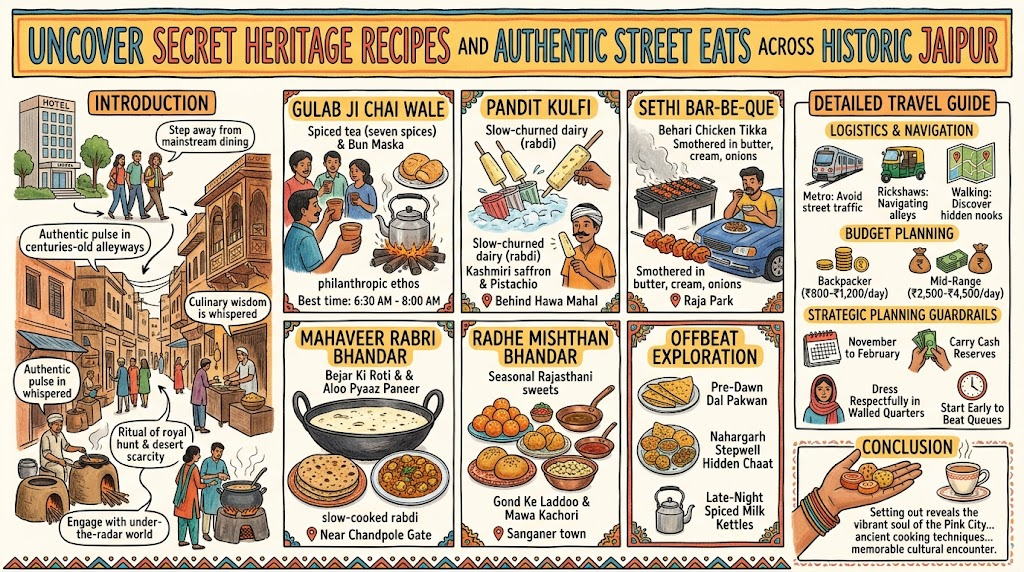
Step away from the air-conditioned, gilded dining rooms of mainstream resorts and the crowded selfie corridors around Hawa Mahal. While the standard tourist trail reduces Rajasthani gastronomy to sanitized thali platters and overpriced rooftop mocktails, the authentic pulse of Jaipur beats within centuries-old, soot-stained alleyways. Here, culinary wisdom is not printed on laminated menus; it is whispered through the crackle of iron cauldrons and the hiss of wood-fired clay ovens.
Jaipur’s authentic food scene is an ancestral ritual deeply rooted in royal hunting traditions, desert scarcity, and merchant heritage. In these hidden neighborhood kitchens, third- and fourth-generation cooks simmer artisanal broths for seven hours and hand-crush spices using basalt stone mortars. Engaging with this under-the-radar world is not merely about having a meal; it is an intimate cultural communion with the living history of the Pink City.
Why Jaipur is a must-visit city
Jaipur stands as an irreplaceable pillar of Indian cultural geography, where royal Rajputana legacy fuses seamlessly with vibrant Marwari trade traditions. Positioned at the apex of the golden travel triangle, its geographical proximity to the Thar desert shaped a culinary landscape reliant on milk solids, lentils, dried berries, and unrefined ghee. Its historic walled grid, planned under Maharaja Sawai Jai Singh II, deliberately carved out dedicated quarters for sweet-makers, spice merchants, and culinary guilds that remain operational today.
Modern connectivity makes navigating this historic gastronomic haven effortlessly viable for global travelers, family adventurers, and lone backpackers alike. The capital is directly tied to the national highway grid via the Delhi-Mumbai Expressway, serviced by a modern international airport, and linked by high-speed express trains. Whether staying in restored heritage estates or budget traveler hostels, visitors enter a vibrant circuit connecting ancient bazaars, desert outposts, and palace fortresses.
| Travel Dimension | Regional Metric / Detail |
|---|---|
| Geographic Zone | Dhundhar Region, Eastern Rajasthan, India |
| Culinary Heritage | Royal Rajput game recipes and heritage Marwari vegetarian confectionery |
| Peak Season | Late October through mid-March (optimal for warm winter gravies and sweets) |
| Transit Access | Jaipur International Airport (JAI), Jaipur Junction (JP), Delhi-Jaipur NH48 |
| Daily Flavor Profile | Mathania red chillies, asafoetida, clarified desi ghee, and roasted gram flour |
| Recommended Stay | 3 to 4 days for comprehensive culinary immersion |
Best Places or Experiences
Gulab Ji Chai Wale
Tucked quietly off the grand arterial stretch of MI Road, this humble open-air stall represents the democratic soul of Jaipur’s morning culture. For decades, Gulab Ji brewed tea with a secretive blend of seven freshly ground aromatic spices, simmered tirelessly with whole buffalo milk over simmering coals. Long before the morning sun illuminates the terracotta facades of the old quarter, luxury vehicle owners, municipal street sweepers, and university scholars stand shoulder-to-shoulder on the pavement, united by the comforting steam rising from earthen cups.
Beyond the beverage itself, the true signature here is the buttery, spiced bun maska laden with generous shavings of fiery green chili samosa tucked inside. The setting embodies genuine street hospitality, carrying forward the founder’s lifelong ritual of offering free fresh batches of tea and snacks to morning paupers. Visiting this unassuming street stall delivers an immediate sensory immersion into the communal heart of the city.
- Location: Ganpati Plaza, MI Road; approximately 2.5 km from Jaipur Junction Railway Station.
- Why it is worth visiting: The legendary spiced milk tea pairs with a deeply philanthropic community ethos unchanged for over seventy years.
- Best things to do: Sip hot ginger-clove masala chai from a disposable terracotta kulhad; order the double-butter bun maska stuffed with hot samosa; observe the diverse social cross-section of early-morning Jaipur regulars.
- Best time to visit: 6:30 AM to 8:00 AM for fresh morning brews and pleasant temperatures.
- Ideal for whom: Solo backpackers, morning strollers, street food lovers, and early risers.
- Travel tip: Standing room only; avoid bringing large backpacks and carry small currency notes for speedy payments.
Pandit Kulfi
Hidden away near the historic Hawa Mahal perimeter within the old walled city, Pandit Kulfi represents the zenith of slow-churned, unadulterated dairy craftsmanship. Established when refrigeration was an artisanal science of crushed ice and rock salt, this legacy shop condenses full-fat buffalo milk over wood-log fires for nearly six hours until it carmelizes naturally. Unlike modern commercial ice creams whipped with air and synthetic stabilizers, this dessert is dense, velvety, and deeply aromatic.
The kulfi is perfumed with authentic Kashmiri saffron, ground green cardamom pods, and raw pistachio slivers before being frozen in tapered metal cones. When ordered, the confectioner slides the frozen cylinder from its mold with practiced ease, slicing it swiftly onto dried sal-leaf plates with wooden sticks. The texture yields smoothly on the palate, releasing a fragrant, smoky sweetness that cuts through the arid desert air.
- Location: Sireh Deori Bazaar, Gangori Bazaar area; 500 meters behind Hawa Mahal.
- Why it is worth visiting: Unbroken lineage of artisanal ice-cream making utilizing traditional rabdi condensation techniques without synthetic binders.
- Best things to do: Taste the classic Pista-Kesar slice; sample the seasonal Sitaphal (custard apple) blend during early winter; witness the rapid unmolding process directly from traditional brine containers.
- Best time to visit: 8:30 PM to 10:30 PM for a classic post-dinner dessert run.
- Ideal for whom: Families, night owls, dessert connoisseurs, and heritage food historians.
- Travel tip: Parking a four-wheeler here is impossible; arrive on foot or hop onto an electric rickshaw from the Badi Chaupar metro terminal.
Sethi Bar-Be-Que
Nestled in the bustling, non-touristy commercial heart of Raja Park, Sethi Bar-Be-Que serves as a nocturnal pilgrimage site for passionate carnivores. Jaipur’s royal past celebrated the hunt and rich meat cooking, and this unassuming establishment translates that legacy into fiery, Mughlai-influenced street dishes. The air outside the shop is thick with the fragrance of smoldering charcoal, roasting fat, and crushed fenugreek leaves.
The undisputed monarch of their kitchen is the Behari Chicken Tikka, bathed in a rich marinade of hung curd, cracked mustard seed, lemon juice, and yellow chilies before being skewered over fiery embers. The meat is pulled directly from the iron skewers, shredded lightly, and smothered in melted butter, cream, and thin-sliced onions. Diners gather around open vehicle hoods or modest outdoor stools, tearing apart thin roomali rotis to scoop up every drop of spiced pan juices.
- Location: Gali No. 8, Raja Park; roughly 6 km southeast of the walled city center.
- Why it is worth visiting: Exceptional open-flame tandoori mastery offering rich, buttery curries far removed from tourist-tailored dining rooms.
- Best things to do: Feast on the decadent butter-laden Behari Chicken Tikka; order freshly tossed paper-thin Roomali Rotis hot off the dome; soak in the chaotic, high-energy tailgate atmosphere.
- Best time to visit: 7:30 PM to 10:00 PM for peak tandoor turnover and the freshest coal roasting.
- Ideal for whom: Meat lovers, late-night adventurers, and small groups of friends.
- Travel tip: Seating is very limited; embrace local custom and eat over your car hood, or opt for rapid curbside takeout.
Mahaveer Rabri Bhandar
Positioned right beside the ancient Chandpole Gate entrance to the walled city, Mahaveer Rabri Bhandar is an iconic culinary sanctuary dedicated to wholesome Marwari staples. For generations, this humble eatery has remained true to traditional recipes designed to sustain merchant families through desert heat and winter chills. The interior is rustic and functional, dominated by massive, shallow iron pans bubbling with thick, sweetened cream layers.
Their signature offering is a rustic platter of Bejar Ki Roti served alongside fiery Aloo Pyaaz paneer sabzi and silky, slow-cooked rabdi. Bejar is an ancient multigrain flour blend of barley, chickpeas, and whole wheat, hand-patted into thick discs and baked crisp over open fire. Smothered in artisanal yellow butter, this rough-textured bread provides the ultimate balance to the spicy garlic and onion curry, ending cleanly with a comforting earthen bowl of thickened, chilled rabdi.
- Location: Chandpole Gate, Pink City; 1.5 km west of City Palace.
- Why it is worth visiting: The ultimate masterclass in slow-cooked village-style Bejar bread paired with rich onion curries and pure condensed milk.
- Best things to do: Savor a hot Bejar Roti drenched in fresh unsalted churned butter; challenge your palate with the red-hot whole-garlic gravy; finish the meal with sweet, clotted-cream rabdi.
- Best time to visit: 1:00 PM to 3:00 PM for an authentic midday lunch feast.
- Ideal for whom: Vegetarians, culinary purists, cultural anthropologists, and spice lovers.
- Travel tip: The garlic chili gravy is legitimately hot; request a milder ladle if you have a low tolerance for intense spices.
Radhe Mishthan Bhandar
Tucked away in the narrow residential labyrinth of Sanganer, this suburban sweethouse is a hidden treasure known almost exclusively to locals. While tourists head to Sanganer solely for block-printed textiles, informed gastronomes seek out Radhe Mishthan Bhandar for the city’s finest seasonal confections. The kitchen honors the rhythms of nature, modifying its copper-pan preparations to match the local harvests of Rajasthan.
During the crisp winter months, the sweet shop produces legendary Daal Ke Samose and flaky, warm Mawa Kachoris steeped in translucent, saffron-scented sugar syrup. Their signature achievement remains the winter Gond Ke Laddoo—nutrient-dense clusters of edible tree gum, whole wheat flour, pulverized almonds, and dried ginger fried in pure cow ghee. Each bite delivers a satisfying crunch followed by an earthy, comforting sweetness that warms the system.
- Location: Main Market, Sanganer; approximately 13 km south of the Jaipur city center.
- Why it is worth visiting: Authentic seasonal Rajasthani sweets prepared using unadulterated cold-pressed ghee and ancient family ratios.
- Best things to do: Sample the dry-fruit heavy Gond Ke Laddoo; order warm, syrup-glazed sweet Mawa Kachoris; purchase vacuum-packed spiced gram-flour snacks for transit.
- Best time to visit: 10:00 AM to 1:00 PM when morning sweets batches emerge hot from the frying pans.
- Ideal for whom: Dessert enthusiasts, shopping explorers visiting textile printing centers, and slow travelers.
- Travel tip: Combine this sweet-house stop with an artisan walking tour through the adjacent hand-block printing workshops.
Offbeat Exploration: Hidden Gems Tourists Miss
The Pre-Dawn Dal Pakwan Trail at Sindhi Camp
Tucked quietly behind the noisy interstate bus terminals of Sindhi Camp lies a tiny enclave of partition-era heritage stalls. Here, migrant families preserved the breakfast ritual of Dal Pakwan—a delicate, crisp flour cracker seasoned with carom seeds, topped with tender Chana Dal, fresh green chilies, tamarind glaze, and chopped onions.
Arrive between 6:30 AM and 8:00 AM before the neighborhood wakes. Watching the shopkeepers ladle tangy chutneys over hot, crisp crackers provides an authentic glimpse into the city’s rich post-1947 refugee culinary history.
Nahargarh Stepwell Hidden Baori Chaat
Far beneath the tourist-thronged ramparts of Nahargarh Fort, along the rugged pedestrian footpath connecting the ridge to the old city, sits an unmarked open-air stone terrace. An elderly artisan sets up an artisanal chaat station on winter afternoons, serving hand-crushed lentil vadas soaked in tangy wild tamarind water and topped with mountain herbs.
Sitting along the sun-warmed stone steps, with panoramic views of the terracotta city below, offers an unforgettable alternative to the commercial cafes above.
Late-Night Spiced Milk Kettles of Tonk Phatak
When the rest of the city winds down after midnight, the intersection near Tonk Phatak comes alive around large, steaming brass cauldrons. Street vendors simmer whole milk for hours with crushed dry dates, saffron, nutmeg, and almond slivers until it develops a thick, frothy golden crown.
Served hot in unglazed terracotta cups, this rich nightcap draws night-shift auto drivers, musicians, and local night owls seeking warmth and quiet conversation under the stars.
Detailed Practical Guidance for Travelers
| Destination | Standard Entry Fee | General Timings | Best Local Food Options Nearby | Recommended Nearby Attractions |
|---|---|---|---|---|
| Gulab Ji Chai Wale | Free (Pay per item: ~₹20-₹60) | 6:00 AM – 9:00 PM | Bun Muska, Samosa, Bun Samosa | Raj Mandir Cinema, MI Road Boutiques |
| Pandit Kulfi | Free (Pay per item: ~₹60-₹120) | 11:00 AM – Midnight | Kesar Pista Kulfi, Paan Kulfi, Rabdi Falooda | Hawa Mahal, Jantar Mantar, City Palace |
| Sethi Bar-Be-Que | Free (Pay per item: ~₹250-₹500) | 6:00 PM – 11:30 PM | Behari Chicken Tikka, Malai Chaap, Roomali Roti | Birla Mandir, Raja Park High Street |
| Mahaveer Rabri Bhandar | Free (Pay per item: ~₹100-₹220) | 9:00 AM – 11:00 PM | Bejar Ki Roti, Aloo Pyaaz Paneer, Sweet Rabdi | Chandpole Gate, Khazane Walon Ka Rasta |
| Radhe Mishthan Bhandar | Free (Pay per item: ~₹50-₹200) | 7:30 AM – 9:30 PM | Gond Ke Laddoo, Mawa Kachori, Moong Daal Halwa | Sanganer Town Fort, Textile Printing Mills |
Logistics & On-Ground Navigation
Local Transport Options
- Jaipur Metro: Highly efficient elevated and underground line linking Mansarovar directly to the walled-city core at Chandpole and Badi Chaupar; perfect for avoiding street-level traffic snarls.
- Auto-Rickshaws & E-Rickshaws: Ideal for negotiating the narrow, winding alleys of the old quarters. Electric rickshaws cost between ₹30 and ₹80 for short hops within the bazaars.
- Ride-Hailing Apps (Uber/Ola): Best for late-night journeys across town to Raja Park or longer excursions out to Sanganer; prices are transparent and eliminate bargaining.
- Walking: The only practical way to discover hidden culinary nooks inside Sireh Deori and Chandpole; bring comfortable, slip-resistant footwear for cobblestone passages.
Budget Planning
- Backpacker Tier (₹800 – ₹1,200 per day): Focus on morning street stalls, subway connections, shared e-rickshaws, and heritage street dinners. A hearty meal of Bejar Roti or Dal Pakwan rarely exceeds ₹150.
- Comfort / Mid-Range Tier (₹2,500 – ₹4,500 per day): Includes private app-based cabs, seated evening barbecue meals, dessert tastings, artisanal souvenir snack boxes, and guided afternoon food walks.
Safety and Inclusivity Tips
- For Families: Ensure smaller children stick to cooked and piping-hot street snacks; keep bottled drinking water on hand, and visit popular street stalls during early operating hours to avoid dense crowds.
- For Couples: Night runs to Pandit Kulfi or rooftop sweets parlors near Hawa Mahal offer relaxed, authentic charm away from daytime tourist congestion.
- General Safety: Choose stalls with rapid turnover where cauldrons boil continuously. Be mindful of personal belongings and cross streets with care amid busy e-rickshaw traffic.
Strategic Travel Planning Guardrails
Travel Planning Tips for Jaipur
- Target Winter Months: Schedule your trip between November and February to enjoy temperature-sensitive winter specialties like fresh rabdi, gond laddoos, and rich tandoori meats.
- Carry Cash Reserves: While Unified Payments Interface (UPI) works across most street vendors, carry ₹500 in small ₹10, ₹20, and ₹50 notes for rapid payments at tiny stalls.
- Dress Respectfully in Walled Quarters: When visiting legacy food lanes around ancient temples or traditional bazaars, choose modest, comfortable clothing that covers shoulders and knees.
- Pace Your Palate: Traditional Rajasthani cooking uses unrefined desi ghee generously; limit deep-fried dishes to one major tasting session per day.
- Start Early to Beat the Queues: Classic breakfast stalls exhaust their best batches of samosas, kachoris, and chai by 9:00 AM; set early alarms for morning food walks.
Common Mistakes to Avoid
- Over-Packing the Daily Route: Do not attempt five palace visits and four culinary neighborhoods in a single day; traffic across the city gates can slow transit considerably.
- Defaulting to Hotel Dining: Relying entirely on hotel kitchens misses the authentic spice profiles and generational recipes that define the city’s food culture.
- Ignoring Neighborhood Layouts: Avoid booking lunch in the far south (Sanganer) and dinner in the far north (Amer) on the same day to save hours in traffic.
- Falling for Street Broker Advice: Never follow unsolicited auto drivers to “special royal craft emporiums” or commissioned tourist thali spots.
- Assuming All Street Food is Unsafe: Stalls with continuous wood-fired cauldrons, rapid customer turnover, and steaming hot oil are generally very safe to enjoy.
Suggested Itinerary Blueprints
1. Day Quick Dash (The Old City Flavor Sprint)
Target Audience: Express travelers, layover visitors, or architectural explorers with limited time.
- 07:30 AM – 09:00 AM: Fuel up with spicy ginger tea and fresh bun maska at Gulab Ji Chai Wale on MI Road.
- 09:30 AM – 01:30 PM: Walk through the Pink City grid, visiting Hawa Mahal and the alleyway markets of Johari Bazaar.
- 01:30 PM – 03:00 PM: Head to Mahaveer Rabri Bhandar at Chandpole Gate for a feast of hot Bejar Roti and fiery garlic-onion gravy.
- 03:30 PM – 06:30 PM: Explore the sprawling courtyards of City Palace and neighboring craft lanes.
- 07:00 PM – 08:30 PM: Conclude with rich, slow-churned saffron pistachio dessert at Pandit Kulfi.
2. Day Deep-Dive (Heritage, Spice & Tandoor Immersion)
- Day 1: The Walled City & Nocturnal Kebab Trail
- Morning: Wake up early for hot Dal Pakwan at Sindhi Camp, followed by an architectural walk through Chandpole’s heritage markets.
- Afternoon: Lunch on traditional Rajasthani thali components near Badi Chaupar, followed by an afternoon exploring stone-carving guilds.
- Evening: Travel to Raja Park for a hearty open-air feast of buttery Behari Chicken Tikka and roomali rotis at Sethi Bar-Be-Que.
- Day 2: Royal Palaces, Artisan Textiles & Desert Sweets
- Morning: Early drive to Amer Fort before crowds gather; sample local spiced buttermilk near the base of the fort.
- Afternoon: Take a scenic drive south to Sanganer to explore artisan block-printing studios and sample winter Gond Laddoos at Radhe Mishthan Bhandar.
- Evening: Return to the center for a late-night cup of saffron-nutmeg spiced milk at Tonk Phatak.
3. Complete Weekend Travel Plan (The Epicurean Circuit)
- Friday: Check into your heritage haveli by mid-afternoon. Head out for an evening walk around MI Road, stopping for snacks at Gulab Ji Chai Wale and enjoying sunset views from the Nahargarh Fort ramparts.
- Saturday: Dedicate the day to the historic walled center. Start with early morning tea and samosas, explore royal palace complexes, enjoy a lunch of Bejar Roti at Mahaveer Rabri Bhandar, and finish with sliced Kesar Kulfi at Pandit Kulfi.
- Sunday: Begin with an early breakfast trail behind Sindhi Camp. Spend the afternoon shopping for authentic spices and brassware in the old bazaars, and spend your final evening enjoying open-flame cooking at Sethi Bar-Be-Que in Raja Park.
Common Tourist Mistakes to Avoid
Geographic Blunders
Attempting to combine a morning tour of Amer Fort in the far north with an afternoon sweet hunt in southern Sanganer is a classic logistical trap. Jaipur’s historic gates create bottlenecks during rush hours; group your culinary stops strictly by regional zones.
Commercial Traps
Many visitors spend their evenings dining in generic multi-cuisine tourist halls around major monuments, paying inflated prices for bland dishes. Instead, venture into the residential streets of C-Scheme and Raja Park, where local culinary institutions take genuine pride in their offerings.
Neglecting Modern/Alternative Zones
While the old quarter holds timeless historic charm, ignoring newer neighborhoods like C-Scheme leaves out a vibrant third-wave cafe culture. Independent roasteries and contemporary bakeries here creatively incorporate regional ingredients like camel milk and local jaggery.
Transport Overpayment
Accepting unmetered flat fares from waiting auto-rickshaws outside major palace gates frequently leads to paying triple the real rate. Always insist on using the ride-hailing app on your phone, or verify the standard rate with your hotel reception beforehand.
Luxury Dining Bias
Confining your meals exclusively to five-star heritage hotel dining rooms insulates you from the true soul of Rajasthani cuisine. The authentic techniques of slow-cooking, coal roasting, and milk reduction thrive out in the open, where cooks practice recipes passed down through generations.
Insider Food Tip: Always look for vendors preparing dishes in small batches over open flames. The freshest sweets and savories emerge between 8:00 AM and 10:00 AM, and again between 5:00 PM and 7:00 PM.
Frequently Asked Questions
1. Is it safe for international visitors to eat street food in Jaipur?
Yes, enjoying street food in Jaipur is generally safe if you stick to bustling stalls with high local footfall. Always choose foods prepared fresh over open flames or bubbling oil rather than items sitting exposed. For cold treats like kulfi, visit established shops like Pandit Kulfi that maintain hygienic, temperature-controlled freezers. Stick to sealed bottled water or boiled beverages like freshly brewed hot masala tea.
2. What traditional dishes best represent Jaipur’s local cuisine?
Beyond the famous Dal Baati Churma, traditional Jaipur cuisine centers around distinct regional staples. These include Pyaaz Kachori (flaky onion-stuffed pastry), Bejar Ki Roti (multigrain barley-chickpea flatbread), Ker Sangri (desert bean and wild berry stir-fry), and rich meat preparations like Laal Maas. Distinctive local sweets like Ghewar, clotted-cream Rabdi, and Mawa Kachori capture the rich culinary heritage of the desert state.
3. When is the best time of year to explore the food scene in Jaipur?
The best period is from late October through mid-March when the weather remains crisp, dry, and pleasant for walking tours. Winter weather pairs perfectly with the region’s rich, ghee-laden cuisine, warm tandoori dishes, and seasonal confections like Gond Ke Laddoo and Gajak. Exploring street stalls and heritage bazaars during the intense summer months can be uncomfortably warm.
4. Where can I find the best authentic Pyaaz Kachori in Jaipur?
While popular bakeries across the city fry thousands of pastries daily, the freshest and flakiest Pyaaz Kachoris are found around Station Road and the old Chandpole bazaars. Look for traditional sweets shops where batches emerge fresh from large iron cauldrons throughout the morning. Pair your hot, spiced kachori with sweet tamarind chutney and a hot earthen cup of spiced tea.
5. How are transactions typically handled at small culinary stalls in the city?
Most small street vendors across Jaipur rely on India’s Unified Payments Interface (UPI) via digital QR codes. However, international travelers without local bank accounts should always carry cash. Keep approximately ₹500 to ₹1,000 in small ₹10, ₹20, and ₹50 notes, as small stalls often struggle to provide change for larger ₹500 currency bills.
6. Are vegetarian travelers well-catered for across Jaipur’s food scene?
Jaipur is an absolute paradise for vegetarian diners. Rooted in traditional Marwari Hindu and Jain cultures, the vast majority of legacy sweet houses, breakfast stalls, and traditional lunch counters are strictly vegetarian. Even neighborhood snack vendors offer abundant meat-free choices, using protein-rich lentils, dairy curd, fresh paneer, and chickpea flour as core components across their menus.
7. What makes traditional blue pottery shops worth combining with a food itinerary?
Combining food and craft stops makes for a richer, more engaging day. Historic neighborhoods like Sanganer house both heritage sweet makers and generations-old block-printing and blue-pottery studios. Exploring these artisan spaces between meals allows you to walk off rich tastings while discovering the authentic creative traditions that define Jaipur’s cultural landscape.
8. What exactly is Bejar Ki Roti, and why is it unique to this region?
Bejar Ki Roti is a traditional Rajasthani flatbread made from a rustic blend of whole wheat, roasted barley, and chickpea flour. Born out of desert agricultural wisdom, it provides sustained energy and digests easily during hot summers and chilly winters. Served warm with fresh churned butter and spicy garlic curries, it delivers a nutty flavor you will not find in standard restaurant breads.
9. How do I get around the narrow streets of the old walled city?
The most practical way to navigate the historic bazaars is by combining the Jaipur Metro with zero-emission electric rickshaws. Take the modern metro line to either Chandpole or Badi Chaupar stations, then walk or take an e-rickshaw through the narrow residential alleys. Avoid hiring large four-wheel cabs within the walled gates, as narrow passages regularly encounter heavy gridlock.
10. What are the key etiquette considerations when dining at traditional food spots?
When eating at traditional street counters, always wash your hands before meals and use your right hand when eating without utensils. In family-run establishments, it is customary to discard used leaf plates or clay cups into designated collection bins rather than leaving them on counters. Dress respectfully, keeping shoulders covered when dining near neighborhood temples.
11. Where can I sample authentic Laal Maas without tourist adaptations?
To taste authentic Laal Maas, avoid the mild, cream-laden curries served at major monument-adjacent hotels. Seek out traditional culinary clubs, heritage homestays, or respected non-vegetarian family eateries around Raja Park and MI Road. True Laal Maas is defined by pungent mustard oil, slow-cooked mutton, and fiery Mathania chillies, delivering a smoky heat balanced by whole spices.
12. Is tap water safe to drink at street stalls, or should I carry bottled water?
Never drink untreated tap water from street stalls or public dispensers. Always carry your own reusable bottle filled from your hotel’s reverse-osmosis (RO) filtration system, or purchase sealed mineral water from authorized vendors. Well-cooked, hot street foods and fresh boiling tea are safe, but avoid raw shaved ice treats or uncovered cut fruit from street carts.
Conclusion
Setting out on a dedicated culinary journey through Jaipur reveals the vibrant soul of the Pink City. Beyond its grand ramparts and pastel palaces lies a city built on rich generational hospitality, where master cooks preserve ancient cooking techniques over wood-fired pots and charcoal embers. Every sip of cardamom tea and bite of hot, hand-patted flatbread connects you to centuries of royal and desert history, turning a simple meal into an unforgettable cultural encounter.
