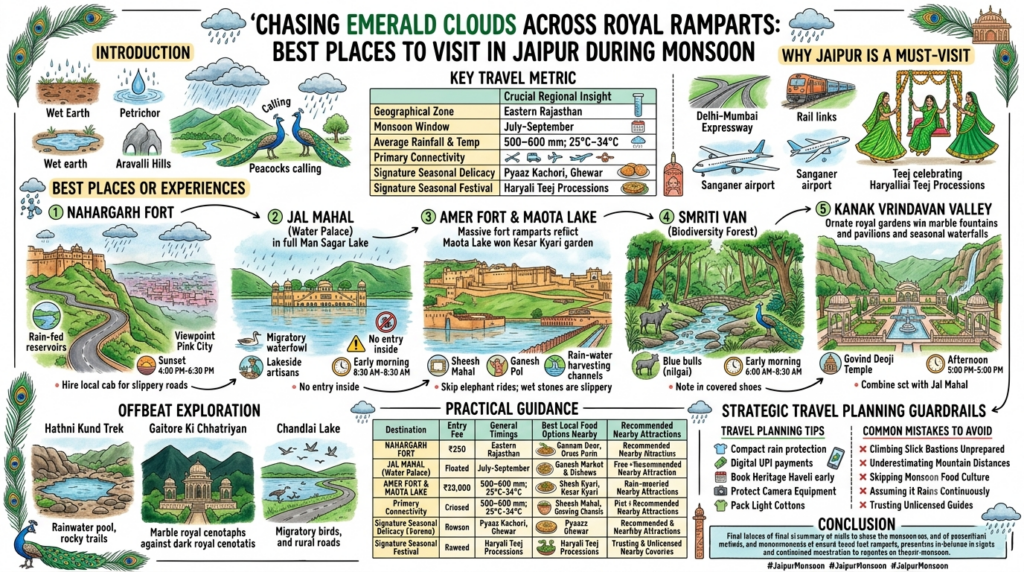
Introduction
Most travelers imagine Rajasthan solely as a scorching expanse of golden sands and sun-baked sandstone, flocking in droves during the dry winter chill. Yet, when the southwest monsoon sweeps over the ancient Aravalli Hills between July and September, the desert capital casts off its dusty veil to reveal something breathtaking. Fragrant wet earth mingling with petrichor replaces midday heat, while rugged fortress hills transform into lush, velvety emerald terraces.
Visiting Jaipur during the rainy season is not merely a holiday; it is an intimate encounter with an age-old romantic tradition known locally as Sawan. Far from the suffocating tourist crowds that congest palace corridors in December, a rain-kissed Jaipur invites you to hear peacocks calling across mist-shrouded battlements, watch dramatic cloudscapes roll over ramparts, and savor piping-hot savories alongside locals under dripping heritage awnings.
Why Jaipur is a must-visit city
Jaipur during the monsoon is an entirely different world compared to typical Indian vacation spots where rain halts all movement. Nestled securely in an ancient geological bowl formed by the rugged Aravalli range, the city enjoys revitalizing, dramatic showers without the paralyzing waterlogging found in coastal metropolises. Culturally, the rains have celebrated romance, music, and seasonal craft here for centuries, culminating in vibrant festivals like Teej, when decorated swings adorn courtyards and women wear vibrant green lehariya attire.
Strategically positioned along India’s Golden Triangle, Jaipur offers seamless connectivity via the modern Delhi-Mumbai Expressway, extensive broad-gauge rail links, and an active international airport at Sanganer. Whether you are a solo backpacker seeking misty fort viewpoints, a couple drawn to atmospheric heritage havelis, or a family exploring royal history, the city blends regal nostalgia with effortless luxury and hospitality.
The monsoon travel circuit branches outward from the walled historic center toward the elevated northern ridge. You navigate through low-lying palace lakes, winding mountain passes, and dramatic clifftop battlements that look out over lush valleys.
| Key Travel Metric | Crucial Regional Insight |
| Geographical Zone | Eastern Rajasthan, Aravalli Ridge System |
| Monsoon Window | July through September (Peak greenery in August) |
| Average Rainfall & Temp | 500–600 mm seasonal rainfall; 25°C to 34°C |
| Primary Connectivity | Jaipur International Airport (JAI), Jaipur Junction (JP), NH-48 |
| Signature Seasonal Delicacy | Crispy Pyaaz Kachori, Steaming Masala Chai, Ghewar |
| Signature Seasonal Festival | Haryali Teej Processions (Late July / Early August) |
Best Places or Experiences
Nahargarh Fort
Perched proudly on the sheer edge of the Aravalli hills, Nahargarh—meaning “Abode of Tigers”—serves as the ultimate vantage point when thunderous rainclouds gather over the plains. Built originally in 1734 by Maharaja Sawai Jai Singh II, the fort was designed as an impregnable retreat that formed a defensive ring alongside Amer and Jaigarh.
During the monsoon, the dramatic winding ascent up Nahargarh Road cuts through a dense forest canopy alive with running streams and calling peacocks. Walking along the outer stone parapets while misty cloud banks roll across the city skyline below offers an exhilarating, ethereal experience that no winter visit can replicate.
- Location: Aravalli Hills, Brahampuri Ridge, roughly 15 km north of Jaipur city center.
- Why it is worth visiting: Unbeatable 360-degree panoramic viewpoints of a mist-covered Pink City and sweeping views of lush mountain valleys.
- Best things to do: Stand along the historic stone ramparts as rain clouds glide overhead, explore the nine royal suites inside the Madhavendra Bhawan, and discover the ancient rain-fed stepped water reservoirs.
- Best time to visit: Late afternoon between 4:00 PM and 6:30 PM to catch dramatic monsoon sunsets and evening city lights.
- Ideal for whom: Couples, landscape photographers, solo daydreamers, and road-trip enthusiasts.
- Travel tip: The winding hill road gets slick after sudden downpours; hire an experienced local cab driver instead of riding lightweight two-wheelers on the steep curves.
Jal Mahal (Water Palace)
Floating serenely in the center of Man Sagar Lake, Jal Mahal is a dazzling showcase of Rajput-Mughal architectural balance. Engineered out of deep red sandstone, this 18th-century marvel is designed so that four of its five storeys remain submerged beneath the water, revealing only the top pavilion.
In dry seasons, the lake can recede, but the monsoon fills Man Sagar to its brim, creating glass-like reflections of the surrounding Nahargarh hills. Strolling along the paved lakeside promenade at dusk while a light drizzle peppers the lake surface is one of the most soothing sensory experiences in Jaipur.
- Location: Amer Road, approximately 5 km northeast of the historic walled city.
- Why it is worth visiting: The visual poetry of an amber-hued palace resting quietly in the center of a full, rain-fed urban lake against green hills.
- Best things to do: Walk along the paved open promenade during an evening drizzle, photograph migratory waterfowl visiting the restored wetlands, and browse traditional brass chimes and street puppets sold by local lakeside artisans.
- Best time to visit: Early morning between 6:30 AM and 8:30 AM for quiet, mist-draped waters.
- Ideal for whom: Leisure walkers, birdwatchers, families, and architecture lovers.
- Travel tip: Entry inside the floating palace itself is restricted to protect the fragile submerged masonry, so avoid private touts selling fake boat tours.
Amer Fort and Maota Lake
Amer Fort represents the pinnacle of amber-toned Rajput military might and royal luxury, built atop rugged Cheel ka Teela by Raja Man Singh I. Its massive ramparts overlook Maota Lake, an engineered reservoir constructed to supply the royal palace with water through complex Persian wheels.
When monsoon downpours flood Maota Lake, the palace’s iconic stepped garden, Kesar Kyari (Saffron Garden), bursts with fresh color amidst the mirrored lake surface. Walking through the open-air courtyards of the Ganesh Pol while rain cascades down carved marble chutes makes the whole fort feel like a living, breathing palace.
- Location: Amer Town, roughly 11 km north of central Jaipur along the Delhi-Jaipur highway.
- Why it is worth visiting: Witnessing the monumental defense ramparts reflected in the overflowing waters of Maota Lake with forested ridges on every side.
- Best things to do: Explore the dazzling glass inlays of the Sheesh Mahal during stormy weather, walk out onto the battlements overlooking the Sun Gate, and observe the historic rain-water harvesting channels throughout the courtyards.
- Best time to visit: Morning between 8:00 AM and 11:00 AM to explore before humidity peaks.
- Ideal for whom: History buffs, cultural travelers, families, and architectural researchers.
- Travel tip: Skip the elephant rides up the stone ramps during the monsoon; wet stone pavers get dangerously slick for the animals, and walking up the gentle slope offers far better vistas.
Smriti Van (Biodiversity Forest)
Originally established as an urban memorial park along the JLN Marg corridor, Smriti Van has matured into a tranquil, wild bio-reserve nestled within the city. During dry months, the ravines appear quiet and barren, but the seasonal rains turn this dense forest tract into a lush, tropical oasis.
Winding pathways cross shallow seasonal streams, stone bridges, and hidden clearings inhabited by native bird species and blue bulls (nilgai). It offers an effortless escape into untamed nature without ever having to leave the city boundaries.
- Location: Jawahar Lal Nehru Marg, approximately 7 km south of Jaipur Junction.
- Why it is worth visiting: A wild, secluded forest trail that bursts into deep green foliage right within modern Jaipur.
- Best things to do: Spot vibrant peacocks displaying plumage in the morning rain, hike quiet, winding forest ravines, and relax on stone benches listening to migratory bird calls.
- Best time to visit: Early morning from 6:00 AM to 8:30 AM when the forest air is cool and fragrant with the scent of wild neem and acacia.
- Ideal for whom: Solo hikers, nature lovers, birdwatchers, and travelers seeking quiet meditation.
- Travel tip: Wear covered shoes with sturdy rubber soles, as the natural earth trails develop muddy patches and slick moss after heavy downpours.
Kanak Vrindavan Valley
Tucked away in the narrow pass between the foothills of Amer and Nahargarh, Kanak Vrindavan is an ornate royal garden complex commissioned by Maharaja Sawai Jai Singh. Designed to resemble mythological Vrindavan, the gardens feature manicured marble fountains, pillared pavilions, and intricate stone balustrades.
During the monsoon, rainwater pours down the adjacent Aravalli ridges into the valley, filling the manicured channels and feeding adjacent groves of kadamba and mango trees. Standing inside the pillared marble pavilions while watching water flow through historic fountains provides an authentic taste of ancient royal leisure.
- Location: Amer Road, near the base of the Nahargarh hills, roughly 8 km north of the city center.
- Why it is worth visiting: Pristine historic valley gardens that sit framed by towering green cliff faces and dramatic seasonal waterfalls.
- Best things to do: Admire the delicate marble carvings of the Govind Deoji Temple, stroll the terraced stone waterways, and photograph panoramic low-angle views of the fort ramparts above.
- Best time to visit: Mid-afternoon between 3:00 PM and 5:00 PM when rain showers bring cool breezes through the valley.
- Ideal for whom: Photographers, couples, seniors seeking flat walking spaces, and heritage landscape enthusiasts.
- Travel tip: Combine your visit to Kanak Vrindavan with Jal Mahal, as both lie along the same transit route just a few minutes apart.
Offbeat Exploration: Hidden Gems Tourists Miss
Hathni Kund Trek (Nahargarh Valley)
Hidden behind the northern mountain ridges, Hathni Kund is a secluded rainwater pool fed by natural cascades during peak showers. The trail winds through rocky, forested terrain starting near Charan Mandir, passing ancient sand-carved shrines and wild stream beds. It is an adventurous, rugged route favored by local trekking clubs that remains completely unknown to mainstream package tourists.
Gaitore Ki Chhatriyan
Resting silently at the foot of Nahargarh Hill, Gaitore houses the majestic royal cenotaphs of the Kachwaha Maharajas. Each open-air marble chhatri features fine, lace-like carvings depicting royal hunts and folklore. When it rains, the white Makrana marble gleams brightly against the dark green backdrop of the surrounding cliff sides, creating a tranquil, reverent haven away from urban bustle.
Chandlai Lake
Located about 30 km south of Jaipur along the Kota Highway, this 140-year-old water reservoir is a hidden paradise for birdwatchers during the rainy months. The monsoon rains attract flocks of migratory birds, including white-tailed lapwings, flamingos, and ruffs. The surrounding flat country roads make for an easy morning drive through rural hamlets untouched by modern tourism.
Detailed Practical Guidance for Travelers
| Destination | Standard Entry Fee | General Timings | Best Local Food Options Nearby | Recommended Nearby Attractions |
| Nahargarh Fort | ₹50 (Indians) / ₹200 (Foreigners) | 10:00 AM – 5:30 PM (Palace); Ramparts open till 10:00 PM | Padao Restaurant (inside fort), Pandit Pav Bhaji | Jaigarh Fort, Charan Mandir Viewpoint |
| Jal Mahal Promenade | Free (Open public access) | 24 Hours Open (Best: 6:00 AM – 9:00 PM) | Jal Mahal Ice Cream & street snacks, Green Pigeon | Amer Fort, Kanak Vrindavan Valley |
| Amer Fort | ₹100 (Indians) / ₹500 (Foreigners) | 8:00 AM – 5:30 PM; 6:30 PM – 9:15 PM (Night) | 1135 AD (Inside Fort), Jagat Shiromani Temple stall | Panna Meena Ka Kund, Anokhi Museum |
| Smriti Van | Free entry | 6:00 AM – 5:00 PM | Curious Life Coffee Roasters, Tapri Central | Jawahar Kala Kendra, Albert Hall Museum |
| Kanak Vrindavan | ₹50 per person | 8:00 AM – 7:00 PM | Heritage Dhaba Amer, Rawat Sweets (Pick up en route) | Jal Mahal, Gaitore Ki Chhatriyan |
Logistics & On-Ground Navigation
Local Transport Options
- Metro Rail: The Jaipur Metro provides an air-conditioned link from Mansarovar to Badi Chaupar, keeping you clear of street-level puddles and traffic snarls in the walled city.
- Auto-Rickshaws & E-Rickshaws: E-rickshaws are ideal for navigating the narrow lanes of the historic bazaars, while auto-rickshaws easily navigate the wider city avenues.
- App-Based Cabs (Uber & Ola): Readily available across the city and the best choice for climbing the winding hill roads to Nahargarh and Jaigarh during sudden rain showers.
- Self-Drive Cars & Scooters: Convenient for rural day trips like Chandlai Lake, but use caution on wet hill ascents, where patches of mud and gravel accumulate on switchbacks.
Budget Planning
- Backpacker / Solo Explorer Tier: Expect to spend ₹1,200 to ₹2,000 per day. This covers a comfortable hostel dorm bed in C-Scheme, street food meals, metro tickets, e-rickshaws, and basic public monument entries.
- Mid-Range / Comfort Explorer Tier: Expect to spend ₹4,500 to ₹8,500 per day. This includes a boutique heritage haveli stay, private app-cab rentals for hilltop fort circuits, sit-down dinners at classic restaurants, and composite monument passes.
Safety and Inclusivity Tips
- For Families: The open stone walkways at Amer and Nahargarh can get slick when wet; make sure children and older family members wear shoes with reliable rubber tread.
- For Couples: The dramatic cloudscapes from Nahargarh and Jal Mahal offer a wonderfully romantic setting, but avoid isolated dirt tracks in the hills after sunset.
- General Safety & Hygiene: Street food stalls thrive in the rainy season, but choose clean, high-turnover vendors serving hot, freshly fried items, and drink only sealed bottled or purified water.
Strategic Travel Planning Guardrails
Travel Planning Tips for Jaipur
- Carry Compact Rain Protection: Pack an inverted, wind-resistant umbrella or lightweight poncho; afternoon showers roll in fast over the Aravallis.
- Rely on Digital UPI Payments: Digital payments like UPI are accepted by almost everyone, from corner chai stalls to monument ticket windows, though keeping small cash notes handy is wise for village stalls.
- Book Heritage Haveli Stays Early: Heritage hotels often feature lush inner courtyards and open roof terraces that are ideal for watching monsoon showers, making them popular with domestic travelers.
- Protect Camera Equipment: Sudden downpours can catch you on exposed fort ramparts, so carry a waterproof dry bag or rain sleeve for your lenses and electronics.
- Pack Light, Breathable Cottons: Monsoons in Rajasthan alternate between refreshing, rain-cooled breezes and warm humidity, making loose linen and quick-drying cotton clothes your best bet.
Common Mistakes to Avoid
- Climbing Slick Bastions Unprepared: Do not wear smooth-soled leather shoes or flimsy sandals when climbing the stone pathways of hilltop forts.
- Underestimating Mountain Distances: Driving up the winding approach to Nahargarh takes longer in wet weather; give yourself at least 45 minutes from the base of the hill.
- Skipping the Monsoon Food Culture: Missing seasonal culinary highlights like hot, onion-filled Pyaaz Kachoris paired with freshly fried Ghewar means missing a central piece of local rainy-season life.
- Assuming It Rains Continuously: Rain in Jaipur typically comes in sharp, dramatic bursts lasting an hour or two, leaving behind clear skies and cooler winds—so don’t cancel plans based on an overcast forecast.
- Trusting Unlicensed Fort Guides: Avoid aggressive touts offering private access to closed fort tunnels or restricted areas near overflow lakes.
Suggested Itinerary Blueprints
1. Day Quick Dash (Monsoon Cloudchaser)
- Target Audience: Weekend travelers and photographers focused on dramatic views.
- Morning (8:00 AM – 11:30 AM): Climb up to Amer Fort early to explore the Sheesh Mahal, then stop for photos by the full waters of Maota Lake.
- Afternoon (12:00 PM – 3:00 PM): Enjoy a leisurely lunch along Amer Road, followed by a lakeside stroll along the Jal Mahal Promenade.
- Late Afternoon & Sunset (3:30 PM – 7:00 PM): Take an app-cab up the winding mountain pass to Nahargarh Fort to watch the monsoon sunset over the misty city skyline.
2. Day Deep-Dive (Heritage, Mist & Architecture)
- Day 1: Explore the historic Old City. Start at Hawa Mahal, step through the City Palace courtyards, and wander the covered arcades of Johari Bazar during mid-day rains. Head to Smriti Van in the late afternoon for a peaceful nature walk.
- Day 2: Spend a dedicated morning at Amer Fort and Panna Meena Ka Kund. Move toward Kanak Vrindavan Valley for lunch, and spend your late afternoon exploring the royal marble cenotaphs at Gaitore Ki Chhatriyan before an evening trip up to Nahargarh.
3. Complete Weekend Travel Plan (The Grand Sawan Circuit)
- Friday: Arrive and check into a restored heritage haveli. Spend the evening enjoying fresh kachoris, sipping masala chai, and browsing seasonal lehariya textiles in Bapu Bazar.
- Saturday: Dedicate the day to the northern mountain ridge. Explore Amer Fort, photograph the overflowing Maota Lake, take lunch at Kanak Vrindavan, and watch the evening thunderstorm roll across the plains from the Nahargarh Fort ramparts.
- Sunday: Take an early-morning drive south to spot migratory birds at Chandlai Lake. Return to the city for lunch, wander the forested ravines of Smriti Van, and catch a final sunset by Jal Mahal.
Common Tourist Mistakes to Avoid
Geographic Blunders
Attempting to visit distant southern attractions like Chokhi Dhani or Chandlai Lake on the same morning you plan to explore the northern hilltop forts is a common pitfall. The city’s historic core separates these two zones, and crossing through urban bottlenecks in rainy traffic can cost you two to three hours of valuable daylight. Group your visits by zone—keep northern forts to one day and southern cultural hubs to another.
Commercial Traps
Do not let auto drivers steer you away from historic artisan areas into overpriced “factory showrooms” along the Amer highway. These places often charge inflated prices for mass-produced textiles and ceramics under the guise of private craft demonstrations. The best way to shop is to explore the atmospheric alleys of the Old City bazaars independently.
Neglecting Modern/Alternative Zones
Many visitors spend their entire stay trapped inside the bustling walled perimeter, overlooking Jaipur’s contemporary creative side. Neighborhoods like C-Scheme and Civil Lines boast leafy, tree-lined streets, independent specialty cafes, and contemporary art spaces that come alive with outdoor courtyard seating during monsoon afternoons.
Transport Overpayment
Unmetered auto-rickshaws waiting directly outside the gates of major monuments often quote exorbitant fares to tourists, especially during sudden downpours. Avoid price gouging by booking rides through app-based services or using the set government prepaid booth rates at Jaipur Junction and main bus terminals.
Luxury Dining Bias
Limiting your dining solely to upscale hotel dining rooms cuts you off from the vibrant flavors of local street food. The rainy season is when Jaipur’s street-side culinary craft shines brightest, from steaming cauldrons of spiced milk to freshly fried samosas and syrupy jalebis served on eco-friendly dried leaf plates.
Monsoon Travel Secret: When buying fresh Ghewar—Jaipur’s iconic seasonal sweet—look for Malai Ghewar that has been freshly prepared that morning. Authentic sweetshops make it exclusively during the high humidity of the monsoon, when the honeycomb pastry absorbs rich condensed milk without turning soggy.
Frequently Asked Questions
1. Is Jaipur worth visiting during the monsoon months?
Yes, Jaipur is spectacular during the monsoon. The surrounding Aravalli hills transform into lush green landscapes, petrichor fills the cool air, and afternoon temperatures drop significantly compared to scorching summer highs. The city’s forts, lakes, and gardens feel romantic, refreshed, and peaceful without the peak winter tourist rush.
2. Does heavy rain disrupt sightseeing around Jaipur?
Monsoon rain in Jaipur usually arrives in brief, powerful showers rather than days of continuous downpours. Roads within the modern districts drain efficiently, meaning you can easily explore monuments, museums, and hilltop viewpoints with only minor adjustments to your daily timing.
3. Which fort in Jaipur offers the most scenic monsoon views?
Nahargarh Fort offers the most scenic views of the city. Perched on a steep northern cliff, its long stone ramparts let you look directly down onto mist-covered neighborhoods on one side and watch rainclouds drift over deep green valleys on the other.
4. What unique seasonal foods should I try in Jaipur during the rains?
You should try Pyaaz Kachori (crisp, spicy onion pastry) served with tart tamarind chutney, steaming Mirchi Bada (batter-fried chili), and authentic Ghewar. Ghewar is a honeycomb-textured sweet made primarily during the humid monsoon months to celebrate the local Teej festival.
5. Are roads to the hilltop forts safe to drive on when wet?
Yes, the paved roads leading up to Amer, Jaigarh, and Nahargarh are well-maintained and safe for passenger cars and taxis. However, two-wheeler riders should avoid high speeds because gravel, wet leaves, and slick turns can become hazardous after sudden rain.
6. What is the Teej festival and why is it special during monsoon?
Teej is an ancient Hindu festival celebrating the arrival of the monsoon, union, and nature’s renewal. In Jaipur, a royal procession carrying the idol of Goddess Parvati winds through the historic Old City gates, accompanied by traditional folk dancers, musicians, caparisoned camels, and vibrant markets.
7. Can I explore the inside of Jal Mahal during the rainy season?
No, visitors cannot enter the interior chambers of Jal Mahal, as the structure is protected to preserve its historic submerged foundation. However, the paved lakeside promenade along Amer Road is fully open, offering panoramic views of the water palace and green hills.
8. What should I pack for a monsoon trip to Jaipur?
Pack loose, quick-drying cotton or linen clothing, a sturdy windproof umbrella, and comfortable walking shoes with grippy rubber soles for slick fort pathways. A water-resistant daypack and protective sleeves for electronics are also essential during unexpected outdoor showers.
9. Are app-based cabs readily available near hilltop forts in the rain?
App-based cabs like Uber and Ola drop passengers off at Nahargarh and Amer without issue, but getting a return ride from the top of Nahargarh can be difficult during rainstorms. It is best to negotiate a round-trip rate with your driver to wait for you.
10. How does the weather in Jaipur feel between July and September?
Weather during the monsoon season brings pleasant, overcast skies and refreshing rainy spells, with daytime temperatures hovering between 28°C and 34°C. While humidity rises between showers, frequent hill breezes keep outdoor sightseeing much more comfortable than during dry summer heatwaves.
11. Is it safe to trek to Hathni Kund during the monsoon?
The trek to Hathni Kund is rewarding, but requires basic trail caution. Never hike the rocky ravines alone during an active, blinding downpour, as stone gullies can channel fast-moving runoff. Always wear proper hiking shoes and go with a knowledgeable local companion.
12. Does Amer Fort offer evening activities during the rainy season?
Yes, Amer Fort hosts a captivating evening Sound and Light Show as well as night viewing hours that run regardless of light drizzle. Walking through the illuminated courtyards in the cool evening air after a fresh afternoon shower is a memorable experience.
Conclusion
Choosing to explore Jaipur during the monsoon is an invitation to experience the royal capital with fresh eyes. As raindrops sweep across rugged sandstone battlements and the scent of damp earth drifts up from palace courtyards, the city steps out from behind its postcard facade to reveal its romantic, timeless soul. Leaving the well-worn tourist paths behind to watch clouds roll over ancient Aravalli ridges will reward you with a deeper, more evocative connection to Rajasthan than any ordinary holiday could ever provide.
