Introduction
While the standard tourist path in Rajasthan steers travelers into crowded souvenir stalls and congested monument checkpoints, a profound spiritual energy hums quietly across the surrounding desert hills. True pilgrimage is never about rushed photo stops or noisy tourist traps; it is about encountering centuries of living faith, raw devotion, and deep silence.
Venturing beyond Jaipur’s fortified pink ramparts unlocks ancient mountain hermitages, sacred spring-fed water kunds, and miraculous shrines where kings once bowed and wandering sadhus found liberation. Here, fragrant temple incense blends with chanting bells and the whispering winds of the Aravalli range, offering weary wanderers an authentic, grounding journey into India’s timeless spiritual heart.
Why Jaipur is a must-visit city
Jaipur stands as the cultural and spiritual keystone of North India’s historic pilgrimage trails, perfectly balancing royal Rajput pride with Vaishnavite and tantric traditions. Its geographical position at the foothills of the rugged Aravallis cradles hidden monastic complexes, while broad multi-lane expressways, electrified railway lines, and international flight connectivity make it effortlessly navigable for backpackers, generational families, and solitary seekers.
Surrounding the Pink City is a dense network of pilgrimage circuits extending toward Shekhawati, Ajmer, and the Dausa foothills. Whether you are chasing the austere serenity of prehistoric natural springs or the pulsing devotional surrender of rural mass gatherings, Jaipur serves as the ultimate logistical base for spiritual exploration.
| Metric / Attribute | Region Details |
| Primary Region | East-Central Rajasthan, Aravalli Hill Corridor |
| Ideal Pilgrimage Season | October to March (Crisp mornings, cool afternoon temple courtyards) |
| Transit Hub | Jaipur Junction (JP) & Jaipur International Airport (JAI) |
| Core Spiritual Traditions | Vaishnavism, Shakta worship, Nath Siddha lineage, Sufism |
| Recommended Circuit Duration | 3 to 4 Full Days for deep countryside journeys |
Best Places or Experiences
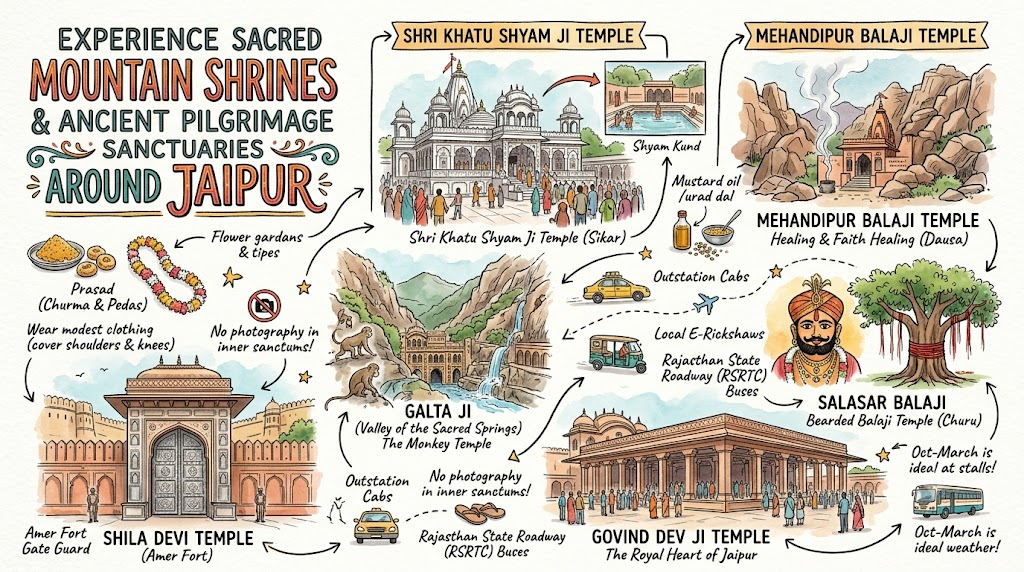
Shri Khatu Shyam Ji Temple
Rising out of the scrublands of Sikar, the sacred shrine of Khatu Shyam Ji represents one of northern India’s most emotionally charged devotional magnets. Dedicated to Barbarika, the heroic grandson of Bhima who sacrificed his head before the epic Mahabharata battle, this sanctum is revered by millions as the ultimate protector of the defeated and vulnerable.
The white marble structure features an ornate sanctum sanctorum adorned with gold inlay and brilliant flower tapestries that change daily. During evening prayers, thousands of pilgrims raise golden pennants, filling the vast courtyard with roaring chants that echo across the rural Rajasthani desert.
- Location: Khatu Village, Sikar District, approximately 80 km northwest of central Jaipur via NH 52.
- Why it is worth visiting: It is universally recognized as the prime shrine of Barbarika, housing the sacred head that witnessed the Kurukshetra war.
- Best things to do: Attend the mesmerizing floral evening Mangala Aarti, bathe feet in the sacred Shyam Kund, and carry a ceremonial Nishan flag across the perimeter.
- Best time to visit: Early morning on regular weekdays; winter months between November and February offer crisp weather.
- Ideal for whom: Devotees seeking wish-fulfillment, cultural photographers, and families.
- Travel tip: Completely avoid Ekadashi dates and Phalgun Mela unless you are prepared to navigate millions of walking pilgrims.
Mehandipur Balaji Temple
Tucked between the rocky ridges of Dausa, Mehandipur Balaji is a legendary temple renowned for extraordinary spiritual healing and ritual exorcisms. Dedicated to Lord Hanuman in his fierce, restorative incarnation, the temple operates with an uncompromising, somber energy unlike anywhere else in India.
The stone idol of Balaji, along with shrines dedicated to Bhairav Baba and Pretraj Sarkar, draws seekers from across the globe looking for deliverance from negative energies and spiritual afflictions. Moving through the dense incense smoke and ritual camphor fires evokes a profound humility and reverence for forces far beyond modern understanding.
- Location: Todabhim, Dausa District, approximately 105 km east of Jaipur on the Agra National Highway.
- Why it is worth visiting: Renowned worldwide as the supreme center for healing spiritual distress and physical illness through intense faith rituals.
- Best things to do: Offer the traditional black urad dal and mustard oil prasad, witness the intense evening Bhairav Aarti, and observe ancient tantric rituals from the perimeter galleries.
- Best time to visit: Early morning at 5:30 AM before the overwhelming noon crowds assemble.
- Ideal for whom: Seekers of esoteric spirituality, researchers of traditional Indian anthropology, and devout pilgrims.
- Travel tip: Never look back when leaving the inner shrine, do not accept food or prasad to take home, and empty all water bottles outside the village boundary.
Galta Ji (The Valley of the Sacred Springs)
Nestled inside a dramatic mountain crevice east of Jaipur, Galta Ji has served as an ascetic meditation retreat since the 16th century, founded by saint Payohari Krishnadas. Natural perennial mountain springs cascade down rocky canyon walls, filling a series of sacred masonry water tanks where devotees perform ceremonial cleansing.
The pink stone pavilions, carved arches, and ornate fresco paintings evoke a lost era of royal monastic patronage. As late afternoon sunlight hits the steep mountain gorge, the resident macaques drink beside holy ascetics, creating an ethereal, timeless vision of classical India.
- Location: Galta Gorge, Sisodia Rani Garden zone, roughly 10 km east of Jaipur city center.
- Why it is worth visiting: A hidden geological marvel where pure natural mountain springs emerge in the middle of semi-arid stone hills.
- Best things to do: Climb the historic stone staircases to the upper spring source, study the faded 18th-century miniature frescoes on the Zenana Kund pavilion, and watch sacred evening lamps reflect in the emerald pool.
- Best time to visit: Late afternoon between 3:30 PM and 6:00 PM for golden sunbeams filtering through the mountain gorge.
- Ideal for whom: Solo spiritual wanderers, architectural historians, and travel photographers.
- Travel tip: Keep shiny objects, loose bags, and food securely hidden inside zipped backpacks to avoid curious resident monkeys.
Salasar Balaji
Situated in the rustic heart of Churu, Salasar Balaji is home to a unique idol of Lord Hanuman, famously depicted with a full mustache and beard. Discovered miraculously by a local farmer while plowing his field in the 18th century, the shrine radiates protective, joyful faith.
The entire temple sanctuary is crafted with pristine white Makrana marble and radiant gold-leaf plating, maintaining clean pilgrim pathways despite high visitor numbers. The constant aroma of pure ghee churma being prepared in massive charity kitchens creates an atmosphere of warm hospitality and selfless service.
- Location: Salasar Town, Churu District, around 170 km northwest of Jaipur via Sikar Road.
- Why it is worth visiting: The only major temple in the country where Lord Hanuman is manifested with traditional regal facial hair.
- Best things to do: Tie a consecrated red sacred thread around the holy Banyan tree, offer freshly roasted savani churma, and sit during the midnight silent prayer session.
- Best time to visit: Late winter mornings between 7:00 AM and 10:00 AM.
- Ideal for whom: Generational families, peace seekers, and traditional devotional travelers.
- Travel tip: Book an online VIP Darshan token in advance through the official temple shrine portal to skip long general lines on Tuesdays.
Shila Devi Temple (Amer Fort)
Perched within the Jaleb Chowk courtyard of the colossal Amer Fort complex, Shila Devi is the fierce guardian goddess of the Kachwaha Rajput royal house. Carved from a single black stone slab brought from Bengal by Maharaja Man Singh I in 1604, the idol is cloaked in rich royal brocades and heavy silver ornamentation.
The entrance features heavy repoussé silver doors carved with the nine manifestations of Goddess Durga and the ten Mahavidyas. The scent of fresh red hibiscus and sandalwood paste contrasts against the raw military fortifications of the surrounding castle walls.
- Location: Inner Royal Quarters, Amer Fort, 11 km north of Jaipur center.
- Why it is worth visiting: The historical protector deity of Jaipur’s founding rulers, rich with royal martial lore and Bengal-Rajput syncretism.
- Best things to do: Admire the masterwork silver relief doorways, receive traditional ginger-laced charanamrit, and marvel at the antique hanging oil lamps.
- Best time to visit: Opening hour at 6:00 AM before the general tourist crowds access Amer Fort.
- Ideal for whom: History buffs, royal heritage lovers, and Shakta devotees.
- Travel tip: Shoes and all leather articles (including belts and wallets) must be deposited in lockers at the foot of the stairs before entering.
Govind Dev Ji Temple
Situated in the royal heart of the City Palace complex, Govind Dev Ji is the spiritual emperor of Jaipur; historically, the Maharajas considered themselves merely prime ministers ruling on the deity’s behalf. The main hall features an immense pillarless flat roof that holds an official architectural record.
During daily prayer sessions, thousands of local residents gather in absolute surrender. The ecstatic singing of traditional bhajans, accompanied by harmoniums and brass cymbals, offers an intoxicating glimpse into Jaipur’s living soul.
- Location: City Palace Compound, Jalebi Chowk, Old City Jaipur.
- Why it is worth visiting: The spiritual heartbeat of Jaipur where the historic deity idol from Vrindavan was enshrined by Sawai Jai Singh II.
- Best things to do: Participate in the raucous morning Mangala Aarti, watch the graceful curtain reveal, and stroll through the royal Kanak Vrindavan gardens nearby.
- Best time to visit: 4:30 AM for the dawn aarti or 7:00 PM for the sunset Sandhya prayer.
- Ideal for whom: Cultural music enthusiasts, urban travelers, and spiritual seekers.
- Travel tip: Park outside the walled city gates near Jalebi Chowk and take an electric rickshaw to avoid Old City gridlock.
Offbeat Exploration: Hidden Gems Tourists Miss
Surya Mandir Hilltop Hermitage
Perched on the highest mountain crest above Galta Ji, this small sun temple overlooks the entire Jaipur basin. While tourists rarely hike the steep stone track, visiting at dawn reveals sweeping panoramic views, cool mountain breezes, and the gentle chanting of solitary ascetics welcoming the rising sun.
Samode Haveli Shiva Shrine
Located in the quiet rural village of Samode just 42 km north of Jaipur, this ancient stone temple remains hidden beneath sprawling banyan trees and rocky cliffs. It offers complete silence, ancient monolithic lingams, and an authentic glimpse into untouched village spirituality away from highway traffic.
Charbhuja Mandir in Amber Old Town
Tucked in the forgotten backstreets beneath the imposing walls of Amer Fort lies this quiet 16th-century temple. Built before Jaipur itself was founded, its carved sandstone pillars, quiet courtyards, and ancient stone carvings see only a handful of respectful visitors each day.
Detailed Practical Guidance for Travelers
| Destination | Standard Entry Fee | General Timings | Best Local Food Options Nearby | Recommended Nearby Attractions |
| Khatu Shyam Ji | Free (VIP ₹200–₹500) | 4:30 AM – 12:30 PM, 4:00 PM – 10:00 PM | Shyam Rasoi (Desi Ghee Thali), Sikar sweets | Harshnath Temple, Jeen Mata Mandir |
| Mehandipur Balaji | Free entry | 5:00 AM – 11:30 AM, 5:00 PM – 9:00 PM | Highway dhabas along NH 21 (Fresh Peda) | Chand Baori Stepwell (Abhaneri) |
| Galta Ji | Free (Camera fee ₹50) | 5:30 AM – 7:30 PM | Jagannath Sharma Pakodi, Sisodia Garden Cafe | Sun Temple ridge, Sisodia Rani Garden |
| Salasar Balaji | Free entry | 4:00 AM – 10:00 PM | Traditional Churma Bhandars around town | Tal Chhapar Blackbuck Sanctuary |
| Shila Devi (Amer) | Free entry | 6:00 AM – 10:30 AM, 4:00 PM – 8:00 PM | 1135 AD (Fine dining), Amer street kachori | Amer Fort Palace, Panna Meena Stepwell |
| Govind Dev Ji | Free entry | Seven time-bound Aartis between 4:30 AM and 8:30 PM | LMB Johari Bazar, Rawat Pyaaz Kachori | City Palace, Jantar Mantar, Hawa Mahal |
Logistics & On-Ground Navigation
Local Transport Options
- Outstation Private Cabs: Renting a private sedan or SUV with a verified driver remains the most dependable option for long-range spiritual sites like Salasar, Khatu, and Mehandipur.
- Rajasthan State Roadways Buses (RSRTC): Frequent express buses depart from Sindhi Camp Central Bus Stand directly toward Sikar, Dausa, and Amer at budget-friendly fares.
- Indian Railways: Fast commuter trains link Jaipur Junction directly with Ringas Junction (the railhead for Khatu Shyam Ji) and Dausa railway station.
- App Cabs & Electric Rickshaws: Ideal for inner-ring destinations like Galta Ji, Amer, and Govind Dev Ji without the friction of parking.
Budget Planning
- Budget/Backpacking Tier (₹1,200 – ₹2,200/day): Stay in registered temple dharamshalas or backpacker dorms near Station Road, travel via state buses or shared jeeps, eat simple ashram langar and roadside dhabas, and keep souvenirs to sacred threads and small wooden beads.
- Mid-Range/Comfort Tier (₹4,500 – ₹8,500/day): Stay in restored heritage havelis or comfortable three-star hotels, book air-conditioned private taxis for outstation rural runs, dine at established heritage vegetarian eateries, and purchase hand-carved stone idols and pure silver amulets.
Safety and Inclusivity Tips
- Families: Keep children close in the narrow, moving crowd lanes of Khatu Shyam Ji; utilize dedicated senior citizen ramps available near the side entrance ramps.
- Couples: Maintain modest behavioral etiquette in rural temple courtyards, keep shoulders and knees covered, and refrain from public displays of affection.
- General Safety: Wear secure footwear that slips off quickly at shoe stalls, secure wallets in zippered interior pockets, and politely decline pushy spiritual brokers promising “instant direct darshan.”
Strategic Travel Planning Guardrails
Travel Planning Tips for Jaipur Pilgrimages
- Honor Traditional Dress Codes: Dress conservatively in loose, breathable linens or traditional Indian wear; avoid shorts, sleeveless shirts, or revealing athletic wear inside holy sanctums.
- Carry Crisp Physical Cash: Rural temple towns frequently experience mobile network drops that disable digital QR-code payments at flower stalls and prasad counters.
- Hydrate with Bottled Water: Countryside water coolers can carry high fluoride or salinity levels; carry sealed, reusable mineral water bottles.
- Time the Lunar Cycles: Be mindful of the lunar calendar; Ekadashi, Purnima, and Navratri trigger massive influxes of hundreds of thousands of pilgrims.
- Remove All Leather: Do not carry leather belts, animal-hide wallets, or leather-bound cameras into inner temple sanctums.
Common Mistakes to Avoid
- Overloading Far-Flung Routes: Don’t attempt to combine Mehandipur Balaji in the east and Khatu Shyam Ji in the west on the same day; it results in grueling highway fatigue.
- Taking Untested Shortcuts: Avoid isolated desert tracks after dusk; stick to illuminated national highways even if maps show minor shortcuts.
- Ignoring Local Temple Customs: Do not attempt photography inside active sanctums where signboards strictly prohibit electronic devices.
- Skipping Prasad Offerings: Don’t pass up traditional dry prasad like mishri-mawa or roasted lentils; these temple offerings are safe and culturally meaningful.
- Engaging Street Middlemen: Never hand money to unverified individuals offering to jump prayer queues; always use official temple trust counters.
Suggested Itinerary Blueprints
Day Quick Dash (Royal Foothill Pilgrimage)
- Target Audience: Busy business travelers or day-trippers seeking core spiritual blessings.
- Morning (5:00 AM – 8:30 AM): Attend the dawn Mangala Aarti at Govind Dev Ji, followed by fresh kachoris at Badi Chaupar.
- Mid-day (9:00 AM – 1:00 PM): Ascend Amer Fort to receive blessings at Shila Devi Temple before midday closing.
- Afternoon (3:30 PM – 6:30 PM): Conclude with a serene journey into the Galta Ji gorge as twilight lamps illuminate the natural stone pools.
Day Deep-Dive (Outstation Divine Circuit)
- Day 1 (Western Sacred Run): Depart Jaipur at dawn for Khatu Shyam Ji (80 km). Complete morning prayers, visit Shyam Kund, proceed to Harshnath temple mountain for sunset, and return to Jaipur by night.
- Day 2 (Eastern Mystic Route): Head east on the Agra highway to Mehandipur Balaji (105 km). Experience the intense morning rituals, stop by the historic Chand Baori stepwell in Abhaneri for architectural grounding, and end with sunset at Galta Ji.
Complete Weekend Travel Plan (The Grand Sacred Triangle)
- Friday Evening: Check into a central heritage haveli, attend the Sandhya Aarti at Govind Dev Ji, and enjoy a traditional Rajasthani dinner at LMB.
- Saturday: Full-day western rural expedition. Early departure toward Salasar Balaji (170 km), afternoon prayers, followed by an evening visit to Khatu Shyam Ji on the return leg.
- Sunday: Relaxed heritage pilgrimage. Morning blessings at Shila Devi in Amer, quiet contemplative hike to the Sun Temple ridge, and a serene evening ritual beside the emerald spring pools of Galta Ji.
Common Tourist Mistakes to Avoid
- Geographic Blunders: Trying to combine Mehandipur Balaji in the east with Salasar Balaji in the northwest on the same calendar day; the distances are too vast and exhausting.
- Commercial Traps: Spending daytime hours in overpriced highway craft emporiums rather than enjoying the tranquil, contemplative atmosphere of authentic temple courtyards.
- Neglecting Alternative Sacred Zones: Overlooking peaceful sites like Galta Ji and the Amer ridge while spending all available hours in congested highway temple queues.
- Transport Overpayment: Hiring unmetered city autos for long rural highway routes instead of securing fixed-fare tourist taxis through official travel desks or verified cab platforms.
- Luxury Dining Bias: Eating only in western-style chain hotels and skipping legendary roadside dhabas serving fresh hand-churned buttermilk, steaming bajra rotis, and pure desi ghee sweets.
Frequently Asked Questions
1. What is the most revered spiritual temple located in the immediate vicinity of Jaipur?
Govind Dev Ji, situated inside the City Palace compound, is regarded as Jaipur’s supreme deity. The historic idol was brought from Vrindavan by Maharaja Sawai Jai Singh II, establishing the god as the true ruler of the Pink City. It offers seven scheduled daily prayer sessions that draw thousands of devout locals.
2. How far is Khatu Shyam Ji from Jaipur, and what is the best way to reach it?
Khatu Shyam Ji is situated roughly 80 kilometers northwest of central Jaipur in the Sikar district. The most convenient route is via NH 52 by hiring a private taxi, which takes approximately 1.5 to 2 hours. Alternatively, travelers can take a commuter train to Ringas Junction and hire an e-rickshaw for the remaining 17 kilometers.
3. What specific clothing etiquette is expected when visiting spiritual temples around Jaipur?
Modest, respectful attire is mandatory at all sacred sites across Rajasthan. Both men and women should wear clothing that comfortably covers shoulders, chests, and knees, such as loose linen trousers, kurtas, or long skirts. Shoes and leather accessories including belts, wallets, and straps must be removed before entering the inner sanctum.
4. Are digital payments through UPI and credit cards accepted at rural pilgrimage shrines?
While official temple trust offices and registered VIP darshan counters accept digital payment cards and UPI, cellular connectivity in rural lanes is notoriously inconsistent. Pilgrims should always carry sufficient physical cash in small denominations to purchase traditional flower garlands, sacred thread, and prasad from local family-run stalls.
5. Why are monkeys so prevalent at Galta Ji, and is the temple safe for travelers?
Galta Ji is situated inside a natural mountain gorge populated by large native troops of rhesus macaques and gray langurs, earning it the nickname “The Monkey Temple.” It is safe provided travelers avoid holding loose food, sugary beverages, or unzipped bags in plain sight, and treat the animals with calm, non-confrontational respect.
6. What makes the rituals at Mehandipur Balaji so unique compared to other temples?
Mehandipur Balaji is globally recognized for intensive faith-healing and exorcism rituals dedicated to Lord Hanuman, Bhairav Baba, and Pretraj Sarkar. Unlike standard decorative temples, its atmosphere is intensely solemn, with pilgrims seeking relief from psychological distress and negative spiritual energies through strict traditional penance rites.
7. Can non-Hindu travelers visit temples like Govind Dev Ji, Galta Ji, and Amer’s Shila Devi?
Yes, visitors of all cultural and religious backgrounds are warmly welcomed into the public prayer courtyards and architectural spaces of these temples. Non-Hindus are simply expected to observe core sanctuary rules, such as removing shoes, dressing modestly, maintaining quiet decorum, and refraining from touching inner sanctum altars.
8. Which days of the week experience the highest pilgrim foot traffic at Hanuman temples?
Tuesdays and Saturdays witness the largest influx of devotees at all regional shrines dedicated to Lord Hanuman, including Mehandipur Balaji and Salasar Balaji. To enjoy a peaceful, quiet darshan without standing in massive queues for several hours, travelers should plan their visits for Wednesday or Thursday mornings.
9. Is photography permitted inside the sacred temples around the Jaipur region?
Photography is strictly forbidden inside the inner sanctums and prayer halls of working temples like Khatu Shyam Ji, Salasar Balaji, and Shila Devi. However, travelers are generally allowed to photograph outer courtyard architecture, stone archways, and mountain views at historic sites like Galta Ji upon paying a nominal camera fee.
10. How can older travelers or travelers with limited mobility navigate rural pilgrimage sites?
Major shrines like Khatu Shyam Ji and Salasar Balaji provide designated accessible pathways, ramps, and battery-powered golf carts from distant parking zones to the main security gates. Families traveling with elderly relatives should register at the official temple trust help desks to request wheelchair assistance and priority darshan passes.
11. What is the traditional prasad offered to the deity at Salasar Balaji?
The signature offering at Salasar Balaji is churma, a rich, sweet Rajasthani preparation made from coarsely ground wheat flour, pure desi ghee, and jaggery or sugar. Local halwais cook this fresh daily in giant brass cauldrons, allowing devotees to purchase consecrated boxes to take home to friends and family.
12. When is the best time of year to undertake an extensive temple tour around Jaipur?
The winter season spanning late October through early March is the optimal time for extensive temple touring across eastern Rajasthan. Temperatures during these months range between comfortable daytime highs of 20°C and cool night temperatures, making long highway drives, outdoor hill climbs, and stone courtyard walking comfortable and pleasant.
Conclusion
Stepping away from Rajasthan’s commercial tourism circuits to walk the sacred temple grounds around Jaipur rewards the soul with a profound sense of inner stillness and connection. Surrounded by towering desert hills, ringing bells, and centuries of unwavering faith, a traveler ceases to be a mere spectator and becomes part of a timeless spiritual tapestry.
