Introduction
Escape the relentless rush of crowded mainstream resorts and step into a living canvas of royal legacy. Jaipur captivates travelers through its magnificent pink sandstone facades, echoing corridors, and vibrant cultural heritage. Every winding alleyway whispers incredible tales of chivalry, artistic mastery, and centuries-old traditions that remain thoroughly alive today.
Why Jaipur is a must-visit city
Jaipur stands as a foundational chapter in world travel because it perfectly balances ancient planning with vibrant modern energy. Conceived in 1727 by Maharaja Sawai Jai Singh II, the city showcases brilliant Vastu Shastra principles combined with classic grid layouts. In addition, smooth national highways, frequent express trains, and a well-connected international airport make traveling here exceptionally easy for families, solo wanderers, and luxury seekers alike.
Beyond its architectural marvels, the city serves as the ultimate gateway to Rajasthan’s wider golden circuit. Visitors seamlessly transition from bustling bazaars brimming with textiles to peaceful rooftop dining overlooking illuminated fortresses. Consequently, every corner presents a captivating mix of royal grandeur, artistic craftsmanship, and mouthwatering local culinary traditions.
| Category | Details |
|---|---|
| Location | Rajasthan, Western India |
| Primary Vibe | Royal Heritage, Vibrant Bazaars, Architectural Splendor |
| Ideal Trip Duration | 2 to 3 Days |
| Best Travel Season | October to March |
Best Places or Experiences
Amer Fort
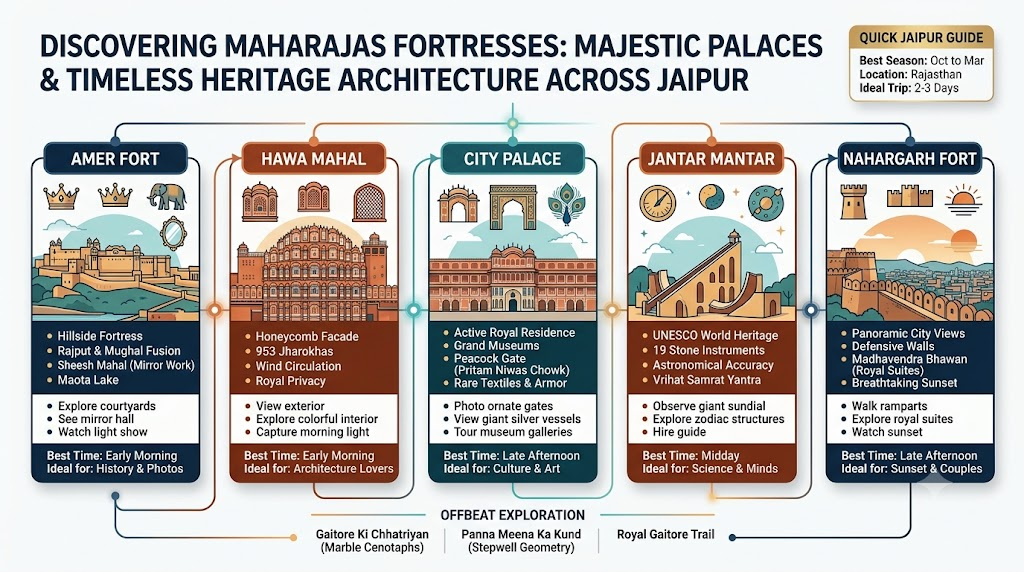
Amer Fort reigns supreme over the Aravalli hills, displaying a staggering fusion of Rajput and Mughal architecture. Furthermore, the complex features sprawling courtyards, intricate marble carvings, and grand gateways that leave visitors utterly spellbound.
As you wander through the central assembly halls, light reflects brilliantly across millions of tiny mirrored tiles inside the Sheesh Mahal. Moreover, walking along these elevated stone ramparts offers sweeping views of Maota Lake shimmering gently below.
- Location: Amer District, approximately 11 km north of the main city center
- Why it is worth visiting: Magnificent hillside fortress featuring breathtaking mirror work and historical royal quarters
- Best things to do: Explore the dazzling Sheesh Mahal, admire the intricate Ganesh Pol entry gate, and watch the evening light show
- Best time to visit: Early morning between 8:00 AM and 10:00 AM to avoid large crowds
- Ideal for whom: History enthusiasts, photographers, and families
- Travel tip: Wear sturdy walking shoes because the stone pathways can be steep and slick
Hawa Mahal
Hawa Mahal stands as an iconic symbol of ingenuity with its stunning five-story honeycombed facade. Built in 1799, this unique structure allowed royal women to observe street festivals without being seen from the outside.
Furthermore, its delicate lattice windows allow cool breezes to circulate continuously throughout the interior chambers. Consequently, stepping inside offers a fascinating perspective on historical royal privacy and smart atmospheric design.
- Location: Johari Bazaar Road, located directly within the Old City core
- Why it is worth visiting: World-famous honeycomb facade boasting 953 meticulously carved Jharokhas
- Best things to do: View the exterior facade from street level, explore the colorful stained glass inside, and capture morning reflections
- Best time to visit: Early morning around 7:30 AM when sunlight illuminates the pink sandstone facade
- Ideal for whom: Architecture lovers, solo travelers, and culture hunters
- Travel tip: Cross the street to nearby rooftop cafes for the best photography angles of the full exterior
City Palace
City Palace remains a magnificent active royal residence located right in the heart of the old city. In addition, the grand complex houses incredible museums, vast courtyards, and beautiful pavilions showcasing historic royal armor and textiles.
Furthermore, the famous Peacock Gate inside the Pritam Niwas Chowk highlights breathtaking craftsmanship representing different seasons. Therefore, exploring these paved courts provides an intimate glimpse into the royal family’s enduring legacy.
- Location: Tulsi Marg, Gangori Bazaar, Central Old City
- Why it is worth visiting: Grand active royal residence displaying rare textiles, weapons, and majestic doorways
- Best things to do: Photograph the four ornate seasonal gates, view giant silver water vessels, and tour museum galleries
- Best time to visit: Late afternoon around 3:00 PM for cooler temperatures and pleasant light
- Ideal for whom: Culture enthusiasts, history buffs, and art connoisseurs
- Travel tip: Purchase the comprehensive ticket option if you wish to access the private palace chambers inside
Jantar Mantar
Jantar Mantar stands as a remarkable UNESCO World Heritage site featuring nineteen architectural astronomical instruments built during the early eighteenth century. Furthermore, these massive stone structures accurately measure time, predict eclipses, and track celestial bodies with stunning accuracy.
Walking among these giant geometric shapes feels like stepping into an open-air historical scientific laboratory. Moreover, seeing the world’s largest stone sundial in active operation highlights the amazing genius of ancient Indian astronomy.
- Location: Adjacent to the City Palace entrance, Old City
- Why it is worth visiting: Extraordinary world heritage astronomical observatory with functioning stone instruments
- Best things to do: Observe the giant Vrihat Samrat Yantra sundial, explore zodiac structures, and hire a certified local guide
- Best time to visit: Midday around 12:00 PM when sunlight strikes the sundials directly for accurate readings
- Ideal for whom: Science buffs, curious minds, and student travelers
- Travel tip: Hiring an official guide is essential to understanding how these complex stone instruments actually function
Nahargarh Fort
Nahargarh Fort stands proudly along the edge of the Aravalli hills, offering majestic defensive walls and sweeping panormas. Furthermore, it originally formed a formidable defensive ring around the city alongside Amer Fort and Jaigarh Fort.
In addition, the Madhavendra Bhawan within the fort features connected suites designed for the Maharaja and his queens. Today, visitors gather along these high stone battlements to watch breathtaking golden sunsets over the vast urban landscape.
- Location: Aravalli Hills, roughly 15 km from the city center via a winding hill road
- Why it is worth visiting: Spectacular panoramic views over the entire pink city and impressive defensive architecture
- Best things to do: Walk along the high stone ramparts, explore the colorful royal suites, and watch the city light up at night
- Best time to visit: Late afternoon from 4:30 PM onward to witness the sunset
- Ideal for whom: Sunset lovers, couples, and photography enthusiasts
- Travel tip: Book your return cab in advance because securing local transport late at night on the hill can be challenging
Offbeat Exploration: Hidden Gems Tourists Miss
Gaitore Ki Chhatriyan
Located at the foothills of Nahargarh Fort, this peaceful complex serves as the royal cremation ground for Jaipur’s rulers. Furthermore, delicate marble cenotaphs display incredible carving work featuring ornate domes and detailed pillars. Because large tour groups rarely visit, the serene gardens offer a quiet retreat from busy market streets.
Panna Meena Ka Kund
This stunning sixteenth-century stepwell sits quietly near Amer Fort, displaying a symmetrical geometric pattern of stone stairs. Furthermore, local residents historically gathered here for water collection and social meetings. The brilliant crisscross layout creates marvelous shadow effects, making it a fantastic spot for quiet reflection and creative photography.
Royal Gaitore Offbeat Trail
Tucked away along the hillsides, this quiet hiking path leads adventurers through native flora up toward scenic hilltop structures. Moreover, walking this trail reveals ruined watchtowers and breathtaking vistas far removed from commercial crowds. Consequently, nature lovers get to experience the rugged natural landscape surrounding the historic valley.
Detailed Practical Guidance for Travelers
| Destination | Standard Entry Fee | General Timings | Best Local Food Options Nearby | Recommended Nearby Attractions |
|---|---|---|---|---|
| Amer Fort | INR 500 (Foreigners) / INR 100 (Locals) | 8:00 AM – 5:30 PM, 6:30 PM – 9:15 PM | Traditional Rajasthani Thali near Amer town | Panna Meena Stepwell, Jaigarh Fort |
| Hawa Mahal | INR 200 (Foreigners) / INR 50 (Locals) | 9:00 AM – 5:00 PM | Local rooftop cafes facing the facade | Johari Bazaar, Bapu Bazaar |
| City Palace | INR 700 (Foreigners) / INR 200 (Locals) | 9:30 AM – 5:00 PM, 7:00 PM – 10:00 PM | Authentic Kachori stalls near Gangori Gate | Jantar Mantar, Govind Dev Ji Temple |
| Jantar Mantar | INR 200 (Foreigners) / INR 50 (Locals) | 9:00 AM – 5:00 PM | Local street snacks and lassi stands | City Palace, Tripolia Bazaar |
| Nahargarh Fort | INR 200 (Foreigners) / INR 50 (Locals) | 10:00 AM – 10:00 PM | Forttop cafe serving light snacks | Jaigarh Fort, Padaao Sunset Point |
Logistics & On-Ground Navigation
Local Transport Options
- Auto-Rickshaws & E-Rickshaws: Ideal for quick hops between tight alleyways in the Old City. Always fix rates beforehand or insist on using ride-hailing applications.
- Metro Rail: Modern, clean, and extremely budget-friendly for traveling across key east-west city corridors.
- Cab Rentals: Hiring a private cab for the entire day works best when visiting distant hilltop forts like Amer, Jaigarh, and Nahargarh.
- Public Buses: Low-cost options available, though they can get very crowded during peak morning and evening commuting hours.
Budget Planning
- Backpacker Tier: Estimate around INR 1,200 to INR 2,000 per day. This easily covers hostel stays, street food meals, public bus transit, and entry to major public monuments.
- Comfort / Mid-Range Tier: Budget around INR 4,500 to INR 8,000 per day. This covers heritage hotel accommodation, sit-down restaurant dining, private cabs, and guided museum tours.
Safety and Inclusivity Tips
- For Families: Well-paved main palace grounds accommodate strollers easily, but watch out for steep steps at stepwells and old fort entrances.
- For Couples: Enjoy peaceful evening walks around Jal Mahal or rooftop dining, while keeping public displays of affection subtle out of respect for local customs.
- General Safety: Keep belongings secure in busy street bazaars and drink bottled water to ensure a comfortable journey.
Strategic Travel Planning Guardrails
Travel Planning Tips for Jaipur
- Book your winter accommodations early because heritage hotels fill up quickly between November and February.
- Carry small cash currency notes alongside digital payment apps for smooth street shopping in old bazaars.
- Respect local temple etiquette by removing footwear and dressing modestly before entering sacred spaces.
- Wear breathable cotton clothing and lightweight head covers to stay cool while exploring open courtyards during daytime hours.
- Keep hydrated with fresh coconut water and local buttermilk throughout your daily walking tours.
Common Mistakes to Avoid
- Do not rush through Amer, Jaigarh, and Nahargarh Forts in a single morning, as each requires ample exploration time.
- Avoid buying high-value gems or silver items without proper authenticity certification from verified government outlets.
- Do not rely solely on credit cards when exploring traditional craft stalls in deep interior markets.
- Avoid planning outdoor monument walks during scorching midday summer heat.
- Do not miss out on authentic street-side culinary spots just because hotel dining options feel convenient.
Suggested Itinerary Blueprints
1 Day Quick Dash (The Royal Highlights)
- Morning: Begin early at Hawa Mahal for sunrise photos, followed immediately by a detailed tour of the City Palace and Jantar Mantar.
- Afternoon: Head north to explore Amer Fort and admire its majestic architecture before grabbing a quick local lunch.
- Evening: Drive up to Nahargarh Fort to catch panoramic views of the city lights before heading home.
2 Day Deep-Dive (Heritage & Markets)
- Day 1: Explore the historic Old City highlights including Hawa Mahal, City Palace, Jantar Mantar, and spend the evening shopping in Johari Bazaar.
- Day 2: Visit Amer Fort, Panna Meena Stepwell, and Jaigarh Fort in the morning. Later, explore Albert Hall Museum and end with sunset at Nahargarh Fort.
Complete Weekend Travel Plan (The Ultimate Cultural Loop)
- Friday: Arrive in the city, check into a heritage hotel, and enjoy a relaxed evening dinner overlooking the illuminated Jal Mahal.
- Saturday: Dedicate your full day to Amer Fort, Gaitore Ki Chhatriyan, and local textile shopping in Bapu Bazaar.
- Sunday: Morning visit to City Palace and Jantar Mantar, lunch at an authentic eatery, and an afternoon craft tour before departure.
Common Tourist Mistakes to Avoid
- Geographic Blunders: Attempting to visit Nahargarh Fort and distant Southern city attractions on the same morning wastes precious hours in traffic.
- Commercial Traps: Spending hours in modernized shopping malls rather than exploring authentic, atmospheric craft bazaars deprives you of real heritage culture.
- Neglecting Modern Zones: Forgetting to explore peaceful modern areas like C-Scheme, which offer lovely art galleries, independent cafes, and green parks.
- Transport Overpayment: Accepting initial inflated auto fares without cross-referencing prices on popular ride-sharing mobile apps leads to overspending.
- Luxury Dining Bias: Sticking exclusively to hotel buffets means missing out on legendary local treats like Pyaz Kachori and Ghewar.
Frequently Asked Questions
- Which months provide the pleasant weather for exploring regional outdoor forts comfortably?
October through March offers cool, pleasant weather ideal for exploring vast stone fortresses and bustling outdoor markets without dealing with intense heat.
- How many days are necessary to comfortably visit the major historical sites?
Spending three full days allows you to comfortably explore the major forts, royal palaces, hidden stepwells, and historic street markets without rushing.
- Are private cabs recommended over local transport for visiting hilltop forts?
Yes, hiring a private cab for the day provides reliable transportation when navigating steep hill roads leading up to Amer, Jaigarh, and Nahargarh.
- Is street food safe to eat for international visitors in markets?
Eating freshly cooked hot food from clean, highly popular local vendor stalls is generally safe and offers an authentic taste of local cuisine.
- What specific traditional handicrafts are famous for purchasing in local bazaars?
The region is world-famous for handcrafted block-printed textiles, blue pottery, gemstone jewelry, silver ornaments, and traditional leather footwear.
- Are photographers allowed to bring professional camera gear inside heritage palaces?
Most monuments permit standard cameras, though commercial filming gear and drone equipment require advance official permissions and extra fees.
- Do major monuments offer discount tickets for students or senior citizens?
Yes, official government monuments provide discounted admission tickets upon presenting valid student photo identification or senior citizen identity proof.
- What dress code should visitors follow when entering active religious temples?
Dress modestly by covering shoulders and knees, and remember to remove leather accessories and footwear before stepping into temple premises.
- Can visitors access the interior living quarters of the City Palace?
Yes, special premium tour tickets allow access to the exquisite private palace chambers, including the famous blue room Chandra Mahal.
- How far is Amer Fort located from the main central city area?
Amer Fort sits approximately 11 kilometers north of the main city center, taking around 25 to 30 minutes by car depending on traffic conditions.
- Are guided walking tours useful for navigating the historic old bazaars?
Guided walking tours provide incredible historical context, helping you navigate winding alleyways effortlessly while discovering hidden artisan workshops.
- What local drink helps keep travelers refreshed during sunny afternoon sightseeing tours?
Freshly prepared chilled buttermilk infused with roasted cumin, locally known as Chaach, serves as a delicious and refreshing way to stay hydrated.
Conclusion
Traveling through this royal paradise rewards you with far more than simple holiday snapshots; it offers a profound journey into living history. Walking along elevated fort ramparts and connecting with master artisans reveals the timeless soul of India’s heritage. Choose this extraordinary journey, and allow the warm royal legacy to leave an indelible mark on your heart.
