Introduction
Forget the sterile, crowded resort strips and cookie-cutter tourist traps. Jaipur offers a sensory immersion directly into living heritage, where ancient craftsmanship thrives along labyrinthine lanes.
Stepping into the heart of the walled Pink City reveals an authentic rhythm unchanged for centuries. Here, royal history is not merely preserved behind glass; it breathes through bustling bazaars, spice-scented air, and terracotta-hued archways.
Why Jaipur is a must-visit city
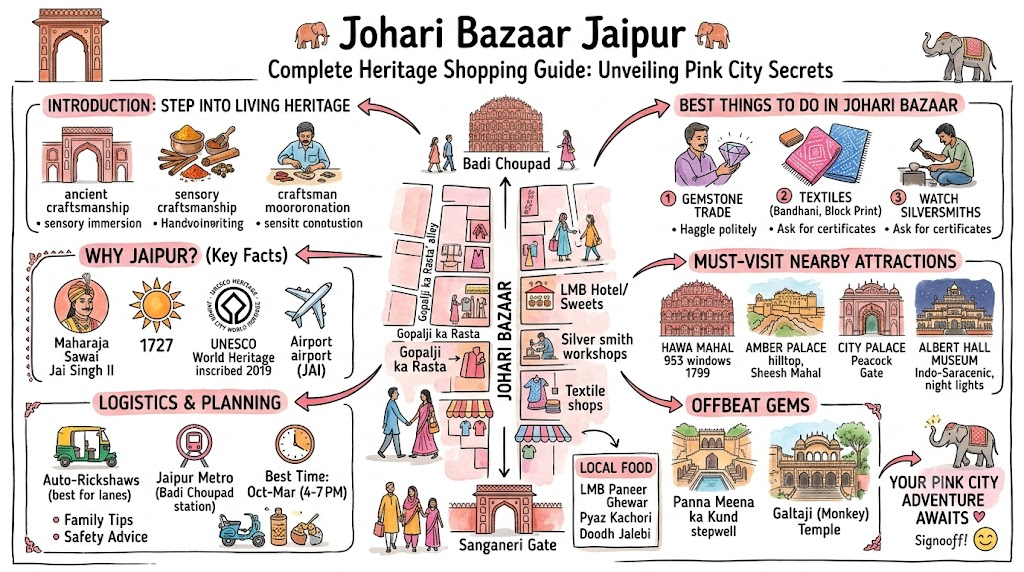
Jaipur stands as a monumental chapter in global travel, serving as the crown jewel of Rajasthan’s Golden Triangle. Planned meticulously in 1727 by Maharaja Sawai Jai Singh II, the city blends ancient Vastu Shastra design principles with grand Rajput and Mughal architecture. Seamlessly connected via the Jaipur International Airport, modern expressways, and extensive rail networks, it caters effortless access to luxury seekers, backpackers, and culture enthusiasts alike.
The primary travel circuit spirals outward from the historic walled core to the rugged Aravalli hills, encircling magnificent forts and opulent palaces. Traveling here is an effortless transition between timeless imperial grandeur and vibrant local markets.
| Key Fact | Details |
| State & Region | Rajasthan, Northern India |
| Founding Year | 1727 by Maharaja Sawai Jai Singh II |
| UNESCO World Heritage Status | Jaipur City (Inscribed 2019) |
| Primary Architectural Style | Indo-Islamic & Rajput Fusion |
| Nearest Airport | Jaipur International Airport (JAI) |
| Ideal Trip Duration | 2 to 4 Days |
Best Places or Experiences
Johari Bazaar Gem Street
Johari Bazaar is the beating heart of Jaipur’s world-famous jewelry trade, where master artisans cut, polish, and set precious gemstones using techniques passed down across generations. Walking through these arcade-lined corridors reveals a glittering world of authentic Meenakari enamelwork and royal Kundan jewelry crafted right before your eyes.
Beyond the sparkling gems, this vibrant avenue is renowned for vibrant hand-blocked textiles, bandhani sarees, and traditional silver ornaments. The electric energy, coupled with the rich aroma of local street delicacies, creates an irreplaceable cultural shopping experience.
- Location: Old City, inside the Sanganeri Gate perimeter, 12 km from Jaipur Junction Railway Station.
- Why it is worth visiting: Unmatched epicenter for authentic Kundan jewelry, Meenakari craft, and historic gemstone trading.
- Best things to do: Explore Gopalji ka Rasta for raw gemstones, shop for traditional Bandhani textiles, and watch silversmiths at work.
- Best time to visit: October to March, ideally late afternoon between 4:00 PM and 7:00 PM when lights illuminate the shops.
- Ideal for whom: Fashion enthusiasts, culture seekers, jewelry collectors, and wedding shoppers.
- Travel tip: Always haggle politely in open markets, but insist on official certificates when purchasing high-value gemstones.
Hawa Mahal
Built in 1799 by Maharaja Sawai Pratap Singh, the Palace of Winds is an extraordinary architectural marvel designed to resemble the crown of Lord Krishna. Its honeycombed hive of 953 delicate lattice-screened windows allowed royal ladies to observe daily street pageantry unseen from the outside.
Constructed from red and pink sandstone, the structure functions as an ancient air-conditioning system, channeling cool breeze through its intricate chambers. Standing inside offers a breathtaking vantage point directly overlooking the bustling streets below.
- Location: Badi Choupad, Pink City, 5 km from city center.
- Why it is worth visiting: Iconic five-story facade featuring world-class Rajput lattice stonework.
- Best things to do: Photograph the exterior from street level, climb to the top chambers for city views, and inspect the ancient ventilation shafts.
- Best time to visit: Early morning around sunrise when golden light illuminates the pink sandstone facade.
- Ideal for whom: Architecture aficionados, historians, and photography enthusiasts.
- Travel tip: Cross the street to the rooftop cafes directly opposite Hawa Mahal for the best panoramic photos.
Amber Palace
Perched dramatically atop the craggy Cheel ka Teela hills, Amber Fort combines fortifying stone ramparts with delicate artistic interiors. Built primarily by Raja Man Singh I in 1592, the palace complex reflects a flawless synthesis of Hindu and Mughal aesthetic designs.
The legendary Sheesh Mahal (Mirror Palace) inside features thousands of concave mirrors that reflect light into a sparkling starry display. Wander through sprawling courtyards, marble halls, and elevated gardens overlooking the serene Maota Lake.
- Location: Amer district, 11 km north of Jaipur center.
- Why it is worth visiting: A UNESCO World Heritage fort featuring breathtaking mirror mosaic art and hilltop views.
- Best things to do: Marvel at the Sheesh Mahal, attend the evening light and sound show, and explore the secret underground tunnels.
- Best time to visit: 8:00 AM for quiet exploration before crowds arrive, or sunset for cooler weather.
- Ideal for whom: History buffs, family travelers, and landscape photographers.
- Travel tip: Skip line congestion by pre-booking digital entry tickets online prior to arriving at the gate.
City Palace
Occupying a vast complex in the heart of the Old City, the City Palace remains the ceremonial seat of the Maharaja of Jaipur. Founded alongside the city itself, the complex displays an inspiring transition from ancient royal residence to living museum heritage.
The striking Pritam Niwas Chowk features four beautifully decorated courtyard gates representing the four distinct seasons. Inside, museums house rare weaponry, royal garments, and massive silver urns once recorded as the largest in the world.
- Location: Jaleb Chowk, Old City, near Hawa Mahal.
- Why it is worth visiting: Living royal residence offering access to regal court history and exquisite courtyard art.
- Best things to do: Photograph the Peacock Gate, admire royal costumes in the museum, and tour the opulent Chandra Mahal rooms.
- Best time to visit: 9:30 AM upon opening or early afternoon on weekdays.
- Ideal for whom: Royal history buffs, art connoisseurs, and architecture lovers.
- Travel tip: Premium tickets give exclusive access to upper private chambers including the famous Blue Room (Sukh Niwas).
Albert Hall Museum
Situated within the lush Ram Niwas Garden, Albert Hall Museum is the oldest museum in Rajasthan, serving as a masterpiece of Indo-Saracenic architecture. Designed by Sir Samuel Swinton Jacob, it opened its doors in 1887 as a public art center.
The museum houses an extensive collection of artifacts, including Egyptian mummies, Persian carpets, delicate ivory carvings, and antique metalware. At night, vibrant yellow and purple floodlights transform the exterior into a glowing fairytale castle.
- Location: Ram Niwas Garden, Hospital Road, 4 km from Jaipur Junction.
- Why it is worth visiting: Premier collection of regional industrial arts and rare global antiquities under one roof.
- Best things to do: View the Egyptian mummy, admire ancient Persian carpets, and photograph the illuminated facade at night.
- Best time to visit: Night visit between 7:00 PM and 10:00 PM when lights create a majestic atmosphere.
- Ideal for whom: Art lovers, students, evening strollers, and history scholars.
- Travel tip: Purchase a composite monument ticket here to gain discounted entry across multiple city attractions.
Offbeat Exploration: Hidden Gems Tourists Miss
Panna Meena ka Kund
Tucked near Amber Fort lies this breathtaking 16th-century stepwell, famous for its symmetrical crisscross staircases. Built as a community water catchment and gathering spot, its geometric precision offers a mesmerising visual pattern for travelers looking beyond mainstream fort itineraries.
Galtaji Temple Complex
Nestled inside a narrow mountain pass, Galtaji is an ancient Hindu pilgrimage site built around natural freshwater springs. Known locally as the Monkey Temple due to resident macaque bands, its pink stone pavilions and sacred water tanks offer an authentic spiritual escape from city chatter.
Purohit Ji Ki Haveli
Located away from heavy crowds, this serene haveli features beautifully preserved frescoes depicting traditional Rajasthani folklore and court life. It provides an intimate look into traditional townhouse architecture without commercial distractions.
Detailed Practical Guidance for Travelers
| Destination | Standard Entry Fee | General Timings | Best Local Food Options Nearby | Recommended Nearby Attractions |
| Johari Bazaar | Free Access | 10:00 AM – 9:00 PM | Laxmi Mishthan Bhandar (LMB) | Hawa Mahal, Bapu Bazaar |
| Hawa Mahal | ₹50 (Indian), ₹200 (Foreign) | 9:00 AM – 5:00 PM | Wind View Cafe, Tattoo Cafe | City Palace, Jantar Mantar |
| Amber Palace | ₹100 (Indian), ₹500 (Foreign) | 8:00 AM – 5:30 PM | 1135 AD, Cafeteria | Jaigarh Fort, Panna Meena Kund |
| City Palace | ₹300 (Indian), ₹1000 (Foreign) | 9:30 AM – 5:00 PM | Palace Cafe, The Jaipur Cafe | Jantar Mantar, Govind Dev Ji Temple |
| Albert Hall Museum | ₹40 (Indian), ₹300 (Foreign) | 9:00 AM – 5:00 PM, 7:00 PM – 10:00 PM | Masala Chowk | Ram Niwas Garden, Central Park |
Logistics & On-Ground Navigation
Local Transport Options
- Auto-Rickshaws & E-Rickshaws: Ideal for navigating narrow lanes inside the Pink City bazaars. Always settle rates beforehand or use ride-hailing applications.
- Jaipur Metro: Fast, eco-friendly option connecting Mansarovar to Badi Choupad, dropping you directly in the heart of Johari Bazaar.
- Taxis & Rental Cars: Best for day trips up the Aravalli hills to Amber, Jaigarh, and Nahargarh Forts.
Budget Planning
- Backpacker / Budget Tier: ₹1,200 – ₹2,500 per day. Covers hostel stays, street food meals, public transport, and basic monuments.
- Mid-Range / Comfort Tier: ₹4,500 – ₹9,000 per day. Covers heritage hotel stays, sit-down dining, private auto/cab rides, and comprehensive monument entries.
Safety and Inclusivity Tips
- Families: Stick to paved walking tracks inside forts, carry hydration kits, and utilize battery-operated carts at Amber Fort for elderly members.
- Couples: Respect local customs by dressing conservatively when visiting temple zones and old city residential quarters.
- General Safety: Keep personal belongings secure in dense market crowds and rely on registered guides carrying official government identity cards.
Strategic Travel Planning Guardrails
Travel Planning Tips for Jaipur
- Book heritage hotels months in advance if traveling during peak winter festival seasons.
- Carry a modest amount of physical cash, as small street vendors in Johari Bazaar often prefer cash over digital payments.
- Respect temple customs by removing footwear and covering shoulders before entering sacred grounds.
- Wear sturdy walking shoes with strong grip to navigate cobble roads and slick stepwell stones.
- Purchase composite monument passes to save both money and waiting time at major ticket booths.
Common Mistakes to Avoid
- Packing tight, overambitious schedules that leave no time to savor local tea and atmosphere.
- Skipping local street food spots out of misplaced fear; choosing high-turnover stalls guarantees fresh meals.
- Assuming all rickshaws use meters; always negotiate or use ride-sharing apps beforehand.
- Overpaying for souvenirs at tourist stops without checking baseline prices at government emporiums.
- Visiting hilltop forts during peak mid-day heat instead of early mornings or golden hour afternoons.
Suggested Itinerary Blueprints
1-Day Quick Dash (The Royal Core Loop)
Designed for fast-paced explorers focusing entirely on iconic central landmarks.
- Morning: Sunrise photos at Hawa Mahal, followed by a detailed morning tour of City Palace and Jantar Mantar.
- Afternoon: Traditional Rajasthani Thali lunch at LMB, followed by gemstone and textile shopping across Johari Bazaar.
- Evening: Sunset panoramic view over the entire Pink City from Nahargarh Fort.
2-Day Deep-Dive (Palaces and Pink Bazaars)
- Day 1: Explore Amber Fort, Panna Meena ka Kund, and Jaigarh Fort in the morning. Enjoy an evening museum tour at Albert Hall under floodlights.
- Day 2: Walk through Hawa Mahal and City Palace early. Spend the afternoon exploring Johari and Bapu Bazaars, finishing with night views at Jal Mahal.
Complete Weekend Travel Plan (The Ultimate Jaipur Expedition)
- Friday: Arrive, check into a heritage haveli, and enjoy evening street food at Masala Chowk.
- Saturday: Full heritage day covering Amber Fort, stepwells, Galtaji Monkey Temple, and twilight shopping along Johari Bazaar gem streets.
- Sunday: Architectural focus across City Palace, Jantar Mantar, and quiet morning frescoes at Purohit Ji Ki Haveli before departure.
Common Tourist Mistakes to Avoid
Geographic Blunders: Attempting to combine distant attractions like Amber Fort and Albert Hall Museum within a single two-hour window wastes precious travel time in transit. Group attractions by proximity.
Commercial Traps: Spending hours in modern air-conditioned malls strips away the romance of discovering century-old craft workshops inside authentic pink bazaars.
Neglecting Modern/Alternative Zones: Focusing exclusively on historical monuments ignores Jaipur’s flourishing contemporary coffee culture, art galleries, and modern boutiques in C-Scheme and Raja Park.
Transport Overpayment: Accepting unmetered street rides without checking ride-hailing apps often results in paying double or triple standard local rates.
Luxury Dining Bias: Sticking solely to hotel buffets misses out on iconic culinary heritage like piping-hot Pyaz Kachoris and authentic Ghewar from historic street halwais.
Frequently Asked Questions
1. What is the historical significance of Johari Bazaar in Jaipur?
Johari Bazaar was established in 1727 as part of King Sawai Jai Singh II’s original city design. It was dedicated exclusively to goldsmiths, silversmiths, and gemstone cutters to make Jaipur an international jewelry capital.
2. What are the operating shop hours for Johari Bazaar?
Most retail shops open around 10:00 AM and close by 8:30 PM or 9:00 PM. Note that several traditional family-run outlets remain closed on Sundays.
3. How do I verify authentic gemstone purchases in Johari Bazaar?
Always request a certified gemstone testing laboratory report with seal details, and purchase items from established jewellers who issue itemized tax invoices.
4. What street foods should visitors try in Johari Bazaar?
Must-try items include the famous Paneer Ghewar at Laxmi Mishthan Bhandar (LMB), crisp Pyaz Kachori at Rawat, and hot Doodh Jalebi served in clay cups.
5. What is the best season to visit Jaipur for comfortable sightseeing?
The winter months from October to March offer pleasant daytime temperatures ranging between 15°C and 25°C, making it perfect for walking tours and fort visits.
6. Can I reach Johari Bazaar easily using public metro transport?
Yes, you can take the Jaipur Metro directly to Badi Choupad Station, which opens right onto the northern end of Johari Bazaar.
7. Are entry fees charged to walk through Johari Bazaar?
No, Johari Bazaar is a public market boulevard open to everyone without any entry ticket or fee.
8. Is bargaining expected when shopping for handicrafts and clothes?
Yes, polite bargaining is normal at open market stalls, though fixed-price showrooms and branded jewelry outlets do not discount prices.
9. How far is Amber Fort from Johari Bazaar?
Amber Fort is located roughly 11 kilometers north of Johari Bazaar, taking about 25 to 30 minutes by taxi or auto-rickshaw.
10. Is Johari Bazaar safe for solo female travelers at night?
Yes, the bazaar area stays well-lit and active until late evening, though standard safety precautions should always be taken in crowded market spaces.
11. What traditional textiles are best to buy near Johari Bazaar?
Look for authentic Bandhani (tie-and-dye) sarees, Leheriya dupattas, and hand-block printed cotton fabrics crafted using natural vegetable dyes.
12. How much time should I allocate for a thorough Johari Bazaar visit?
Plan at least 2 to 3 hours to comfortably explore side alleys like Gopalji ka Rasta, shop for souvenirs, and enjoy local snacks.
Conclusion
Choosing Jaipur over an ordinary getaway is a transformation from passive vacationing to rich cultural engagement. Standing amid the pink arcades of Johari Bazaar, hearing the rhythmic hum of silver beating, and gazing upon towering desert fortresses leaves a lasting imprint on the soul. The Pink City does not merely show you history—it invites you to become a part of its enduring legacy.
