Introduction
Mainstream tourist circuits often relegate Jaipur to a rapid photo-stop tour of pastel palaces and sandstone ramparts. Yet behind the grand facade lies an ancient, pulsing labyrinth where master artisans practice centuries-old craft traditions virtually unchanged since 1727. Entering these historic bazaars connects you directly with lineage weavers, gem cutters, and potter families who carry the living heritage of Rajasthan in their hands.
Jaipur’s artisan quarters offer something rare in modern travel: pure authenticity where every alleyway resonates with the rhythm of hand hammers and wooden blocks. Skipping cookie-cutter shopping malls for these pink-walled lanes unlocks a rich sensory journey that brings history alive.
Why Jaipur is a must-visit city
Jaipur stands as a masterwork of 18th-century urban planning, founded by Maharaja Sawai Jai Singh II as a haven for skilled craftspeople across South Asia. Its royal patronage attracted master jewellers, textile printers, brass sculptors, and stone carvers who established dedicated guilds in distinct grid sectors. Today, the UNESCO World Heritage Walled City forms the ultimate craft capital, seamlessly blending architectural magnificence with living cultural traditions.
Accessibility is exceptionally smooth across all budget tiers. The Pink City is directly linked via the Delhi-Jaipur Expressway, Jaipur International Airport, and frequent superfast trains into Jaipur Junction. Modern metro networks and traditional rickshaws allow seamless movement between ancient bazaars and modern quarters.
| Key Fact | Detail |
| Primary Region | Rajasthan, Western India |
| Architectural Style | Rajput-Mughal Fusion Walled City Grid |
| Famous Craft Specialities | Kundan Jewellery, Blue Pottery, Block Prints, Lac Bangles |
| Ideal Trip Duration | 3 to 4 Days for deep exploration |
| Peak Tourist Season | October through March |
Best Places to Buy Handicrafts in Jaipur
Johari Bazaar
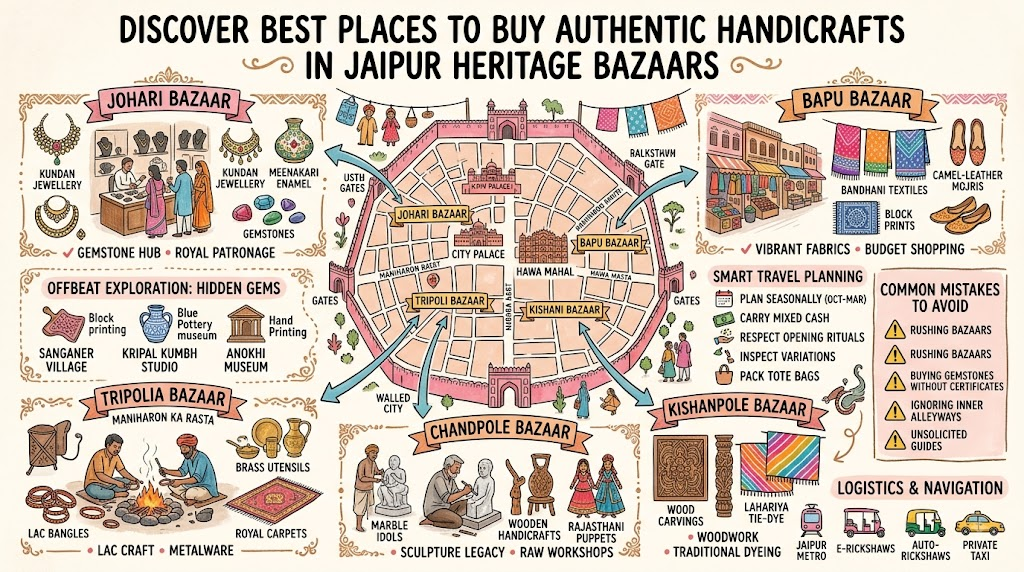
Johari Bazaar is the historic crown jewel of Jaipur’s gemstone and artisanal jewellery trade. Lined with iconic terracotta buildings, this bustling avenue houses master craftspeople specializing in royal Kundan and Meenakari enamel artwork passed down through generations.
Beyond glitzy gold and silver, hidden courtyards called havelis conceal master lapidaries cutting semi-precious emeralds, rubies, and sapphires. Walking through its narrow side lanes offers an intimate window into royal jewelling techniques that date back to the city’s founding.
- Location: Heart of the Walled City, 1.5 km from City Palace.
- Why it is worth visiting: Unrivaled selection of authentic Kundan, Meenakari, and certified loose gemstones.
- Best things to do: Explore Gopalji Ka Rasta for raw gemstone traders, shop for handmade silver jewellery, and watch enamel artists at work.
- Best time to visit: Late morning around 11:00 AM when shops open without heavy evening crowds.
- Ideal for whom: Jewellery collectors, wedding shoppers, and lovers of traditional metalcraft.
- Travel tip: Always ask for hallmark certification when purchasing high-value precious metals or stones.
Bapu Bazaar
Bapu Bazaar is a dazzling open-air parade famous for vibrant Rajasthani textiles, camel-leather items, and hand-stitched mojri footwear. The uniform pink arcades create an immersive backdrop as rolls of fiery Bandhani tie-dye and block-printed cottons overflow onto the walkways.
The air is fragrant with traditional attar perfumes and sizzles with local street delicacies. Shoppers can source custom-tailored ethnic garments made from authentic vegetable-dyed fabrics within hours.
- Location: Located between Sanganeri Gate and New Gate in the southern grid of the Walled City.
- Why it is worth visiting: The definitive hub for budget-friendly Rajasthani textiles, leather goods, and souvenirs.
- Best things to do: Pick up handcrafted camel-leather juttis, buy vibrant Sanganeri block-print quilts, and sample fresh street snacks.
- Best time to visit: 4:00 PM to 7:00 PM for peak atmospheric energy.
- Ideal for whom: Fashion enthusiasts, budget souvenir hunters, and textile lovers.
- Travel tip: Check leather seams and stitching quality on footwear before finalizing your price negotiations.
Tripolia Bazaar
Tripolia Bazaar spans the central thoroughfare running between Chhoti Chaupar and Manak Chaupar. Renowned worldwide for exquisite lac bangles, this market buzzes with artisans heating and shaping resin over open embers.
In addition to delicate wristwear, Tripolia is famous for hand-hammered brass utensils, wrought-iron home decor, and royal carpets. The narrow Maniharon Ka Rasta lane inside this bazaar provides an unforgettable look at lac bangle craftspeople in action.
- Location: Adjacent to City Palace and Jantar Mantar inside the old city.
- Why it is worth visiting: World-class destination for custom lac bangles and traditional metalware.
- Best things to do: Watch artisans shape lac bangles in Maniharon Ka Rasta, browse brass home accents, and purchase hand-knotted wool rugs.
- Best time to visit: 12:00 PM to 4:00 PM when artisan workshops are actively operating.
- Ideal for whom: Culture enthusiasts, interior decorators, and traditional accessory lovers.
- Travel tip: Measure your wrist size accurately, as authentic lac bangles have zero flexibility once cooled.
Chandpole Bazaar
Chandpole Bazaar marks the western border of the historic grid, preserving Jaipur’s famed marble sculpture legacy. As you walk down Khazane Walon Ka Rasta, the rhythmic sound of chisels carving white Makrana marble echoes down the street.
This market also features intricate wooden handicrafts, hand-carved furniture, and colorful Rajasthani puppets. It feels far less commercialized than other central markets, offering a genuine glimpse into raw workshop environments.
- Location: Near Chandpole Gate, accessible directly via Chandpole Metro Station.
- Why it is worth visiting: Premier center for hand-carved marble idols, architectural stone accents, and wooden art.
- Best things to do: Observe master sculptors in Khazane Walon Ka Rasta, buy carved wooden block stamps, and explore traditional puppets.
- Best time to visit: 11:30 AM to 3:00 PM for quiet walking and photo opportunities.
- Ideal for whom: Art collectors, home decor shoppers, and photography enthusiasts.
- Travel tip: Sculptors can arrange international crate shipping for heavy marble installations or statues.
Kishanpole Bazaar
Kishanpole Bazaar runs parallel to Chaura Rasta and is globally recognized for fine wood carvings and traditional ornamental tie-dye. Master carpenters here transform seasoned teak and shisham wood into elaborate furniture and decorative panels.
The bazaar is also a vibrant center for Lahariya tie-dye textiles, characterized by festive diagonal wave patterns. Visiting Kishanpole allows you to support skilled independent woodworkers who operate small family studios.
- Location: Running south from Chhoti Chaupar down Kishanpole Bazar Road.
- Why it is worth visiting: Famous for detailed wooden carving, antique furniture replicas, and Lahariya textiles.
- Best things to do: Custom-order wooden mirror frames, browse traditional Lahariya dupattas, and buy carved spice boxes.
- Best time to visit: 2:00 PM to 6:00 PM.
- Ideal for whom: Woodwork fans, textile shoppers, and rustic home stylists.
- Travel tip: Bargaining is standard here; polite negotiation can yield reasonable prices on hand-carved decor.
Jaipur Blue Pottery Art Centre
Located outside the dense inner grid, the Jaipur Blue Pottery Art Centre showcases one of Rajasthan’s most delicate craft styles. Unlike standard clay pottery, Jaipur blue pottery uses ground quartz stone, glass, and natural oxide pigments, resulting in a distinct glazed finish.
The studio displays an impressive range of hand-painted ceramic tiles, vases, coasters, and dinnerware. Watching artisans apply intricate cobalt-blue flower patterns demonstrates why this craft enjoys global acclaim.
- Location: Amer Road, approximately 4 km north of Hawa Mahal.
- Why it is worth visiting: The definitive destination for authentic, high-fired, lead-free Blue Pottery.
- Best things to do: Tour the pottery firing units, buy hand-painted door knobs and coasters, and view rare antique designs.
- Best time to visit: 10:00 AM to 1:00 PM.
- Ideal for whom: Pottery lovers, souvenir buyers, and craft historians.
- Travel tip: Ask the staff to wrap ceramic items in heavy bubble wrap to protect them during flights.
Offbeat Exploration: Hidden Gems Tourists Miss
Sanganer Artisan Village
Located 16 km south of Jaipur, Sanganer is the historic heart of hand-block printing and handmade paper manufacturing. Walking along the Sanjharia riverbed reveals acres of freshly printed fabric drying in the sun, dyed with natural turmeric, indigo, and madder root. Visiting local workshops lets you watch block carvers sculpt complex floral patterns into hard teak blocks with incredible precision.
Kripal Kumbh Studio
Tucked away in the quiet residential neighborhood of Bani Park, Kripal Kumbh was established by the legendary revivalist artist Padma Shri Kripal Singh Shekhawat. Unlike commercial outlets, this atelier acts as a living museum preserving rare 19th-century blue pottery glaze recipes and complex geometric motifs. It is the perfect spot for serious art collectors looking for signature, museum-grade ceramic art.
Anokhi Museum of Hand Printing
Situated in a beautifully restored pink sandstone haveli near Amer Fort, this offbeat museum documents the history of block printing crafts. Live craft demonstrations take place in the courtyard, where visitors can try hand-stamping their own cotton scarves using traditional wooden blocks.
Detailed Practical Guidance for Travelers
| Destination | Standard Entry Fee | General Timings | Best Local Food Options Nearby | Recommended Nearby Attractions |
| Johari Bazaar | Free Access | 10:00 AM – 9:00 PM | Laxmi Misthan Bhandar (Ghewar & Kachori) | Hawa Mahal, City Palace |
| Bapu Bazaar | Free Access | 10:30 AM – 8:30 PM | Pandit Kulfi, Falooda Stalls | Sanganeri Gate, Albert Hall |
| Tripolia Bazaar | Free Access | 10:00 AM – 8:00 PM | Rawat Mishthan Bhandar (Pyaaz Kachori) | Jantar Mantar, City Palace |
| Chandpole Bazaar | Free Access | 10:00 AM – 7:30 PM | Local Lassi stalls near Chandpole Gate | Isarlat Tower, Marble Market |
| Kishanpole Bazaar | Free Access | 11:00 AM – 8:00 PM | Shri Khandelwal Pavitra Bhojnalaya | Chhoti Chaupar, Nahargarh Fort Road |
| Blue Pottery Art Centre | Free Access | 9:30 AM – 6:00 PM | Jal Mahal Floating Cafe nearby | Jal Mahal, Amer Fort |
Logistics & On-Ground Navigation
Local Transport Options
Navigating Jaipur’s historic grid requires a smart mix of transport modes. The Jaipur Metro is clean, rapid, and drops you directly at Chandpole Metro Station, providing easy access to the western bazaars.
For inner market travel, battery-powered e-rickshaws offer an nimble way to dodge pedestrian crowds in narrow lanes. Traditional auto-rickshaws work well for mid-distance trips, provided you agree on a fare beforehand or insist on using ride-hailing apps like Ola and Uber. Renting a chauffeur-driven taxi for a full day is recommended if you plan to visit outlying craft hubs like Sanganer or Amer.
Budget Planning
- Budget / Backpacking Tier (₹1,500 – ₹2,500 per day): Stays in hostel dorms or heritage homestays, meals at iconic street stalls, transport via metro and e-rickshaws, and shopping focused on small souvenirs like lac bangles or cloth block prints.
- Mid-Range / Comfort Tier (₹4,500 – ₹8,500 per day): Stays in boutique heritage hotels, dining at courtyard restaurants, transport via private app taxis, and purchases including Kundan silver jewellery, Jaipur quilts, and blue pottery dinnerware sets.
Safety and Inclusivity Tips
- For Families: The dense market crowds can feel overwhelming during peak evening hours; stick to morning shopping windows between 10:30 AM and 1:30 PM for a calmer experience.
- For Solo Travelers & Couples: Keep wallet and phone pockets secure in dense lanes like Bapu Bazaar. Dress respectfully in breathable cotton clothing covering shoulders and knees when visiting working craft guilds.
- General Safety: Stay hydrated during warm afternoons and carry crisp currency notes, as small artisan workshops may lack digital payment terminals during network outages.
Strategic Travel Planning Guardrails
Travel Planning Tips for Jaipur
- Plan around seasonal timings: Visit between October and March to enjoy pleasant daytime temperatures for outdoor market walking.
- Carry mixed cash reserves: While large boutique stores accept credit cards, street vendors and small workshop masters rely strictly on cash.
- Respect shopkeeper opening rituals: Avoid aggressive price bargaining on the very first sale of the morning (Bohani), as merchants consider it a sacred start to their business day.
- Inspect handmade variations: True hand-block prints and hand-fired ceramics naturally feature slight color irregularities; these variations confirm authenticity rather than flaws.
- Pack lightweight tote bags: Bring foldable canvas shopping totes to reduce plastic bag usage while browsing multiple bazaar lanes.
Common Mistakes to Avoid
- Rushing through the markets: Trying to cover three major bazaars in a single hour leads to fatigue; dedicate at least half a day per market grid.
- Buying gemstones without certificates: Avoid purchasing expensive uncertified precious stones from unverified street brokers.
- Ignoring the inner alleyways: Main road shops often mark up prices; deeper lanes like Gopalji Ka Rasta offer authentic artisan pricing.
- Assuming uniform closing days: Many bazaars remain closed or operate on limited staff on Sundays; plan major shopping tours Tuesday through Saturday.
- Falling for unauthorized commission guides: Politely decline unsolicited street guides who claim to offer “exclusive government artisan factory discounts.”
Suggested Itinerary Blueprints
1. Day Quick Dash (Express Craft Loop)
Designed for time-pressed travelers seeking key souvenirs within a single 6-hour window:
- Morning: Start at Johari Bazaar at 10:30 AM for Kundan silver jewellery and gemstone browsing. Walk directly into Tripolia Bazaar to view lac bangle crafting in Maniharon Ka Rasta.
- Afternoon: Head to Bapu Bazaar for camel-leather juttis and block-printed cotton scarves, followed by an authentic lunch at Laxmi Misthan Bhandar.
2. Day Deep-Dive (Artisan Mastery Circuit)
- Day 1: Explore the historic core. Morning tour of Johari Bazaar and Tripolia Bazaar metal workshops. Afternoon marble sculpture walkthrough in Chandpole Bazaar. Evening textile browsing at Bapu Bazaar.
- Day 2: Focus on specialty crafts. Morning visit to Jaipur Blue Pottery Art Centre. Afternoon trip to Sanganer Artisan Village for live block printing demonstrations and paper-making tours.
3. Complete Weekend Travel Plan (Heritage & Craft Immersion)
- Friday Evening: Arrival, evening walk through illuminated Bapu Bazaar, and local street dining.
- Saturday: Full-day Walled City exploration covering Johari Bazaar, Tripolia Bazaar, and Kishanpole Bazaar. Sunset drinks overlooking the old city ramparts.
- Sunday: Excursion to Amer Fort, followed by an afternoon visit to the Anokhi Museum of Hand Printing and boutique ceramic shopping at Kripal Kumbh.
Common Tourist Mistakes to Avoid
Geographic Blunders
Attempting to cross from Amer Fort on the far northern ridge to Sanganer in the far south during peak evening rush hour burns hours in transit. Cluster your itinerary geographically: group northern heritage monuments with Amer crafts, and dedicate a separate day to the central Walled City markets.
Commercial Traps
Spending precious vacation hours in air-conditioned modern shopping malls strip away the cultural context of Jaipur. Authentic craft production lives in open-air bazaars and heritage lanes where you can converse directly with the artists.
Neglecting Modern/Alternative Zones
Focusing exclusively on old city bazaars means missing out on Jaipur’s modern creative neighborhoods. Areas like C-Scheme and Civil Lines house upscale design concept stores that blend traditional block prints with contemporary fashion silhouettes.
Transport Overpayment
Accepting flat high rates from auto-rickshaws waiting directly outside major tourist gates leads to overpaying. Always cross-reference distances on app-based ride services or walk 100 meters away from tourist exits to secure fair metered fares.
Luxury Dining Bias
Eating exclusively inside hotel restaurants deprives you of Jaipur’s true culinary soul. Iconic street institutions like Laxmi Misthan Bhandar and Rawat Mishthan Bhandar offer legendary local dishes like Pyaaz Kachori and Mirchi Bada right in the heart of the shopping districts.
Frequently Asked Questions
1. What are the best traditional handicrafts to buy in Jaipur?
The top authentic items to purchase include Kundan and Meenakari jewellery, hand-painted Blue Pottery, Sanganeri hand-block printed textiles, lac bangles, and camel-leather juttis.
2. Which market in Jaipur is best for buying authentic jewellery?
Johari Bazaar is the absolute premier market for fine gold, silver, Kundan, Meenakari, and certified gemstones.
3. Is bargaining expected when shopping in Jaipur bazaars?
Yes, polite negotiation is standard practice across street bazaars like Bapu Bazaar and Kishanpole Bazaar, though fixed prices apply in modern government showrooms.
4. How can I distinguish authentic Jaipur Blue Pottery from cheap imitations?
Authentic Jaipur blue pottery is made without clay using ground quartz, producing a cooler, smooth glass-like texture with delicate natural glaze variations.
5. What is the nearest metro station to the main shopping bazaars?
Chandpole Metro Station is the primary metro hub, placing you within easy walking distance of Chandpole, Tripolia, and Kishanpole Bazaars.
6. Are the bazaars in Jaipur open on Sundays?
Many traditional family shops close or operate with shorter hours on Sundays, making Tuesday through Saturday the optimal time for shopping.
7. Where can I buy authentic hand-block printed fabrics and quilts?
Bapu Bazaar and Sanganer Village are the finest locations for genuine Sanganeri and Bagru hand-block printed cottons and quilts.
8. What is the best time of day to go shopping in Jaipur?
Late morning between 11:00 AM and 1:30 PM offers comfortable temperatures and uncrowded aisles, while 5:00 PM onwards provides a lively evening atmosphere.
9. How do I avoid buying fake gemstones in Johari Bazaar?
Always buy from established, certified shops, ask for authentic lab test certificates, and avoid unverified brokers approaching you on the street.
10. Can craft workshops ship heavy marble or pottery items internationally?
Yes, major studios in Chandpole Bazaar and the Blue Pottery Art Centre routinely arrange insured international freight for large purchases.
11. Where can I see artisans actively making lac bangles?
Maniharon Ka Rasta, a specialized narrow lane inside Tripolia Bazaar, is famous for artisans shaping lac bangles over live fires.
12. What budget should I allocate for souvenir shopping in Jaipur?
A modest budget of ₹2,000 to ₹5,000 allows you to buy quality textiles, leather shoes, and pottery, while high-end jewellery or rugs require a larger budget.
Conclusion
Choosing to explore Jaipur through its historic artisan bazaars transforms a standard sightseeing trip into an unforgettable cultural encounter. Standing beside a master craftsman in a shaded Walled City courtyard reveals the passion, patience, and heritage woven into every single creation. Beyond the physical treasures you carry home, the true reward lies in connecting with a living royal art legacy that continues to bloom inside Rajasthan’s immortal Pink City.
