Introduction
Jaipur, globally celebrated as the Pink City, is an absolute paradise for anyone with a camera. Many first-time visitors expect Rajasthan to be just deserts, historic dust, or predictable museum tours. However, Jaipur shatters those expectations entirely. It is a vibrant, living canvas where deep cultural heritage merges seamlessly with bustling local life, green valleys, architectural marvels, and breathtaking sunrise views.
For a photography lover, this city offers infinite creative possibilities. From the symmetrical pastel corridors that have taken social media by storm to raw, authentic street scenes filled with local artisans, textiles, and spices—every single corner has a story to tell. Whether you are a professional landscape photographer, an influencer tracking down the ultimate Instagram frames, a solo backpacker collecting visual memories, or a family wanting stunning holiday portraits, this comprehensive Jaipur travel guide is designed for you. Let’s dive into how you can capture the absolute soul of Jaipur with your lens.
Why Jaipur is a Must-Visit City
Jaipur successfully pairs structural grandeur with a deeply approachable traveler culture. Unlike many heritage destinations that feel stagnant or overly curated for museums, Jaipur’s monuments are woven directly into the daily life of its residents. It is a city where historic city gates act as functional traffic roundabouts and centuries-old stepwells serve as local neighborhood hangouts.
For photographers, the city provides an incredible diversity of genres. You can transition from shooting clean, minimalist architectural geometry in the morning to dramatic action shots of wildlife or vibrant street portraits by the afternoon. It is incredibly well-connected, highly budget-friendly, and offers safe, warm hospitality that makes shooting here an absolute joy for families, couples, and solo travelers alike.
Best Places or Experiences
1. Hawa Mahal (The Palace of Winds)
Location
Hawa Mahal Road, Badi Choupad, Pink City, Jaipur.
Why it is worth visiting
This iconic five-story pink sandstone structure mimics the crown of Lord Krishna and features an incredible 953 small windows called jharokhas. The front facade looks like an intricate honeycomb lattice and is the ultimate symbol of Jaipur’s architectural brilliance.
Best things to do
- Capture the golden light directly striking the front facade during sunrise.
- Head to the rooftop cafes directly across the street (like the Wind View Cafe or Tattoo Cafe) to secure an unobstructed, elevated shot of the entire building.
- Go inside to photograph the light playing through the colored stained-glass windows, casting vibrant reflections across the inner stone corridors.
Best time to visit
6:30 AM to 8:30 AM for the best external lighting conditions and to completely beat the heavy morning street traffic.
Ideal for whom
Architectural photographers, solo travelers, couples, and social media content creators.
Travel tip
Do not use a standard lens from the street level right in front of it; the extreme upward angle distorts the lines. A wide-angle lens from across the street or the rooftop cafes delivers a much more balanced and dramatic perspective.
2. Patrika Gate (Jawahar Circle)
Location
Jawahar Circle Park, Airport Road, Malviya Nagar, Jaipur.
Why it is worth visiting
Serving as the grand entrance to Jawahar Circle Park, Patrika Gate is a visual explosion of colors. Every single archway and pillar within this massive walkway is meticulously hand-painted with vibrant murals detailing the entire history, royal rulers, jewelry arts, and fort fortresses of Rajasthan.
Best things to do
- Shoot symmetrical composition photographs down the long, continuous corridor of hand-painted arches.
- Use the intense rows of contrasting pastel colors to frame high-fashion travel portraits.
- Incorporate the natural ambient light flowing in from the sides to create dramatic depth and shadow plays.
Best time to visit
7:00 AM to 9:00 AM. It gets incredibly crowded with casual tourists, morning walkers, and pre-wedding shoots later in the day.
Ideal for whom
Portrait photographers, lifestyle influencers, fashion bloggers, and couples looking for memorable vacation frames.
Travel tip
Wear solid, neutral-colored clothing (like white, beige, or cream). The background patterns are exceptionally dense and colorful; wearing complex patterns will make you blend completely into the wall art.
3. Panna Meena ka Kund
Location
Near Anokhi Museum, Amer Road, Amer, Jaipur.
Why it is worth visiting
This is a historic 16th-century geometric stepwell famed for its stunning architectural symmetry. The criss-cross arrangement of golden-yellow stone steps, angular recesses, and contrasting turquoise waters creates a dazzling visual pattern that looks like an abstract piece of art.
Best things to do
- Utilize a wide-angle lens from the top perimeter to capture the completely flawless geometric patterns of the steps.
- Photograph the beautiful light and shadow play created when the sun hits one side of the stepwell while keeping the opposite side in deep shadow.
- Frame the small historic corner alcoves that overlook the main structure.
Best time to visit
8:00 AM to 10:00 AM when the bright daylight clearly illuminates the deep stair patterns without creating completely harsh vertical shadows.
Ideal for whom
Fine art photographers, geometry lovers, backpackers, and drone photography enthusiasts (note: drone use requires valid local permits).
Travel tip
To preserve the ancient monument, local guards strictly prohibit visitors from walking down onto the actual steps for photos. Respect the local heritage boundaries and focus on composing incredible shots from the upper viewing platforms.
4. Amber Fort (Amer Fort)
Location
Devisinghpura, Amer, Jaipur (roughly 11 kilometers out from the main city center).
Why it is write visiting
Perched high on a rugged hill overlooking Maota Lake, this massive UNESCO World Heritage site is a masterclass in Rajput architecture. The fort is built from yellow and pink sandstone mixed with pure white marble, offering expansive courtyards, grand gates, and stunning views.
Best things to do
- Photograph the world-renowned Ganesh Pol gate, an ornate gateway adorned with brilliant fresco paintings and intricate mosaic tilework.
- Capture the breathtaking Sheesh Mahal (Mirror Palace), where walls and ceilings are entirely inlaid with thousands of tiny, glittering convex mirrors.
- Shoot expansive landscape frames of the winding fort walls snaking across the surrounding Aravalli hillsides.
Best time to visit
8:00 AM sharp (right when the gates open) to secure clean shots of the courtyards before the massive tourist crowds and tour groups arrive.
Ideal for whom
Landscape photographers, history buffs, families, and solo travelers.
Travel tip
Walk all the way to the rear exits and upper corridors of the fort. Most tourists stay clustered around the main entry courtyards, leaving the deeper royal quarters completely empty for uninterrupted architectural photography.
5. Jal Mahal (The Water Palace)
Location
Man Sagar Lake, Amer Road, Jaipur.
Why it is worth visiting
Jal Mahal is an ethereal low-rise palace that appears to float right in the middle of Man Sagar Lake. Constructed out of pink sandstone, four stories of this five-story structure remain entirely submerged underwater, leaving only the top floor and lush rooftop gardens visible.
Best things to do
- Capture the perfectly still morning waters of the lake creating a flawless, symmetrical mirror reflection of the palace.
- Photograph the local flocks of migratory birds that gather around the lake edges during the cooler winter months.
- Shoot long-exposure photographs during the dusk hours when the palace is beautifully illuminated by golden spotlights.
Best time to visit
6:30 AM for a dramatic sunrise behind the surrounding hills, or 6:30 PM for clean night photography frames.
Ideal for whom
Landscape photographers, bird watchers, nature lovers, and couples.
Travel tip
You cannot actually enter or board a boat to the palace itself as entry is completely restricted. Set up your tripod along the paved lakeside promenade on Amer Road. Bring a zoom or telephoto lens to capture the fine architectural details of the building from the shore.
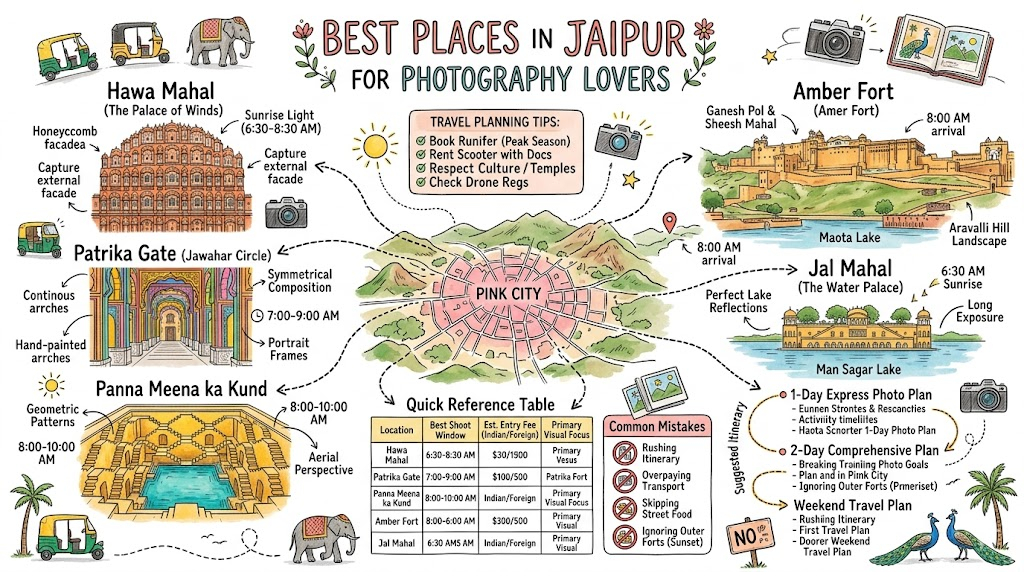
Jaipur Photography Spot Quick Reference
| Location | Best Shoot Window | Est. Entry Fee (Indian / Foreign) | Primary Visual Focus |
| Hawa Mahal | 06:30 AM – 08:30 AM | ₹50 / ₹200 | Honeycomb Sandstone Facade |
| Patrika Gate | 07:00 AM – 09:00 AM | Free Entry | Symmetrical Hand-Painted Arches |
| Panna Meena ka Kund | 08:00 AM – 10:00 AM | Free Entry | Geometric Stepwell Patterns |
| Amber Fort | 08:00 AM – 11:00 AM | ₹100 / ₹500 | Grand Courtyards & Mirror Palace |
| Jal Mahal | 06:30 AM & 06:30 PM | Free (View from Shore) | Lakeside Reflections & Sunrises |
Travel Planning Tips for Jaipur
Book stays early during peak season
Jaipur experiences a massive influx of international and domestic travelers between October and March when the weather is pleasantly cool. Book your heritage hotels and homestays months in advance to get the best rates.
Rent scooters only with proper documents
Renting a scooter or motor bike is a fantastic, flexible way to navigate the narrow lanes of the old Pink City. Ensure you carry a valid driving license and always demand a helmet from the rental provider.
Keep cash handy for local markets and entry tickets
While digital payments (like UPI) are widely accepted across India, smaller street vendors, traditional auto-rickshaws, and certain monument ticket counters still prefer cash. Keep a steady supply of small denomination bills on hand.
Respect the local culture and environment
Jaipur is filled with active religious shrines and living heritage spaces. Always dress modestly when visiting temples (like Galtaji Monkey Temple), remove your shoes where required, and never litter around the historic monuments.
Check local drone regulations
Flying a drone in Jaipur is highly restricted due to the proximity of military zones, government buildings, and historical properties. Always check current DGCA guidelines and obtain specific local police permits before launching a drone.
Common Mistakes to Avoid
- Rushing the itinerary: Trying to cram Amber Fort, Hawa Mahal, City Palace, and Nahargarh Fort all into a single afternoon. You will end up exhausted, shooting in harsh, unflattering midday light.
- Overpaying for local transport: Accepting the very first price quoted by street-side auto-rickshaws. Always use ride-hailing apps like Uber or Ola to check standard market rates first, or politely negotiate before stepping in.
- Skipping the local street food: Sticking exclusively to standard continental hotel buffets. You will miss out on incredible, visually rich food culture shots at places like Rawat Mishthan Bhandar (famed for Pyaaz Kachori) or Laxmi Mishthan Bhandar (LMB).
- Ignoring the outer forts at sunset: Many travelers visit Amber Fort and head straight back to the city. They completely miss the panoramic sunset views over the entire city skyline from the ramparts of nearby Nahargarh Fort.
Suggested Jaipur Itinerary Angle
To get the absolute best results for your portfolio, your Jaipur itinerary should be built specifically around light tracking. Here is how you can perfectly integrate these top photography spots into your trip plan.
1-Day Express Photo Plan
- Morning (06:30 AM): Sunrise reflection shots at Jal Mahal, followed immediately by clean facade framing at Hawa Mahal before the crowds arrive.
- Mid-Day (11:00 AM): Indoor architectural details and vibrant doorways inside the shaded courtyards of the City Palace.
- Evening (04:30 PM): Catch the sweeping golden hour and dramatic sunset views overlooking the city from Nahargarh Fort.
2-Day Comprehensive Plan
- Day 1: Dedicate your morning to Hawa Mahal and the historic street markets of Pink City. Spend your afternoon exploring the vast structures of City Palace and Jantar Mantar.
- Day 2: Head out early to catch the geometry of Panna Meena ka Kund, followed by a detailed exploration of Amber Fort. End your afternoon tracking down the colorful corridors of Patrika Gate.
Weekend Travel Plan
- Friday Evening: Night photography and long exposures outside the illuminated Albert Hall Museum.
- Saturday: Early morning at Patrika Gate, mid-day street portrait photography in Bapu Bazaar, and sunset at Nahargarh Fort.
- Sunday: Morning exploration of Amber Fort and Panna Meena ka Kund, closing your trip with a relaxed sunset view by Jal Mahal.
FAQs
1. What is the absolute best time of year to visit Jaipur for photography?
The ideal window is from October to March. The weather is cool and comfortable for walking around outdoor forts, the skies are crisp and clear, and you avoid the intense haze and extreme heat of the summer months.
2. Do I need to pay extra camera fees at Jaipur monuments?
Yes, several heritage sites and museums charge a nominal separate camera fee (ranging from ₹50 to ₹200) for professional DSLR or mirrorless setups. Standard smartphone photography is usually included in the base entry ticket.
3. Is tripods allowed inside Jaipur forts and palaces?
Tripods are generally permitted along public walkways like Jal Mahal promenade or Patrika Gate. However, they are strictly banned inside the main ticketing areas of City Palace, Hawa Mahal, and Amber Fort unless you have formal written permission from the archaeology department.
4. Where can I capture the best sunset view of Jaipur?
Nahargarh Fort offers the absolute best panoramic sunset view. The fort sits on the edge of the Aravalli hills, providing an uninterrupted view of the entire city skyline as it lights up for the night.
5. How can I get clean shots at Hawa Mahal without cars blocking the view?
Arrive between 6:00 AM and 7:00 AM. The shops in the market remain closed, traffic is virtually non-existent, and the early morning light hits the pink stone beautifully.
6. Is it safe for solo female photographers to shoot in Jaipur at night?
Yes, Jaipur is generally safe for solo travelers. However, stick to well-lit, populated areas like Albert Hall Museum or the main Pink City markets for night photography. Avoid isolated fort roads after dark.
7. What lenses should I pack for a Jaipur trip?
Bring a versatile wide-angle lens (like a 16-35mm) to capture expansive fort courtyards and stepwell geometry, along with a fast prime lens (like a 50mm f/1.8) for beautiful street portraits and low-light market captures.
8. Are there hidden, less-crowded photography spots in Jaipur?
Gaitor Ki Chhatriyan (the royal cenotaphs) and the Royal Gaitor complex are stunningly beautiful, intricately carved stone structures that receive a mere fraction of the crowds found at Amer Fort.
9. Can I photograph the local people in the markets?
Most locals in Jaipur are exceptionally friendly and accustomed to travelers. However, it is always best practice to smile, point to your camera, and ask for permission before taking a close-up street portrait.
10. How do I travel between different photography spots efficiently?
For traveling within the old city walls, auto-rickshaws are fast and highly efficient. For longer journeys out to Amber Fort or Nahargarh Fort, booking a full-day cab through a reliable service or utilizing rideshare apps is the most comfortable and practical option.
Conclusion
Jaipur is far more than a simple pin on a tourist map; it is an incredible visual journey that rewards travelers who slow down and look closely. By planning your days around the natural golden hours, respecting local heritage boundaries, and exploring both iconic landmarks and quiet side lanes, you will leave with a spectacular portfolio of memories.
