Introduction
Many modern travelers naturally find themselves exhausted by the chaotic crowds of commercialized beach resorts or standard mountain stations. Therefore, seeking an escape that offers profound cultural roots and deep historical immersion becomes essential. The vibrant capital of Rajasthan fulfills this desire perfectly by preserving its centuries-old regal identity. Visitors instantly feel a strong emotional bond with the soil as they explore the stunning pink sandstone alleyways. Consequently, every meal and street corner reveals an authentic story of royal heritage rather than a mass-produced tourist show.
Why Jaipur is a must visit city
This majestic destination stands out as an irreplaceable jewel in global tourism because it masterfully blends ancient architecture with living traditions. Geographically located on the edge of the Thar Desert, the historic city acts as the gateway to India’s most colorful state. Furthermore, a highly structured transport network simplifies accessibility for backpackers, couples, and multi-generational families alike. Excellent national highways, robust railway connections, and an international airport ensure smooth transit into the heart of the region.
The famous Golden Triangle circuit heavily relies on this historic hub to showcase the peak of Rajputana majesty. Travelers can seamlessly transition from exploring grand hilltop fortresses to sampling rich, ghee-laden culinary delicacies in bustling medieval bazaars.
| Key Fact | Details |
| Best Known For | Palatial Architecture, Hand-Block Printing, Royal Culinary Heritage |
| Ideal Trip Duration | 3 to 4 Days |
| Primary Languages | Hindi, Rajasthani, English |
| Peak Season | October to March |
Best Places or Experiences
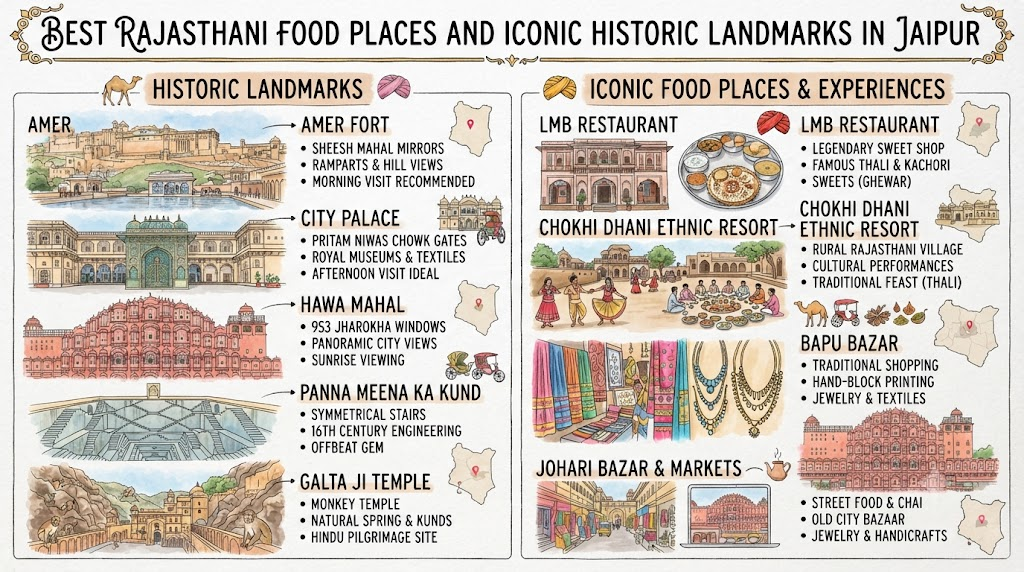
Amer Fort
The monumental fortress stands as a breathtaking architectural masterpiece on the craggy hills of the Aravalli range. Maharaja Man Singh I started the construction in the late sixteenth century, and subsequent rulers gradually expanded the palace complex. Consequently, the structure showcases a fascinating fusion of traditional Rajput military architecture and elegant Mughal aesthetic elements.
Inside the massive ramparts, visitors discover the breathtaking Sheesh Mahal, where thousands of tiny convex mirror tiles cover the walls and ceilings. This incredible design allows a single candle flame to illuminate the entire royal hall beautifully. Furthermore, the sweeping views of Maota Lake reflecting the yellow sandstone walls create an unforgettable visual spectacle for photographers.
- Location: Amer District, approximately 11 kilometers north of the old walled city center.
- Why it is worth visiting: The fort displays an unparalleled combination of rugged defensive walls and delicate, jewel-like artistic interiors.
- Best things to do: Marvel at the intricate mirror mosaics inside Sheesh Mahal, watch the evening sound and light show, and capture panoramic valley views from the ramparts.
- Best time to visit: Arrive between 8:00 AM and 10:30 AM to catch smooth morning lighting and avoid the intense afternoon heat.
- Ideal for whom: History buffs, architecture enthusiasts, families, and landscape photographers.
- Travel tip: Avoid taking elephant rides to support ethical animal tourism, and choose the scenic walking path or an authorized vehicle instead.
Hawa Mahal
The extraordinary Palace of Winds stands proudly as the most recognizable silhouette in the heart of the old city bazaar. Maharaja Sawai Pratap Singh commissioned this unique five-story structure in the late eighteenth century to expand the royal residence. Specifically, architect Lal Chand Ustad designed the facade to resemble the crown of the Hindu deity Lord Krishna.
The stunning pink exterior features exactly 953 small casements, which locals call jharokhas, decorated with intricate latticework. Therefore, these screens allowed royal women to observe daily street life and colorful festivals without being seen by the public. Additionally, the brilliant architectural layout creates a natural cooling effect by channeling breezy drafts through the narrow windows.
- Location: Sireh Deori Bazar, right in the center of the walled Old City.
- Why it is worth visiting: It represents an absolute engineering marvel of natural ventilation and delicate honeycomb design.
- Best things to do: Climb to the top floor for a panoramic view of the City Palace, photograph the facade from opposite cafes, and study the colored glass windows.
- Best time to visit: Catch the early sunrise hours when the golden morning rays strike the pink sandstone facade directly.
- Ideal for whom: Independent explorers, culture lovers, and photography enthusiasts.
- Travel tip: The entrance sits at the rear side of the building rather than the famous front facade facing the main road.
Chokhi Dhani Ethnic Resort
This sprawling cultural wonderland offers an immersive window into the rustic soul of rural Rajasthan. The beautifully designed village recreation serves as a lively celebration of traditional art, folk dance, and regional culinary heritage. Thus, visitors escape the urban rush to experience genuine village hospitality under a starlit sky.
Local artists perform mesmerizing puppet shows, traditional fire dances, and acrobatic feats across the earthy property. However, the absolute highlight remains the ceremonial dining hall, where servers treat guests like royalty. Diners sit cross-legged on the floor while attentive hosts continuously serve traditional delicacies soaked in pure clarified butter.
- Location: Tonk Road, roughly 20 kilometers outside the primary city center.
- Why it is worth visiting: It provides the ultimate all-in-one exposure to Rajasthani folk arts, live entertainment, and authentic community dining.
- Best things to do: Watch the intense Kalbelia dance performances, ride a traditional camel cart, and feast on an authentic multi-course thali.
- Best time to visit: Arrive around 6:00 PM as the evening festivities begin and the entire village illuminates with oil lamps.
- Ideal for whom: Food lovers, cultural travelers, and families with young children.
- Travel tip: Keep your lunch extremely light because the traditional dining experience includes a massive, unlimited quantity of heavy local food.
LMB Restaurant (Laxmi Misthan Bhandar)
Operating for many decades inside the historic market, this legendary sweet shop and restaurant carries an iconic culinary reputation. It serves as an essential pilgrimage site for anyone tracking the true flavors of historic sweet-making. The buzzing atmosphere reflects the timeless popularity of its highly guarded family recipes.
The talented kitchen staff takes immense pride in crafting the most authentic Pyaaz Kachori and sweet Ghewar in the region. Moreover, their signature royal platter showcases a complex symphony of spicy, sweet, and tangy flavors. Every item uses traditional ingredients, ensuring that patrons taste the exact flavors that delighted royals in previous eras.
- Location: Johari Bazar, situated prominently within the historic market lanes.
- Why it is worth visiting: It is the oldest and most famous culinary establishment serving uncompromised vegetarian Rajasthani sweets and platters.
- Best things to do: Indulge in a premium Rajasthani Thali, purchase boxed Paneer Ghewar as souvenirs, and sample the crispy, hot kachoris.
- Best time to visit: Drop in between 4:00 PM and 7:00 PM for the freshest batch of evening snacks and sweets.
- Ideal for whom: Dedicated foodies, solo travelers, and dessert lovers.
- Travel tip: The sweet counter gets incredibly crowded on weekends, so order your takeaway boxes before sitting down at the dining tables.
City Palace Complex
This grand royal residence occupies a massive sector in the middle of the historic grid layout. Maharaja Sawai Jai Singh II established the foundational structures when he shifted his capital away from the hills of Amer. Consequently, the sprawling complex contains a beautiful network of hidden courtyards, manicured gardens, and ornate palace buildings.
The inner courtyard features the world-famous Pritam Niwas Chowk, which contains four stunning doorways dedicated to the changing seasons. For instance, the Peacock Gate showcases breathtaking colorful mosaics that celebrate the lush spirit of the monsoon season. Today, the descendants of the royal family still occupy a private wing of this beautiful palace.
- Location: Jaleb Chowk, adjacent to the historic Jantar Mantar observatory.
- Why it is worth visiting: The palace houses spectacular museums displaying royal costumes, ancient weaponry, and giant sterling silver vessels.
- Best things to do: Take photographs at the iconic Peacock Gate, admire the royal textile collection, and explore the Mubarak Mahal.
- Best time to visit: Plan for late afternoon around 3:00 PM to explore the outdoor courtyards under cooler temperatures.
- Ideal for whom: Art lovers, history enthusiasts, and luxury travelers.
- Travel tip: Purchase the composite ticket if you plan to visit the nearby observatory on the exact same afternoon.
Offbeat Exploration: Hidden Gems Tourists Miss
Panna Meena ka Kund
This stunning sixteenth-century stepwell sits quietly near the foothills of the grand northern fortress. The brilliant geometric layout features symmetrical staircases that create an incredible interlocking pattern. Local communities historically used this beautiful architectural wonder for rainwater harvesting and as a cool community gathering space during blistering summers.
Galta Ji Temple (The Monkey Temple)
Tucked away inside a narrow mountain pass to the east, this sacred Hindu pilgrimage site remains beautifully serene. The natural spring water feeds seven holy water tanks where devotees gather for ritual purifications. Additionally, large tribes of playful rhesus macaques live around the pink stone shrines, giving the valley its popular nickname.
Detailed Practical Guidance for Travelers
The following comprehensive breakdown helps simplify your logistical planning across the major landmarks:
| Destination | Standard Entry Fee | General Timings | Best Local Food Options Nearby | Recommended Nearby Attractions |
| Amer Fort | INR 100 for Locals / INR 500 Foreigners | 8:00 AM – 5:30 PM / 6:30 PM – 9:15 PM | Jal Mahal Restaurant (Traditional Curries) | Panna Meena ka Kund, Anokhi Museum |
| Hawa Mahal | INR 50 for Locals / INR 200 Foreigners | 9:00 AM – 5:00 PM | Wind View Cafe (Snacks & Masala Chai) | Johari Bazar markets |
| Chokhi Dhani | INR 900 – INR 1200 per adult | 5:00 PM – 11:00 PM | Internal Traditional Buffet (Included in entry) | None (Outskirts location) |
| LMB Restaurant | No Entry Fee (Pay per dish) | 8:00 AM – 11:00 PM | Sweet Counter (Kachoris and Ghewar) | Bapu Bazar shopping lanes |
| City Palace | INR 300 for Locals / INR 700 Foreigners | 9:30 AM – 5:00 PM / 7:00 PM – 10:00 PM | Palace Cafe (Continental & Local Snacks) | Jantar Mantar Observatory |
Logistics & On-Ground Navigation
Local Transport Options
- Railways & Metro: The local metro network provides swift, air-conditioned connectivity between the main railway station and the edge of the historic walled city.
- Auto-Rickshaws: These three-wheeled vehicles weave through heavy traffic perfectly, but riders must negotiate fixed prices before entering the vehicle.
- E-Rickshaws: These silent, battery-operated vehicles offer incredibly cheap, short-distance shared rides along the narrow bazaar lanes.
- Car Rentals: Booking a private vehicle via popular mobile apps ensures reliable comfort when traveling to distant northern forts and outer villages.
Budget Planning
- Budget Tier (Backpacking): Expect to spend roughly INR 1,500 to INR 2,200 per day. This budget comfortably covers hostel stays, public e-rickshaws, and delicious local street food.
- Mid-Range Tier (Comfort): Budget approximately INR 4,500 to INR 7,000 per day. This tier easily covers boutique heritage hotels, private car rentals, and sit-down dinners at famous restaurants.
Safety and Inclusivity Tips
- Families: Always choose early morning excursions to keep children comfortable, and carry packaged drinking water during outdoor fortress walks.
- Couples: Enjoy romantic rooftop dinners overlooking illuminated palaces, but avoid overly affectionate public displays in conservative historic neighborhoods.
- General Safety: Keep your personal belongings secure in crowded market lanes, and firmly ignore aggressive street vendors or unofficial tour guides.
Strategic Travel Planning Guardrails
Travel Planning Tips for Jaipur
- Secure your boutique heritage hotel reservations at least two months in advance if traveling during the popular winter festivals.
- Keep loose cash handy because small street food vendors and rickshaw drivers rarely accept international digital credit cards.
- Respect local customs by removing your shoes before stepping inside any active temple complex or traditional dining area.
- Carry a light cotton scarf to protect your face from dust and sun during open-air rickshaw rides.
- Purchase composite monument tickets at your first stop to save significant processing time at subsequent ticket windows.
Common Mistakes to Avoid
- Packing your daily schedule tightly with too many distant palaces, which results in physical exhaustion.
- Assuming that all local transport options run on official meters during late-night hours.
- Skipping the incredible street food scene due to unnecessary worries about traditional spice profiles.
- Overpaying for standard machine-made souvenirs instead of tracking authorized artisan hand-block printing workshops.
- Scheduling your outdoor market walks during peak afternoon hours when solar radiation stays highest.
Suggested Itinerary Blueprints
- Day Quick Dash (The Walled City Loop): Ideal for business travelers. Begin with a fast morning photo stop at Hawa Mahal, explore the rich City Palace museum, eat a grand lunch at LMB Restaurant, and finish with sunset views at Nahargarh Fort.
- Day Deep-Dive (Fortresses & Flavors): Perfect for weekend explorers. Dedicate the first morning entirely to Amer Fort and the Panna Meena stepwell before diving into shopping at Johari Bazar. On the second day, explore the City Palace and spend your entire evening experiencing the cultural buffet at Chokhi Dhani.
- Complete Weekend Travel Plan (The Royal Immersion): A comprehensive Friday-to-Sunday loop. Kick off Friday evening with hot kachoris and market strolls. Spend Saturday exploring Amer, Jaigarh, and Nahargarh forts. Finally, dedicate Sunday morning to the Monkey Temple and conclude your trip with a royal thali dining experience.
Common Tourist Mistakes to Avoid
Geographic Blunders
Many tourists mistakenly try to explore Amer Fort and Chokhi Dhani on the exact same afternoon. Because these locations sit on completely opposite sides of the metropolitan area, travelers waste hours in frustrating traffic gridlocks.
Commercial Traps
Visitors frequently spend precious holiday hours wandering through shiny modern shopping malls. However, doing so deprives them of the historic charm found inside atmospheric markets like Tripolia Bazar.
Neglecting Alternative Zones
Tourists often overlook the beautiful, quiet cafes expanding across modern residential neighborhoods like C-Scheme. These trendy spaces offer wonderful contemporary art galleries and excellent fusion food options.
Transport Overpayment
Unsuspecting travelers regularly accept arbitrary price quotes from roadside rickshaws. To protect your wallet, cross-check estimated rates on ride-hailing mobile apps before boardings.
Luxury Dining Bias
Sticking exclusively to fine-dining hotels means missing the true gastronomic soul of the city. The real culinary magic thrives within old street-side shops that have perfected their single recipes over generations.
Frequently Asked Questions
1. Which local sweet is considered an absolute must-try specialty during winters?
The traditional sweet called Paneer Ghewar represents the ultimate culinary treat during festive seasons. Chefs craft this disc-shaped sweet using flour and sugar syrup before garnishing it with rich saffron and nuts.
2. Is tap water safe for consumption while exploring the historic market streets?
No, travelers should strictly stick to sealed bottled water from reliable brands to avoid health issues. Most premium restaurants use purified water, but verifying with the staff remains a smart habit.
3. What is the smartest way to save money on entry tickets across major sites?
Purchasing the official Department of Archaeology composite ticket saves significant money for international and domestic tourists. This single pass grants entry to multiple grand structures over two consecutive days.
4. Can visitors explore the inner residential rooms of the grand City Palace?
Yes, visitors can access the private residential quarters by purchasing a premium inner-palace ticket upgrade. This special tour includes an authorized guide who shares intimate family histories of the royal lineage.
5. How do travelers handle aggressive haggling from persistent souvenir vendors?
Maintain a polite but firm negative response and continue walking toward your destination without showing extended interest. Alternatively, explore government-authorized emporiums where goods carry fixed price tags.
6. What clothing choices are considered appropriate for visiting historical religious shrines?
Choose modest clothing that fully covers your shoulders and knees to show respect for local traditions. Loose cotton garments work beautifully because they handle the warm climate while keeping you comfortable.
7. Are digital payment methods widely accepted across the traditional old bazaars?
Most permanent shop owners gladly accept local mobile wallet transactions, but international cards frequently fail in small shops. Therefore, keeping small denominations of hard cash ensures seamless transactions for street snacks.
8. Why do the historic structures throughout the old town feature a uniform pink hue?
Maharaja Sawai Ram Singh ordered the entire city painted pink to welcome Prince Albert during his nineteenth-century royal tour. Pink traditionally symbolizes warm hospitality, and the local government maintains this color code by law.
9. Is it safe for solo female travelers to explore the city night markets?
Yes, the popular markets remain highly safe due to active policing and bustling family crowds until late evening. However, hiring registered app-based cabs remains recommended for returning to your hotel after midnight.
10. Which local neighborhood is best known for authentic hand-block printed textiles?
The nearby artisanal hub of Sanganer specializes in traditional block printing using natural vegetable dyes. Visitors can watch master craftsmen stamp intricate patterns onto long sheets of cotton fabric.
11. Do local auto-rickshaw drivers reliably follow official distance meters?
Most drivers decline to use digital meters and prefer quoting flat rates to tourists. For this reason, always negotiate and clarify the final fare before stepping inside the vehicle.
12. What makes the traditional dish Dal Baati Churma unique?
This signature meal combines hard wheat rolls, spicy lentil curry, and a sweet, crushed wheat dessert. The intense contrast of savory, spicy, and sweet flavors creates an unforgettable culinary experience.
Conclusion
Choosing this immersive royal journey offers an intellectual and cultural reward that standard commercial vacations simply cannot match. Rather than returning home with generic souvenirs, travelers depart with a profound appreciation for living heritage and ancient architecture. The sensory memories of tasting rich local curries, listening to folk songs, and watching sunsets from desert fortresses linger for a lifetime. Ultimately, exploring this historic kingdom reshapes your perspective on how beautifully a modern society can honor its golden past.
