Introduction
While most commercial vacation spots funnel crowds through generic shopping centers and sterile gift shops, Jaipur invites you into a sensory whirlwind of authentic textile art. The Pink City breathes living craftsmanship across alleys shaded by terracotta-hued colonnades where dyeing, weaving, and embroidery techniques thrive uninterrupted.
Stepping into these centuries-old shopping quarters connects you directly with artisan communities that have preserved India’s royal sartorial heritage. Whether it is the rhythmic thud of wooden hand-blocks or the fine metallic sheen of Gota Patti needlework, this destination offers a tactile, soulful immersion into authentic Indian craftsmanship.
Vibrant traditional storefronts lining Bapu Bazar.
Why Jaipur is a must-visit city
Jaipur stands as the cultural crown of Rajasthan, balancing grand monarchical history with accessible modern travel infrastructure. Planned in 1727 under Maharaja Sawai Jai Singh II along precise principles of Shilpa Shastra, its grid-style bazaars were designed specifically to host specialized artisan guilds. From six-lane expressways and regular intercity trains to a bustling international airport, Jaipur effortlessly accommodates backpackers, luxury explorers, and multi-generational family groups.
The city anchors the world-famous Golden Triangle circuit alongside Delhi and Agra, serving as an irreplaceable portal to Rajasthani design traditions. Here, the preservation of indigenous craft techniques such as Bandhani tie-dye, Leheriya wave patterns, and wooden block printing turns shopping into an unforgettable cultural masterclass.
| Key Fact | Travel Summary Detail |
|---|---|
| Geographic Location | Eastern Rajasthan, 260 km southwest of New Delhi |
| Primary Textile Signatures | Bandhani, Leheriya, Sanganeri print, Bagru dabu, Gota Patti |
| Peak Shopping Season | October to March (Cool, dry, festive daytime weather) |
| Transit Connectivity | Jaipur International Airport (JAI), Jaipur Junction (JP), NH48 |
| Bazaar Operating Days | Monday through Saturday (Sunday partial closures vary by market) |
Best Places or Experiences
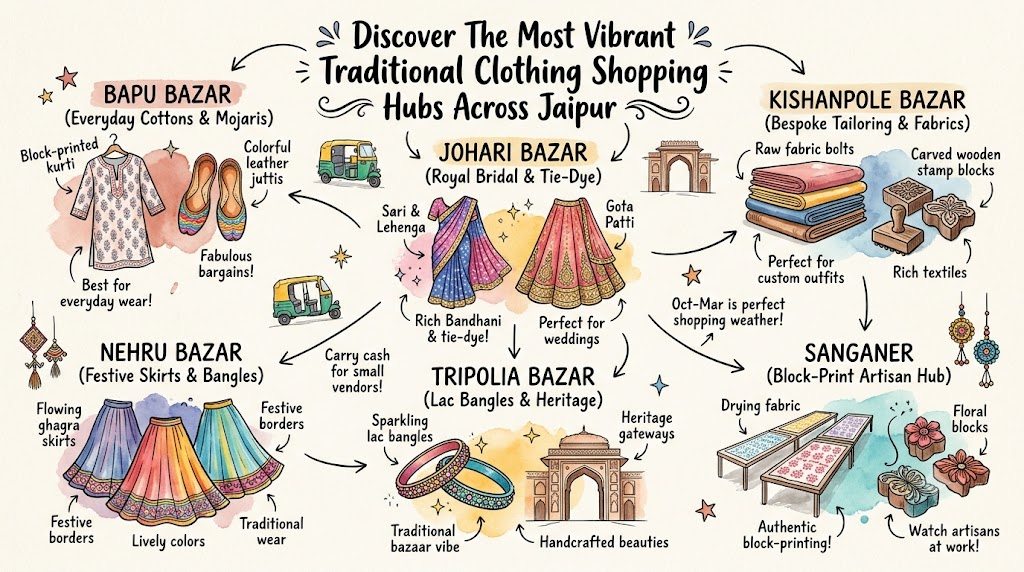
Bapu Bazar
Bapu Bazar remains the undisputed epicenter for everyday ethnic attire, flowing cotton fabrics, and colorful traditional ensembles. Flanked on both sides by uniform pink arches, the pedestrian-friendly avenue showcases endless shopfronts filled with ready-to-wear salwar suits, printed dupattas, and handcrafted juttis.
The market buzzes with infectious merchant energy and aromatic street food carts. It is the premier destination to observe the sheer variety of lightweight Sanganeri printed cottons, where skilled artisans stamp natural dye motifs onto crisp voiles and mulmul fabrics.
Intricate Bandhani textiles in Jaipur
- Location: Situated between Sanganeri Gate and New Gate in the southern Old City, roughly 4.5 km from Jaipur Junction.
- Why it is worth visiting: It offers the most comprehensive collection of ready-to-wear Rajasthani daywear and matching leather mojari footwear in one central location.
- Best things to do: Bargain for authentic indigo-dyed cotton kurtis, compare genuine camel-leather juttis, and pick up block-printed bed linens.
- Best time to visit: Late afternoon between 3:00 PM and 6:00 PM when all shops are fully open and temperatures cool down.
- Ideal for whom: Budget travelers, solo backpackers, casual textile hunters, and souvenir collectors.
- Travel tip: Start your negotiations at roughly 40% below the opening quoted price, especially when purchasing multiple garments.
Johari Bazar
While world-renowned for its heritage gemstone trade, Johari Bazar is equally celebrated for high-end royal ethnic wear and wedding couture. The bustling thoroughfare houses storied fabric shops and hidden interior courtyards where brides source heirloom sarees.
Within its narrow residential lanes, master dyers roll and bind gossamer georgettes and silks into distinctive Leheriya chevron ribbons. The avenue provides a rare glimpse into classic Indian bridal craftsmanship, blending silk brocades with glittering real-zari borders.
Colonnaded facade of Johari Bazar.
- Location: Stretching north-south between Badi Chaupar and Sanganeri Gate, approximately 5 km from the main city railway terminal.
- Why it is worth visiting: The definitive hub for authentic tie-dye textiles, celebratory turbans, and intricate Gota Patti bridal lehengas.
- Best things to do: Explore hidden lanes for master Bandhani dyers, browse antique Zari sarees, and admire handcrafted royal poshak ensembles.
- Best time to visit: Morning hours from 11:00 AM to 1:30 PM for attentive service before the afternoon foot traffic peaks.
- Ideal for whom: Wedding shoppers, luxury collectors, couples, and textile heritage scholars.
- Travel tip: Venture deep into the inner alleys (katras) like Purohit Ji Ka Katra for genuine wholesale rates away from street-front markups.
Kishanpole Bazar
Running parallel to Chaura Rasta, Kishanpole Bazar is the historical epicenter for bespoke tailoring, traditional turban tying, and raw unstitched fabric bolts. The market retains an authentic local character, largely unbothered by commercial tourist hype.
Centuries-old wooden shop fronts display bolts of plain and patterned fabrics that can be cut, dyed, and tailored within hours. It is also an active wood-carvers’ quarter, allowing shoppers to view the exact wooden blocks used to stamp the garments sold nearby.
- Location: Western spine of the Walled City between Ajmeri Gate and Chhoti Chaupar, 3.5 km from the central station.
- Why it is worth visiting: Unmatched access to wholesale unstitched textiles, raw handloom silks, and bespoke tailoring workshops.
- Best things to do: Custom-tailor a traditional bandhgala jacket, purchase hand-carved teak textile stamps, and observe turban-tying masters.
- Best time to visit: Midday between 12:00 PM and 3:00 PM when tailors take bespoke pattern consultations.
- Ideal for whom: Tailoring enthusiasts, slow-fashion designers, and DIY craft shoppers.
- Travel tip: Bring exact reference measurements or a well-fitting sample garment if you intend to commission same-day custom tailoring.
Nehru Bazar
Connecting Ajmeri Gate to New Gate, Nehru Bazar frames the southern border of the historic core with a slightly more relaxed pace than Bapu Bazar. It is famous for affordable Rajasthani skirts, printed palazzo sets, and vibrant traditional loungewear.
The lane bridges traditional apparel with colorful local accessories. Here, you will find piles of bright bandhej dupattas alongside stalls of handmade lac bangles and colorful mirrored umbrellas.
- Location: Southern boundary of the historic core between Ajmeri Gate and New Gate, 4 km from Jaipur Junction.
- Why it is worth visiting: Outstanding variety of inexpensive festive skirts, casual ethnic lounge sets, and matching accessories.
- Best things to do: Pick up mirror-embroidered ghagra skirts, sample local street savories, and browse handmade footwear.
- Best time to visit: Early evening between 4:30 PM and 7:30 PM to experience the market’s lively evening atmosphere.
- Ideal for whom: College students, families seeking everyday ethnic wear, and budget shoppers.
- Travel tip: Check garment seams carefully for double-stitching, as fast-fashion street pieces may require reinforced hems.
Tripolia Bazar
Anchored by the grand tripartite gateway between Chhoti Chaupar and Badi Chaupar, Tripolia Bazar serves as a bridge of royal history and artisan legacy. The bazaar is flanked by the towering City Palace complex on its northern edge.
Alongside brassware and iron hardware, Tripolia hosts venerable family establishments specializing in Maniharon Ka Rasta lac bangles and royal bandhej textiles. The grand avenue gives visitors a tangible sense of 18th-century royal commerce.
- Location: Central thoroughfare connecting Chhoti Chaupar and Badi Chaupar, 4.5 km from Jaipur Junction.
- Why it is worth visiting: Rich historic ambiance located right against the royal palace walls with legendary bangle-makers and fabric shops.
- Best things to do: Watch artisans shape hot resin lac bangles over open coals, source heavy winter shawls, and shop for handwoven dhurries.
- Best time to visit: Late morning around 11:30 AM as shutters roll open and artisans start morning demonstrations.
- Ideal for whom: Cultural history enthusiasts, photographers, and families.
- Travel tip: Combine a shopping stop here immediately before or after touring the adjacent City Palace gates to save transit time.
Sanganer Artisan Town
Located just beyond the southern edge of Jaipur, the craft settlement of Sanganer is the geographic birthplace of world-renowned floral wood-block prints. Walking through its narrow residential lanes reveals courtyards filled with long fabric-printing tables and open-air drying yards.
Visiting Sanganer lets you bypass retailers entirely and purchase yardage directly from master printers. The village is an essential pilgrimage for anyone wishing to understand the environmental and human rhythms behind natural pigment textile production.
- Location: Sanganer suburban township, roughly 13 km south of the Walled City center.
- Why it is worth visiting: The authentic manufacturing source of fine calico block-printed fabrics and handmade paper mills.
- Best things to do: Tour a working block-printing workshop, purchase running cotton yardage by the meter, and visit handmade paper mills.
- Best time to visit: Morning between 9:00 AM and 12:00 PM to watch fabric washing and sun-drying in open fields.
- Ideal for whom: Textile designers, sustainable fashion advocates, and craft researchers.
- Travel tip: Hire a private auto-rickshaw on a round-trip waiting basis, as returning transit can be sparse in the inner printing hamlets.
Offbeat Exploration: Hidden Gems Tourists Miss
Purohit Ji Ka Katra
Hidden behind a discreet archway inside Johari Bazar, this enclosed multi-story wholesale enclave serves as the secret bridal supply center of Rajasthan. Devoid of tourist window-dressing, this dense warren offers untouched wholesale rates for bulk sarees, embroidered fabrics, and festival attire.
Maniharon Ka Rasta
Branching off Tripolia Bazar, this quiet pedestrian lane is the ancestral home of the Muslim Lac bangle-making community. Shoppers can sit directly on woven mats and watch master artisans roll, tint, and encrust heated natural resin bangles to coordinate with their clothing purchases.
Bagru Artisan Workshops
Situated 30 km southwest of Jaipur along the Ajmer highway, the village of Bagru specializes in Dabu mud-resist dyeing and deep vegetable indigo vats. Unlike the delicate white backgrounds of Sanganer, Bagru fabrics boast rich indigo, madder, and earthy ochre tones.
Detailed Practical Guidance for Travelers
| Destination | Standard Entry Fee | General Timings | Best Local Food Options Nearby | Recommended Nearby Attractions |
|---|---|---|---|---|
| Bapu Bazar | Free Entry | 11:00 AM – 8:30 PM | Falooda at Pandit Kulfi; Samosas at Gulab Ji | Albert Hall Museum, New Gate Gardens |
| Johari Bazar | Free Entry | 10:30 AM – 8:00 PM | Pyaaz Kachori at LMB; Lassiwala (MI Road) | Hawa Mahal, Jama Masjid |
| Kishanpole Bazar | Free Entry | 11:00 AM – 7:30 PM | Masala Chai at Sahu Chai; Mahaveer Rabdi | Ajmeri Gate, Marble Statuary Lane |
| Nehru Bazar | Free Entry | 11:00 AM – 8:30 PM | Dahi Vada at Natraj; Chhole Bhature stalls | Ram Niwas Garden, Ravindra Manch |
| Tripolia Bazar | Free Entry | 10:30 AM – 8:00 PM | Ghewar at Kanha Sweets; Kachori at Samrat | City Palace, Jantar Mantar, Isarlat |
| Sanganer Town | Free Entry | 9:30 AM – 6:00 PM | Local dal-baati eateries near Sanganer Bus Stand | Sanganer Jain Temple, Kagzi Paper Mill |
Logistics & On-Ground Navigation
Local Transport Options
- Jaipur Metro: Fast, reliable, and air-conditioned, connecting suburban areas directly to the edge of the markets at Badi Chaupar and Chhoti Chaupar stations.
- Auto-Rickshaws & E-Rickshaws: Ideal for moving through the narrow lanes of the Walled City; agree on a fixed fare before stepping inside or hail via ride apps.
- App-Based Taxis: Uber and Ola operate extensively across the city, providing smooth transport between modern districts and the outer gates.
- Walking & Foot Exploration: Walking remains the single best way to explore the inner Katras, colonnades, and side alleys where vehicular traffic is restricted.
Budget Planning
- Backpacker / Budget Tier (₹1,500 – ₹2,500 per day): Stay in heritage hostels near Bani Park, eat street kachoris and thalis, travel using the Jaipur Metro and shared e-rickshaws, and shop for cotton kurtis and dupattas (averaging ₹300 to ₹600 each).
- Mid-Range / Comfort Tier (₹4,500 – ₹8,000 per day): Base yourself in a converted boutique haveli, take air-conditioned app taxis, dine at heritage restaurants, and invest in authentic Gota Patti suits, hand-block quilts, and pure silk sarees (ranging from ₹2,000 to ₹10,000+).
Safety and Inclusivity Tips
- Families: Keep small children close, as footpaths are narrow and two-wheelers frequently navigate market crowds; carry bottled water to stay hydrated.
- Couples: The markets are warm and welcoming; dress modestly covering shoulders and knees to blend in respectfully within traditional residential bazaars.
- General Safety: Keep wallets and mobile phones in secure zipped front pockets to avoid pickpocketing in crowded evening bazaar bottlenecks.
Strategic Travel Planning Guardrails
Travel Planning Tips for Jaipur
- Focus on October to March: Winter weather allows comfortable day-long walking without the oppressive desert summer heat.
- Prioritize Digital UPI & Carry Backup Cash: Most established retailers accept UPI QR payments and cards, but smaller roadside stalls and dye artisans rely entirely on cash.
- Plan Around Sunday Closures: Many government-regulated shops inside the Walled City observe staggered Sunday holidays; check specific bazaar schedules.
- Leave Luggage Space: Traditional block-printed quilts (Jaipuri Razai) and flowing textiles take up bulk; carry a lightweight foldable duffle bag.
- Inspect Fabric Under Daylight: Neon shop bulbs can distort pastel colors; step to the shop entrance to verify natural dye shades in natural light.
Common Mistakes to Avoid
- Overpacking Daily Itineraries: Trying to visit four major forts and three major markets on the same day guarantees physical exhaustion.
- Falling for Commission Touts: Never allow unverified auto drivers or street guides to reroute you to “exclusive artisan co-ops,” as prices are inflated with commissions.
- Assuming Fixed Pricing Everywhere: Except for clear state-run emporiums, prices in bustling street bazaars are open to respectful negotiation.
- Skipping Fabric Wash Tests: Before purchasing unwashed natural indigo items, gently rub a corner with a damp tissue to check for excessive color bleeding.
- Overlooking Care Instructions: Pure hand-block vegetable dyes and zari borders require dry cleaning or gentle cold washes; always verify fabric care.
Suggested Itinerary Blueprints
Day Quick Dash (Old City Textile Blitz)
- Target Audience: Short-stay travelers, layover visitors, and fast shoppers.
- Morning (9:30 AM – 1:00 PM): Arrive at Badi Chaupar, photograph Hawa Mahal exterior, and plunge directly into Johari Bazar for Bandhani fabrics and Gota Patti borders.
- Afternoon (2:00 PM – 5:30 PM): Enjoy kachoris at LMB, walk west along Tripolia Bazar to observe lac artisans, and conclude with rapid cotton shopping along Bapu Bazar.
Day Deep-Dive (Walled City & Craft Heritage)
- Day 1 (Core Bazaars): Spend the morning touring City Palace and Jantar Mantar. Dedicate the entire afternoon and evening to Bapu Bazar and Nehru Bazar for kurtis, mojari shoes, and street food.
- Day 2 (Artisan & Tailoring Trail): Spend the morning in Kishanpole Bazar for custom tailoring and fabric bolts. Spend the afternoon exploring the wholesale lanes of Purohit Ji Ka Katra and Johari Bazar.
Complete Weekend Travel Plan (From Raw Block to Royal Robe)
- Friday: Check in, enjoy an evening culinary walk along MI Road, and shop for handloom stoles at Bapu Bazar.
- Saturday: Full-day excursion to Sanganer town to explore live block-printing yards and paper mills; return to Johari Bazar for fine bridal textile viewing.
- Sunday: Morning architectural walk through Kishanpole and Tripolia Bazars; pick up bespoke bandhgalas and lacquer accessories before evening departure.
Common Tourist Mistakes to Avoid
- Geographic Blunders: Attempting to explore northern Amer Fort and southern Sanganer workshops in the same afternoon wastes hours in heavy cross-city traffic.
- Commercial Traps: Spending entire afternoons in sanitized highway souvenir malls where products are machine-printed reproductions sold at inflated prices.
- Neglecting Modern/Alternative Zones: Overlooking leafy modern neighborhoods like C-Scheme and Civil Lines, which feature contemporary designer studios and quiet cafes.
- Transport Overpayment: Agreeing to flat rates from auto drivers standing outside tourist monuments; always insist on the meter or check ridesharing apps for standard fares.
- Luxury Dining Bias: Restricting your meals to hotel buffets; you will miss the city’s true culinary soul found in historic street food stalls serving fresh kachoris and lassi.
Frequently Asked Questions
1. Which market in Jaipur is best for buying everyday readymade cotton kurtis?
Bapu Bazar is the premier destination for ready-to-wear cotton kurtis, casual salwar suits, and everyday ethnic skirts. The market specializes in breathable Sanganeri prints, offering massive selections across all price points.
2. How do I know if the block print fabric I am buying is genuine handwork?
Inspect the printed pattern for slight organic irregularities, faint color overlaps, or subtle smudges. Machine-printed copies display flawless mechanical symmetry, uniform spacing, and typically lack printing bleed on the fabric’s reverse side.
3. What is the difference between Sanganeri and Bagru printing styles?
Sanganeri prints typically use pure white or off-white fabric backgrounds adorned with delicate floral patterns. Bagru prints use mud-resist Dabu techniques and feature earthy tones, natural indigo blues, deep madder reds, and bold geometric layouts.
4. Can I get clothes stitched on the same day in Jaipur markets?
Yes, several tailors along Kishanpole Bazar and the alleys off Bapu Bazar offer same-day or 24-hour turnaround for simple garments, blouse fittings, and kurtas if you provide clear measurements early in the day.
5. Are traditional clothing markets closed on Sundays in Jaipur?
While many shops along Johari Bazar and Kishanpole Bazar close or operate on partial hours on Sundays, parts of Bapu Bazar and Nehru Bazar remain open to cater to weekend travelers.
6. What is the typical price range for an authentic Bandhani silk saree?
A basic art-silk Bandhani saree starts around ₹1,200, whereas authentic fine georgette, pure silk, or chinnon Bandhani sarees with hand-tied knots and Gota Patti borders range from ₹4,500 to over ₹25,000.
7. Where can I find the best bridal Lehengas and Gota Patti work?
Johari Bazar and the wholesale courtyards of Purohit Ji Ka Katra are the undisputed leaders for bridal wear, heavy zardozi embroidery, and heirloom Gota Patti lehengas in Jaipur.
8. Is bargaining expected when shopping for clothing in Jaipur bazaars?
Bargaining is standard practice in open street markets like Bapu Bazar and Nehru Bazar. However, high-end designer showrooms, established saree houses in Johari Bazar, and government emporiums maintain strictly fixed pricing policies.
9. What should I do if a taxi driver insists on taking me to a specific craft emporium?
Politely decline the recommendation and insist on your chosen destination. Drivers frequently earn heavy commissions from private emporiums that charge inflated prices to unwitting tourists.
10. What is the safest way to carry cash and payments while market shopping?
Use digital UPI smartphone payments whenever possible, as almost all registered merchants accept QR codes. Carry small amounts of cash in an interior zipped pocket for small street snacks and auto rides.
11. How can I safely wash and care for hand-printed vegetable dye fabrics?
Wash natural indigo and block-printed garments separately in cold water with mild liquid detergent for the first few cycles, or opt for dry cleaning to prevent premature color fading.
12. Where should men shop for traditional Rajasthani bandhgalas and kurtas?
Kishanpole Bazar and the fabric stores around Chaura Rasta offer the best options for men’s traditional attire, providing rich brocades, linen bolts, and experienced tailors for bespoke royal bandhgalas.
Conclusion
Stepping into Jaipur’s traditional clothing markets rewards travelers with much more than vibrant shopping bags—it provides a direct, living connection to Rajasthan’s royal artisan legacy. By walking these ancient colonnades, engaging with generational textile masters, and choosing handcrafted fabrics over factory-made goods, you invest in a sustainable artistic heritage that turns every worn garment into a cherished story.
