Introduction
While conventional getaways frequently herd vacationers into bland, homogenized concrete towers, true travel magic unfolds where past eras linger in quiet stone corridors. In Rajasthan’s historic heart, luxury is not measured by standardized perks, but by the resonance of centuries-old marble archways and royal courtyards.
Choosing a heritage stay immerses you within deep feudal traditions, where handcrafted frescoes, scented gardens, and bespoke Rajput hospitality outshine generic modern hospitality. Stepping across these restored palace thresholds connects your modern journey directly to India’s timeless aristocratic grandeur.
Grand palace architecture at Rambagh Palace.
Why Jaipur is a must-visit city
Jaipur stands as the crowning jewel of northern India’s celebrated Golden Triangle circuit, balancing imperial military history with artistic refinement. As India’s first planned medieval city, its wide avenues, pink terracotta walls, and UNESCO-designated urban layout reflect an astonishing fusion of Shilpa Shastra, Rajput architecture, and Mughal finesse. Reaching the city is effortless, thanks to high-speed national expressways from Delhi, extensive railway connections, and a well-serviced international airport that accommodates every travel tier.
The city’s classic travel circuit weaves past fortified hilltops, tranquil lake pavilions, and bustling craft guilds. Anchoring this entire ecosystem is the legendary conversion of private royal residences into living heritage hotels, offering travelers an immersive stay in active history.
| Key Fact | Details |
|---|---|
| Geographic Zone | Eastern Rajasthan, Aravalli Mountain Basin |
| Best Travel Period | October through March (Cool, radiant desert climate) |
| Connectivity Hubs | Jaipur International Airport (JAI), Jaipur Junction (JP) |
| Hospitality Architecture | Rajput-Mughal Fusion, Indo-Saracenic Havelis, Royal Palaces |
| Recommended Stay Duration | 3 to 4 Full Days for deep immersion |
Best Places or Experiences
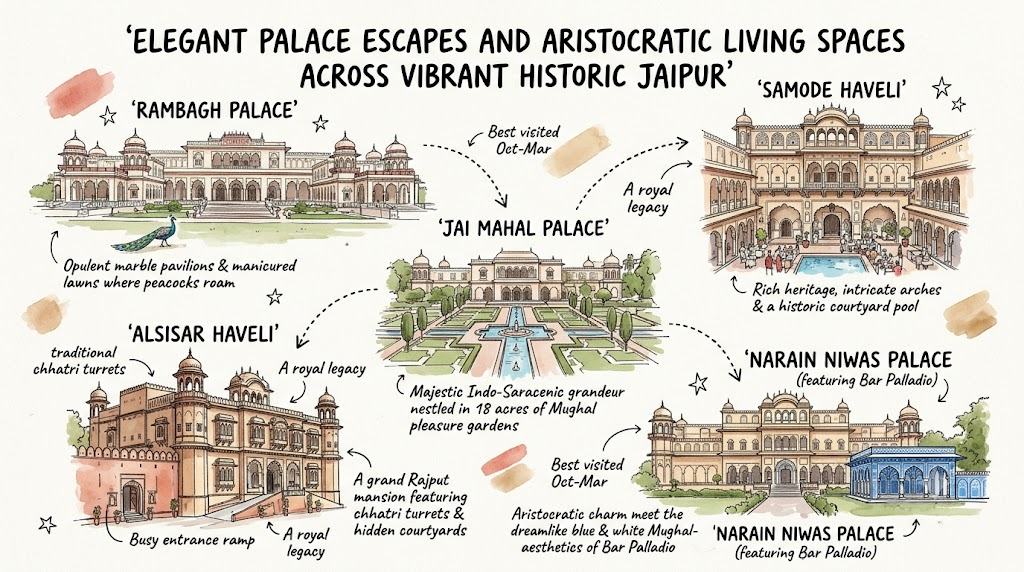
Rambagh Palace
Originally built in 1835 as a garden retreat for the queen’s favorite handmaiden and later expanded into the official residence of Maharaja Sawai Man Singh II and Maharani Gayatri Devi, Rambagh Palace is often celebrated as the “Jewel of Jaipur.” The sprawling 47-acre estate showcases pristine marble corridors, intricate jali latticework, and sprawling Mughal gardens where peacocks wander past antique fountains.
Within its polished sandstone pavilions, guests encounter an era of unprecedented regal opulence. The interiors are adorned with rich silk drapes, French crystal chandeliers, and museum-caliber portraits that immerse visitors in authentic royal heritage.
- Location: Bhawani Singh Road, C-Scheme; approximately 5 km south of the historic walled city gates.
- Why it is worth visiting: It offers an authentic chance to reside within an intact, operating royal palace managed with world-class hospitality.
- Best things to do: Sip vintage single-malts inside the Polo Bar, indulge in traditional Ayurvedic spa rituals, and dine beneath the grand vaulted frescoed ceilings of Suvarna Mahal.
- Best time to visit: Late afternoon around 4:30 PM for high tea on the veranda as traditional musicians perform.
- Ideal for whom: Discerning luxury travelers, honeymooners, and architecture connoisseurs.
- Travel tip: Book non-resident dinner reservations at Suvarna Mahal several weeks ahead, as access past the palace gates is strictly monitored.
Samode Haveli
Tucked discreetly inside the northern ramparts of the Old City, Samode Haveli is a 225-year-old aristocratic urban mansion built for the hereditary rulers of Samode. This boutique treasure features sunken central courtyards, gentle fountains, and hand-painted floral frescoes rendered in vegetable dyes.
The property retains its intimate, labyrinthine character, with private alcoves, mosaic-lined verandas, and a stunning outdoor pool sheltered by Moorish arches. It provides a peaceful sanctuary away from the energetic streets of the bustling bazaars nearby.
Courtyard pool retreat at Samode Haveli.
- Location: Gangapole, Old Walled City; 6 km northeast of Jaipur Junction railway station.
- Why it is worth visiting: The preserved Sheesh Mahal dining chamber features some of the finest mirror-inlay artistry in Rajasthan.
- Best things to do: Relax on daybeds beside the pool courtyard, admire private miniature paintings in the library, and enjoy a candlelight dinner beneath open-air arches.
- Best time to visit: Mid-afternoon for a leisurely lunch followed by an architectural stroll through the courtyards.
- Ideal for whom: Couples seeking romantic privacy, heritage preservation buffs, and boutique retreat seekers.
- Travel tip: Hire an e-rickshaw to reach the property gates, as the historic approach streets can be narrow for large SUVs.
Alsisar Haveli
Dating back to 1892, Alsisar Haveli was the distinguished city home of the royal Khetri-Alsisar clan, situated just outside the historic walled perimeter. The property is renowned for its broad courtyards, ornate chhatri turrets, and intricate stone carvings.
Restored with deep respect for historic Rajasthani architecture, the mansion features classic antique four-poster beds, vintage family heirlooms, and polished stone floors. Its expansive central courtyard is bordered by leafy trees that create a refreshing microclimate even in warm months
.
Traditional courtyards of Alsisar Haveli.
- Location: Sansar Chandra Road; about 2 km from Jaipur Junction railway station.
- Why it is worth visiting: It balances genuine aristocratic heritage with accessible central pricing, making royal living approachable.
- Best things to do: Enjoy evening puppet performances in the courtyard, browse period weapons in the lounges, and swim in the tiled garden pool.
- Best time to visit: Early morning between 7:00 AM and 9:00 AM when soft sunlight illuminates the ornate upper balconies.
- Ideal for whom: Culture-focused families, independent travelers, and classical history enthusiasts.
- Travel tip: Request a heritage room on the upper terrace level for sweeping views across the palace courtyards.
Jai Mahal Palace
Set amidst 18 acres of landscaped Mughal pleasure gardens, Jai Mahal Palace was erected in 1745 as the residence of the prime minister of princely Jaipur. This Indo-Saracenic masterpiece features multi-tiered white domes, sandstone pillars, and tiered water fountains.
The palace’s classic symmetry offers guests a private resort experience right in the city center. Stone-paved garden paths, outdoor chess sets, and evening folk celebrations ensure an authentic cultural immersion.
- Location: Jacob Road, Civil Lines; roughly 3 km from the central railway hub.
- Why it is worth visiting: The meticulously restored 18th-century decorative gardens offer an authentic glimpse into historic Mughal horticultural design.
- Best things to do: Play a match on the life-sized garden chessboard, dine on royal Rajasthani specialties at Cinnamon restaurant, and stroll the fountain pathways at twilight.
- Best time to visit: Sunset between 5:30 PM and 7:00 PM when courtyard oil lamps are lit to folk melodies.
- Ideal for whom: Multi-generational families, luxury travelers, and wedding celebrations.
- Travel tip: Ask the palace concierge for an architectural garden walk to discover the original geometric water irrigation channels.
Narain Niwas Palace
Constructed in 1928 by General Amar Singh Ji of Kanota, Narain Niwas Palace combines Anglo-Indian country manor elements with classic Rajput royal design. The estate houses an impressive private library of personal diaries alongside period furnishings and hunting memorabilia.
Surrounded by sprawling orchards and inhabited by resident peacocks, the grounds host the vibrant Shikaar Bagh veranda lounge and the chic Bar Palladio. The palace balances living historical ambiance with Jaipur’s modern cultural renaissance.
- Location: Kanota Bagh, Narain Singh Road; roughly 4 km southeast of the Old City bazaars.
- Why it is worth visiting: It offers an inspiring mix of historic clan heritage and lively contemporary evening dining.
- Best things to do: Sip Italian-inspired aperitivos at the peacock-blue Bar Palladio, explore the Kanota royal family archives, and dine under open stars at Shikaar Bagh.
- Best time to visit: Twilight from 6:30 PM onwards when garden lanterns illuminate the frescoed verandas.
- Ideal for whom: Creative travelers, couples, boutique shoppers, and design fans.
- Travel tip: Secure an advance table reservation for Bar Palladio, as evening walk-ins face lengthy waitlists.
Offbeat Exploration: Hidden Gems Tourists Miss
The Stepwell Alcoves of Chand Baori at Abhaneri
While most travelers only visit Amber Fort’s stepwell, taking a dedicated morning detour east toward Abhaneri reveals one of the world’s deepest and largest stepwells. With 3,500 narrow stone steps arranged in precise geometric patterns across 13 stories, this 8th-century marvel feels like an architectural dream.
The Kanota Family Royal Library Archives
Located within driving distance of Narain Niwas at the ancestral Kanota Fort, this private archive preserves the world’s longest continuous handwritten diary, penned by General Amar Singh. It provides an intimate, unfiltered look into everyday royal Rajput court life, British interactions, and culinary secrets.
Galwar Bagh at Early Dawn (The Monkey Temple Valley)
Tucked within a narrow gorge along the eastern hills, this sacred complex of natural freshwater springs and pink pavilions awakens before sunrise. Visiting before regular tour buses arrive lets you experience holy morning temple chants, quiet mountain vistas, and peaceful sunlit ridges.
Detailed Practical Guidance for Travelers
| Destination | Standard Entry Fee | General Timings | Best Local Food Options Nearby | Recommended Nearby Attractions |
|---|---|---|---|---|
| Rambagh Palace | Resident access or dining reservation | Open 24 Hours (Dining 12:30 PM – 11:30 PM) | Suvarna Mahal, Rajput Room | Central Museum (Albert Hall), Birla Temple |
| Samode Haveli | Resident access or prior dining booking | Open 24 Hours (Visitor dining by booking) | LMB Sweet House, Handi Restaurant | City Palace, Hawa Mahal, Jantar Mantar |
| Alsisar Haveli | Resident access or courtyard pass | Open 24 Hours (Pool/Courtyard 8:00 AM – 10:00 PM) | Rawat Mishthan Bhandar, Natraj Restaurant | Station Road Bazaars, Raj Mandir Cinema |
| Jai Mahal Palace | Resident access or table booking | Open 24 Hours (Garden dining 11:00 AM – 11:00 PM) | Cinnamon, Giardino, Curious Life Coffee | Civil Lines Promenade, Bais Godam Studios |
| Narain Niwas Palace | Resident access or evening venue patrons | Open 24 Hours (Lounges 6:00 PM – 12:00 AM) | Bar Palladio, Shikaar Bagh, Cafe Palladio | Albert Hall, M.I. Road Handicraft Emporiums |
Logistics & On-Ground Navigation
Local Transport Options
- App-Based Taxis: Uber and Ola operate smoothly across the city, providing reliable, fixed-fare air-conditioned transit between outer palaces and city monuments.
- Pre-arranged Chauffeur Vehicles: Booking a dedicated air-conditioned sedan through your heritage hotel concierge ensures effortless point-to-point transit throughout the day.
- Auto-Rickshaws and E-Rickshaws: Ideal for traversing the congested alleyways of Johari and Bapu Bazaars where larger vehicles cannot easily navigate.
- Jaipur Metro System: A modern, clean, elevated and underground line running directly from Mansarovar through the central railway station to Badi Chaupar in the Old City.
Budget Planning
- Backpacker Tier (₹1,800 – ₹3,200 per day): Stay in boutique heritage dorms or family havelis, travel via Jaipur Metro and e-rickshaws, eat traditional kachoris and local thalis, and view palaces via public garden passes.
- Comfort & Heritage Tier (₹9,000 – ₹18,000 per day): Stay in restored ancestral suites at properties like Alsisar Haveli, book private rental cars, enjoy fine-dining meals at boutique heritage restaurants, and hire licensed historians for monument tours.
Safety and Inclusivity Tips
- For Families: Heritage courtyards provide secure, car-free environments for children, though visitors should watch little ones closely near historic parapets and decorative fountains.
- For Couples: Properties like Samode Haveli and Narain Niwas offer quiet, candlelit courtyards designed for romantic privacy away from public bustle.
- General Safety Guardrails: Keep small cash notes for local tips, verify your auto-rickshaw fare before boarding, and drink only filtered or bottled water from verified sources.
Strategic Travel Planning Guardrails
Travel Planning Tips for Jaipur
- Secure Heritage Suites Early: Premier converted rooms at historic estates book out months ahead for the peak winter wedding and holiday season.
- Pack Light Layers for Temperature Swings: Desert winters feature crisp mornings, warm sunny afternoons, and chilly nights that call for a wool wrap or light jacket.
- Adopt Hybrid Digital and Cash Payments: While boutique hotels and upscale stores welcome credit cards and UPI QR codes, traditional bazaar stalls prefer physical currency.
- Observe Heritage Etiquette: Remove your shoes when entering active temples or shrine alcoves tucked within historic haveli properties.
- Carry Comfortable Walking Shoes: Cobblestone courtyards, marble staircases, and historic stone pathways require supportive, slip-resistant footwear.
Common Mistakes to Avoid
- Overcrowding Single-Day Schedules: Trying to cover three distant hilltop forts, two royal museums, and multiple craft shops in a single afternoon causes severe travel fatigue.
- Assuming All Havelis Are Centralized: Properties are scattered between the historic Old City, Civil Lines, and the southern bypass; plan around regional clusters.
- Ignoring Hotel Dining Reservation Policies: Showing up at premier palace restaurants like Suvarna Mahal without advance reservations almost always results in disappointment at the entry gate.
- Dismissing Regional Rajasthani Fare: Sticking to familiar continental dishes means missing out on signature royal dishes like Dal Baati Churma and Ker Sangri.
- Overpaying for Unmetered Transit: Never accept an initial unmetered fare from street transport stands without cross-checking current ride-hailing app estimates first.
Suggested Itinerary Blueprints
Day Quick Dash (Royal Heritage Highlights)
- Target Audience: Busy travelers wanting an iconic 24-hour palace experience.
- Morning: Check into your central haveli, then head out early to photograph the sunlit facade of Hawa Mahal and the royal courtyards of City Palace.
- Afternoon: Tour the massive ramparts of Amber Fort, followed by lunch overlooking Jal Mahal.
- Evening: Enjoy a regal fine-dining dinner beneath the gilded ceilings of Suvarna Mahal at Rambagh Palace.
Day Deep-Dive (Palatial Arts & Historic Haveli Trail)
- Day 1: Explore the walled city’s classic architecture, discover the miniature paintings at City Palace, lunch in the courtyards of Samode Haveli, and spend the evening watching the city lights from Nahargarh Fort.
- Day 2: Visit the historic stepwell at Panna Meena Ka Kund, explore Anokhi Museum of Hand Printing, return for an afternoon swim at Alsisar Haveli, and finish with evening drinks at Bar Palladio.
Complete Weekend Travel Plan (The Aristocratic Jaipur Loop)
- Friday: Arrive, settle into your historic suite at Jai Mahal Palace, enjoy a twilight garden walk, and dine on traditional delicacies in the courtyard.
- Saturday: Dedicate the day to Amber Fort, the royal cenotaphs at Gaitore, and block-print shopping in the old quarters; wind down with relaxed lounge dining at Shikaar Bagh.
- Sunday: Enjoy a leisurely breakfast in the gardens, shop for blue pottery in Civil Lines, visit Albert Hall Museum, and conclude with high tea at Rambagh Palace before heading to the airport.
Common Tourist Mistakes to Avoid
- Geographic Blunders: Grouping northern outer sights like Amber Fort and Jaigarh with southern modern districts on the same morning leads to hours lost in cross-city traffic.
- Commercial Traps: Spending afternoon shopping hours in flashy roadside souvenir complexes rather than exploring authentic artisan workshops and government-certified emporiums.
- Neglecting Modern/Alternative Zones: Skipping the tree-lined streets of C-Scheme and Civil Lines, home to some of the city’s best independent cafes, contemporary galleries, and design studios.
- Transport Overpayment: Agreeing to flat rates from tourist taxi ranks without checking app-based rates, often paying two or three times the going rate.
- Luxury Dining Bias: Missing out on classic local culinary staples like street-side pyaaz kachoris at Rawat or clay-cup lassi on M.I. Road by dining only within hotel walls.
Frequently Asked Questions
1. What fundamentally distinguishes an authentic heritage hotel from a standard luxury hotel in Jaipur?
Authentic heritage properties are historic aristocratic residences, havelis, or palaces that have been meticulously restored into living hotels. Unlike modern five-star hotels with uniform layouts, these properties preserve their original stone carvings, hand-painted floral frescoes, vintage courtyards, and centuries of authentic family heritage.
2. Are non-resident travelers allowed to visit these heritage palace properties for dining?
Yes, non-resident guests can dine at celebrated palace venues like Suvarna Mahal at Rambagh Palace or Bar Palladio at Narain Niwas. However, guests must make advance table reservations to ensure clearance through hotel security gates.
3. What is the optimal season to plan a royal palace stay in Jaipur?
The most rewarding time to visit is during the cooler desert winter from October through March. Pleasant daytime temperatures create ideal conditions for garden strolls, courtyard dinners, and open-air folk performances that hot summer months cannot offer.
4. How accessible are these historic havelis for travelers with mobility limitations?
Because many heritage hotels are converted historic residences with multi-level courtyards, narrow stairwells, and raised thresholds, ramp access can be limited. However, premier luxury palace properties provide elevators, ramp pathways, and ground-level suites upon request.
5. What is the approximate starting cost per night for an authentic heritage stay?
Charming boutique havelis such as Alsisar Haveli typically start between ₹6,000 and ₹12,000 per night, whereas premier palace stays like Rambagh Palace can range from ₹45,000 to over ₹1,50,000 per night depending on the season and suite category.
6. Do heritage hotels offer traditional Rajasthani food suited to international dietary requirements?
Yes, heritage hotel kitchens excel at crafting authentic royal recipes while tailoring spice levels to international preferences. Dedicated chefs can easily accommodate vegan, gluten-free, nut-free, and Jain dining preferences when informed in advance.
7. Can children enjoy staying at historic palace hotels?
Children love exploring the sprawling gardens, spotting peacocks, and watching live folk music and puppet shows in the courtyards. However, parents should supervise little ones around decorative fountains, narrow historic balconies, and vintage heirlooms.
8. Do heritage hotels assist with authentic local sightseeing and artisan shopping?
Most heritage properties have knowledgeable in-house concierges who can arrange certified local historians, private chauffeur vehicles, and visits to reputable artisan studios specializing in blue pottery, block printing, and jewelry.
9. Are modern room amenities available inside centuries-old palace chambers?
Yes, restored properties seamlessly integrate modern comforts such as central climate control, high-speed Wi-Fi, updated luxury bathrooms, and plush bedding into their historic architectural shells without diminishing antique aesthetic charm.
10. How far in advance should I reserve a room during peak holiday months?
For travel between November and February, reserve your heritage hotel rooms at least three to five months in advance. The city’s popular wedding dates, festive seasons, and cultural festivals quickly fill the limited inventory of palace suites.
11. Is photography permitted within private royal heritage hotels?
Resident guests can take personal photographs across garden areas, courtyards, and common verandas. However, commercial shoots, drone photography, and flash equipment within historic painted chambers are strictly regulated and require management clearance.
12. What is the best way to travel from the airport to central heritage hotels?
The most seamless transfer is a pre-arranged hotel pickup or an app-based cab via Uber or Ola from the arrivals terminal. The drive to C-Scheme, Civil Lines, or the Old City takes about 25 to 40 minutes depending on traffic.
Conclusion
Choosing an authentic heritage stay in Jaipur elevates your journey from a conventional holiday into an unforgettable encounter with living history. Waking to birdsong across sunlit marble pavilions, walking courtyards that once hosted royal gatherings, and enjoying heartfelt Rajput hospitality leaves an enduring impression on your travel memories.
