Introduction
While most travelers flock to Jaipur strictly to photograph crowded palace courtyards or battle tourist buses at fort gates, an entirely different cultural renaissance unfolds in the city’s curated art spaces. Jaipur’s creative spirit extends far beyond its historic pink facades into cutting-edge contemporary galleries, architectural marvels, and dynamic multidisciplinary arts centers.
Stepping into these spaces offers an authentic dialogue between royal Rajasthani heritage and avant-garde international expression. By venturing into artist studios, modernist pavilions, and curated private collections, creative travelers uncover the living, evolving soul of Rajasthan away from mainstream crowds.
Why Jaipur is a must-visit city
Jaipur occupies a paramount position in the global creative consciousness, acting as the beating cultural heart of India’s Golden Triangle. Historically planned under the astronomer-king Maharaja Sawai Jai Singh II and architect Vidyadhar Bhattacharya, the city was conceived from its very inception in 1727 as a haven for master artisans, miniature painters, and sculptors under royal patronage.
Today, that classical craftsmanship seamlessly fuels a modern visual arts ecosystem that bridges centuries of tradition with provocative contemporary thought. Seamlessly connected via direct international flights, express rail corridors, and modern expressways, Jaipur offers a sophisticated artistic circuit that effortlessly caters to solo creative retreatants, design scholars, and casual culture seekers alike.
| Key Fact | Details |
|---|---|
| State / Region | Rajasthan, Northern India |
| Best Travel Season | October to March (Temperate, dry winters) |
| Nearest Airport | Jaipur International Airport (JAI), Sanganer |
| Artistic Specialization | Miniature painting, modern sculpture, visual arts, architectural installations |
| Ideal Exploration Time | 3 to 4 Days for dedicated gallery hopping |
Best Places or Experiences
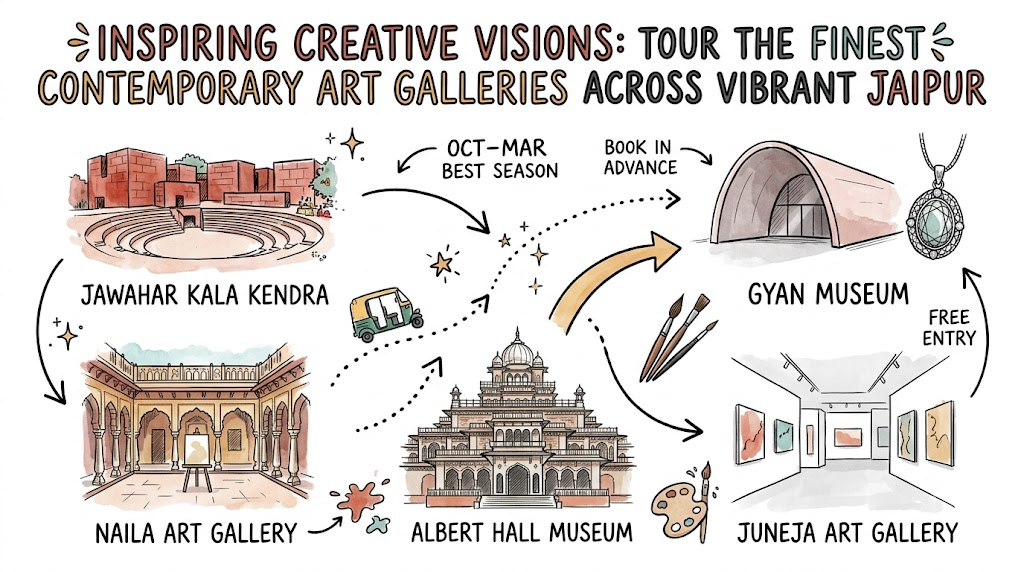
Jawahar Kala Kendra
Conceived by legendary modernist architect Charles Correa, Jawahar Kala Kendra (JKK) is a masterwork of structural storytelling based on the nine-planet Navagraha cosmic mandala. Built with bold red sandstone walls and sweeping open courtyards, each thematic square within the complex corresponds to an astronomical realm, fostering an atmosphere where space and creativity merge effortlessly.
As Rajasthan’s flagship multi-arts center, JKK regularly hosts groundbreaking contemporary visual art exhibitions, experimental theater, and craft symposiums. The complex includes the acclaimed Chaturdik Gallery, printmaking studios, and the iconic open-air amphitheater Madhyavarti, where visiting artists gather beneath starlit desert skies.
- Location: Jhalana Doongri, approximately 6 km south of the historic walled city gates.
- Why it is worth visiting: Unmatched synthesis of astrological architecture and cutting-edge contemporary Indian visual art.
- Best things to do: Walk through rotating exhibitions at Chaturdik Gallery, browse rare art catalogues at the resource library, and unwind at the outdoor Indian Coffee House.
- Best time to visit: Late afternoon around 3:30 PM to experience natural light shifting across the red sandstone courtyards.
- Ideal for whom: Architecture purists, fine arts scholars, solo travelers, and design creatives.
- Travel tip: Check the internal event notice boards upon arrival for unannounced artist talks or theater screenings happening that evening.
Gyan Museum
Designed by acclaimed French architect Jean-François Lesage, the Gyan Museum is a breathtaking private institution dedicated to the private collection of master gemologist Gyan Chand Dhaddha. Spanning an astonishing 3,000-year timeline, this subterranean minimalist gallery showcases antique jewelry, miniature Mughal paintings, rare manuscripts, and antique Persian tapestries in a dramatic dim-lit setting.
The museum’s curved concrete architecture and tailored acoustic dampening create a quiet sanctuary where each artifact feels suspended in time. Contemporary visual arts exhibitions often dialogue with the historic permanent collection, creating an evocative bridge between ancient royal craft and modern minimalist sculpture.
Sleek contemporary curation at Gyan Museum.
- Location: Sitapura Industrial Area, roughly 18 km south of Central Jaipur.
- Why it is worth visiting: A hidden architectural jewel housing world-class rare miniature paintings and gemstone art rarely seen by the general public.
- Best things to do: Examine intricate 17th-century Mughal miniature details with gallery magnifying glasses, explore antique gold weaponry, and admire the concrete rib-vaulted gallery ceiling.
- Best time to visit: Midday between 11:30 AM and 2:00 PM for uninterrupted, peaceful gallery contemplation.
- Ideal for whom: Antique collectors, jewelry designers, fine art historians, and luxury aesthetic travelers.
- Travel tip: Advance online booking is mandatory before visiting because admission is tightly controlled to preserve the serene gallery environment.
Naila Art Gallery
Nestled within the lush garden courtyard of Naila Bagh Palace, this historic art space was established to nurture emerging Rajasthani painters and sculptors alongside established Indian masters. The surrounding heritage property dates back to 1872, offering an atmospheric setting filled with hand-painted fresco ceilings and tranquil heritage archways.
The gallery displays bold oil canvases, expressive mixed-media abstracts, and experimental ceramic forms that defy typical tourist art cliches. It frequently hosts resident international artists, creating a vibrant melting pot where studio practitioners exchange ideas with collectors over tea in marble-paved verandas.
- Location: Moti Doongri Road, around 3 km from the Albert Hall Museum.
- Why it is worth visiting: An authentic studio environment inside a living 19th-century royal haveli supporting independent visual artists.
- Best things to do: Engage directly with resident painters at work, tour the historic haveli frescos, and purchase original signed canvases from emerging regional talent.
- Best time to visit: Mornings between 10:00 AM and 12:30 PM when natural sunlight illuminates the open gallery verandas.
- Ideal for whom: Contemporary painting collectors, cultural backpackers, and bohemian creative duos.
- Travel tip: Inquire at the front desk about ongoing artist residency schedules to meet painters currently producing work on-site.
Albert Hall Museum Central Gallery
Standing proudly amid the sprawling Ram Niwas Garden, this majestic Indo-Saracenic palace designed by Sir Samuel Swinton Jacob houses Rajasthan’s oldest public art collection. Intricately carved stone arches, ornate jali screens, and domed chhatris make the exterior an artistic feast long before you step inside its grand galleries.
The central corridors display magnificent 19th-century Jaipur school miniature paintings, rare Persian carpets, and historical metalwork collected directly from regional royal workshops. For visual artists, the museum serves as a primary reference archive documenting how traditional Rajasthani pigments, lapis lazuli glazes, and botanical dyes were applied across generations
Historic Indo-Saracenic majesty of Albert Hall Museum.
- Location: Ram Niwas Garden, southern perimeter of the historic Old City.
- Why it is worth visiting: The definitive classical art archive of Rajasthan, showcasing masterworks of the Jaipur, Bundi, and Kishangarh miniature schools.
- Best things to do: Study the intricate brushwork of the Razmnama epic miniatures, view the antique 16th-century Persian garden carpet, and photograph the illuminated facade at night.
- Best time to visit: Early morning at 9:00 AM for quiet museum halls, or after 7:00 PM to view the stunning exterior architectural illuminations.
- Ideal for whom: History buffs, classical art students, sketch artists, and traveling families.
- Travel tip: Purchase the composite monument ticket if you plan to visit Amber Fort and Hawa Mahal on the same travel circuit to save money and skip ticket queues.
Juneja Art Gallery
Founded in the late 1980s in the vibrant C-Scheme district, Juneja Art Gallery is one of Jaipur’s longest-running independent platforms promoting contemporary Indian fine art. The gallery represents prominent modernists while consistently introducing fresh regional voices working across figurative and abstract genres.
The pristine white-cube aesthetic inside contrasts delightfully with Jaipur’s bustling streetscapes outside. Visitors will find powerful oil paintings, dynamic bronze figurines, and evocative charcoal compositions that address contemporary environmental and societal themes.
- Location: C-Scheme, near Ashok Nagar, approximately 4 km from Jaipur Junction Railway Station.
- Why it is worth visiting: A pioneer of the modern art scene in Rajasthan with meticulously curated commercial contemporary collections.
- Best things to do: Discover high-caliber investment art, discuss modern Indian movements with knowledgeable gallery docents, and explore unique bronze sculptures.
- Best time to visit: Late afternoon between 4:00 PM and 6:30 PM before exploring neighborhood cafes.
- Ideal for whom: Serious art collectors, contemporary gallery hoppers, and interior art consultants.
- Travel tip: Juneja ships authenticated artwork internationally with full provenance certificates, making it ideal for foreign buyers.
Offbeat Exploration: Hidden Gems Tourists Miss
The Sculpture Park at Madhavendra Palace
Perched inside Nahargarh Fort, this public sculpture initiative transforms the royal living apartments of the 19th-century palace into a cutting-edge contemporary sculpture gallery. Renowned international and Indian sculptors display massive abstract bronze, glass, and steel works directly inside hand-frescoed royal suites, creating an unforgettable juxtaposition of medieval architecture and modern minimalism.
Traditional Chitrashala at Amer
Tucked away in the historic hillside settlement behind Amer Fort, small family-run painter ateliers still practice the ancient art of miniature painting using genuine squirrel-hair brushes and crushed gemstone minerals like ruby, lapis, and emerald. Visiting these private living rooms gives you a front-row view of centuries-old technique preserved without modern commercialization.
Anokhi Museum of Hand Printing
Located in a meticulously restored sandstone haveli in the shadow of Amer Fort, this specialist museum and gallery is entirely dedicated to the historical art of woodblock carving and textile printing. Watching master woodcarvers chisel complex geometric motifs into teak blocks reveals the immense foundational craftsmanship behind Rajasthan’s legendary textile art.
Detailed Practical Guidance for Travelers
| Destination | Standard Entry Fee | General Timings | Best Local Food Options Nearby | Recommended Nearby Attractions |
|---|---|---|---|---|
| Jawahar Kala Kendra | Free entry (Ticketed events vary) | 10:00 AM – 8:00 PM | Indian Coffee House (On-site), Decked Up by R Kitchen | World Trade Park, Smriti Van Nature Trail |
| Gyan Museum | Approx. ₹1,000 (By appointment) | 10:00 AM – 6:00 PM (Closed Sundays) | Chokhi Dhani Dining Hall, Local Sitapura Cafes | Alice Garg National Seashell Museum |
| Naila Art Gallery | Free entry | 11:00 AM – 7:00 PM | Bar Palladio (Heritage cocktails), Tapri Central | Birla Mandir, Moti Doongri Temple |
| Albert Hall Museum | ₹300 (Foreigners) / ₹40 (Indians) | 9:00 AM – 5:00 PM & 7:00 PM – 10:00 PM | Masala Chowk (Regional food street), Lassiwala MI Road | Ram Niwas Garden Zoo, New Gate Bazar |
| Juneja Art Gallery | Free entry | 11:00 AM – 7:00 PM | Curious Life Coffee Roasters, Anokhi Cafe | Statue Circle, Central Park Walking Tracks |
Logistics & On-Ground Navigation
Local Transport Options
- App-Based Taxis: Uber and Ola provide transparent, air-conditioned transport connecting distant creative hubs like Sitapura and Jhalana with Central Jaipur.
- Auto-Rickshaws & E-Rickshaws: Excellent for short hops between downtown galleries in C-Scheme, Civil Lines, and the walled perimeter. Always confirm fares beforehand.
- Jaipur Metro: A clean, affordable transit line connecting Mansarovar through the city center to Badi Chaupar, ideal for skipping Old City surface traffic.
- Self-Drive & Private Day Chauffeurs: Booking a private taxi for 8 hours is the most productive strategy for covering spread-out sites like Gyan Museum and Nahargarh.
Budget Planning
- Budget/Backpacking Creative Tier (₹1,500 – ₹2,500 per day): Stay in boutique hostels in C-Scheme, explore free public art galleries like JKK and Juneja, eat at Masala Chowk, and commute via Metro and e-rickshaws.
- Mid-Range/Collector Comfort Tier (₹6,000 – ₹10,000 per day): Stay in heritage havelis, book private appointments at boutique private museums, hire a dedicated private car, and dine at refined historic spaces like Bar Palladio.
Safety and Inclusivity Tips
- For Families: The vast grassy courtyards and open corridors of Jawahar Kala Kendra and Ram Niwas Garden allow children to move freely without disrupting quiet gallery environments.
- For Couples: Evening walks through the illuminated gardens surrounding Albert Hall Museum offer a quiet, romantic ambiance away from commercial street noise.
- General Traveler Safety: Keep high-value cameras secured in bags during street transfers, verify photography permission placards before shooting inside private galleries, and carry filtered water during mid-day travel.
Strategic Travel Planning Guardrails
Travel Planning Tips for Jaipur
- Align with Art Festivals: Plan your trip around prominent cultural gatherings such as the Jaipur Literature Festival (January) or Jaipur Art Week for pop-up exhibitions.
- Pre-Book Specialist Spaces: Always confirm private gallery slots (particularly Gyan Museum) at least 48 hours in advance to guarantee access.
- Embrace UPI and Cash: Major commercial galleries accept cards, but artisan workshops and entry counters often require UPI payments or small cash notes.
- Check Weekly Closures: Note that government institutions and several private galleries close on Mondays or Sundays; verify schedules before setting out.
- Dress in Layered Cottons: Winter days are delightfully sunny but cool down rapidly after sunset; pack light shawls or jackets for evening gallery openings.
Common Mistakes to Avoid
- Focusing Solely on Monuments: Visiting only standard forts and skipping the city’s active artist studios leaves out Jaipur’s modern cultural pulse.
- Rushing Through Exhibitions: Packing more than three major galleries into a single day causes sensory fatigue; give yourself time to reflect.
- Buying Commercial Souvenirs in Markets: Purchasing mass-produced factory prints in tourist bazars instead of original signed artwork from gallery studios wastes your money.
- Ignoring Local Transport Apps: Hailing unmetered street auto-rickshaws outside major tourist gates frequently results in paying 3x the normal rate.
- Overlooking Gallery Cafes: Skipping on-site creative hubs like JKK’s coffee house deprives you of meeting local artists and writers who congregate there daily.
Suggested Itinerary Blueprints
Day Quick Dash (Modern Art & Classical Highlights)
- Target Audience: Creative travelers on a tight 24-hour business or weekend layover.
- Morning: Begin at 9:30 AM examining classical miniature paintings inside Albert Hall Museum.
- Afternoon: Head south to Jawahar Kala Kendra for lunch at Indian Coffee House, followed by touring the modernist architecture and Chaturdik Gallery.
- Evening: Finish with contemporary art viewing at Juneja Art Gallery in C-Scheme, followed by artisanal coffee nearby.
Day Deep-Dive (Heritage Meets Contemporary Vision)
- Day 1: Explore the classical roots: start at the Anokhi Museum of Hand Printing, visit the Chitrashala ateliers in Amer, and tour the Nahargarh Sculpture Park at sunset.
- Day 2: Modern art immersion: spend the morning at Gyan Museum in Sitapura, take lunch in C-Scheme, and spend your afternoon and evening between Naila Art Gallery and Jawahar Kala Kendra.
Complete Weekend Travel Plan (The Ultimate Jaipur Art Circuit)
- Friday Evening: Check into a heritage boutique stay in C-Scheme; enjoy evening exhibitions at Juneja Art Gallery and drinks at Bar Palladio.
- Saturday: Morning architectural and visual arts walk through Jawahar Kala Kendra; afternoon private appointment at Gyan Museum; sunset at Nahargarh Fort overlooking the city.
- Sunday: Morning exploration of Albert Hall Museum; afternoon artist studio visits at Naila Art Gallery; evening leisurely shopping for original handmade crafts at authentic artisan guilds.
Common Tourist Mistakes to Avoid
- Geographic Blunders: Attempting to combine the Gyan Museum (far south in Sitapura) with Nahargarh Fort (far north in the Aravalli hills) on the same afternoon leads to hours stuck in gridlock.
- Commercial Traps: Spending prime vacation hours inside generic multi-story craft emporiums that offer kickbacks to taxi drivers rather than visiting authentic non-profit art centers.
- Neglecting Modern/Alternative Zones: Confining your exploration strictly to the walled pink city and missing vibrant, leafy creative districts like C-Scheme and Civil Lines.
- Transport Overpayment: Accepting arbitrary flat rates from street rickshaws without checking Ola or Uber apps to establish standard local pricing.
- Luxury Dining Bias: Eating exclusively inside high-end hotel dining rooms and missing authentic culinary institutions like Masala Chowk, where local food artisans serve traditional regional flavors.
Frequently Asked Questions
1. What is the most prominent contemporary art center to visit in Jaipur?
Jawahar Kala Kendra is undeniably the centerpiece of contemporary arts in Jaipur. Conceived by Charles Correa, it houses dedicated visual arts galleries, experimental theater spaces, printing studios, and open-air performance courtyards that celebrate both contemporary Indian painting and cutting-edge regional performance arts daily.
2. Do I need an advance appointment to tour private art museums in Jaipur?
Yes, specialized private museums such as the Gyan Museum in the Sitapura Industrial Area strictly require advance reservations. Booking through their official channels guarantees access to private viewing halls and ensures dedicated docents are available to walk you through the collections.
3. Are entry tickets expensive for public art galleries in Jaipur?
Public art hubs like Jawahar Kala Kendra and independent spaces like Juneja Art Gallery offer completely free entry to their exhibition corridors. Historical venues such as Albert Hall Museum charge modest entry fees ranging from ₹40 for Indian citizens to ₹300 for international visitors.
4. Can creative travelers purchase original contemporary artwork directly from galleries?
Reputable galleries including Juneja Art Gallery and Naila Art Gallery exhibit original fine art, bronze sculptures, and mixed-media canvases that are available for immediate purchase. These institutions provide verified certificates of authenticity and coordinate international insured freight shipping for visiting art collectors.
5. How does Jawahar Kala Kendra differ from traditional historic museums in Jaipur?
Unlike traditional royal repositories that display preserved static royal relics, Jawahar Kala Kendra functions as an active, living multidisciplinary cultural space. It regularly hosts contemporary visual art exhibitions, craft residencies, workshops, and avant-garde theater productions reflecting modern social narratives.
6. Where can visitors see traditional Rajasthani miniature paintings created by hand?
Original Rajasthani miniature painting can be studied at the Albert Hall Museum, which exhibits historic masterworks. To witness master artisans painting live using natural mineral pigments and delicate squirrel-hair brushes, explore traditional family-run ateliers located in the heritage quarters behind Amer Fort.
7. Is photography permitted inside art galleries across Jaipur?
Photography policies vary significantly depending on the venue. While Jawahar Kala Kendra permits photography in its courtyards and most general galleries, spaces like the Gyan Museum strictly prohibit cameras inside exhibition vaults to protect fragile artifacts and respect artist copyright.
8. What is the best neighborhood in Jaipur to stay for an art-focused trip?
C-Scheme and Civil Lines are the premier neighborhoods for art lovers. These leafy, upscale residential districts place you within minutes of contemporary galleries, hip design boutiques, independent cafes, and artist studios while remaining insulated from Old City congestion.
9. Are art galleries in Jaipur open throughout the entire week?
Government-managed cultural institutions and certain private galleries observe weekly closures, frequently shutting on Mondays or Sundays. It is strongly recommended to check the specific opening days and public holiday schedules for your targeted galleries before finalizing your daily itinerary.
10. What makes the architecture of Jawahar Kala Kendra significant to visual artists?
Jawahar Kala Kendra’s architectural footprint is a physical embodiment of Vedic cosmology designed by Charles Correa. Its nine distinct red-sandstone square sections mirror the nine planets of the Navagraha, making the building itself an extraordinary structural work of art worth analyzing.
11. Can visitors meet local painters and sculptors directly in Jaipur?
Yes, visiting creative spaces like the Naila Art Gallery or attending scheduled openings at Jawahar Kala Kendra allows travelers to interact directly with resident artists. Many painters are open to discussing their processes, thematic inspirations, and current studio work.
12. How does Jaipur Art Week impact gallery visits during the winter season?
Jaipur Art Week transforms the city into an expansive open-air celebration of modern aesthetics. Historic stepwells, abandoned heritage structures, and contemporary galleries host synchronized installations, artist-led walks, and panel discussions that bring the international creative community together across multiple accessible venues.
Conclusion
Choosing an art-focused journey through Jaipur delivers an intellectual and sensory reward that ordinary sightseeing tours simply cannot match. By wandering through quiet modernist courtyards, admiring master miniature strokes, and engaging directly with contemporary visual storytellers, you discover a dynamic, forward-looking Pink City that continues to shape global creative dialogue.
