Introduction
When people think of Indian getaways, coastal retreats or mountain escapes often steal the spotlight. But travel is about more than just standard holiday vibes. True exploration is about immersion—and Jaipur offers an incredible mix of culture, nature, street food, royal adventure, heritage, and deep local experiences.
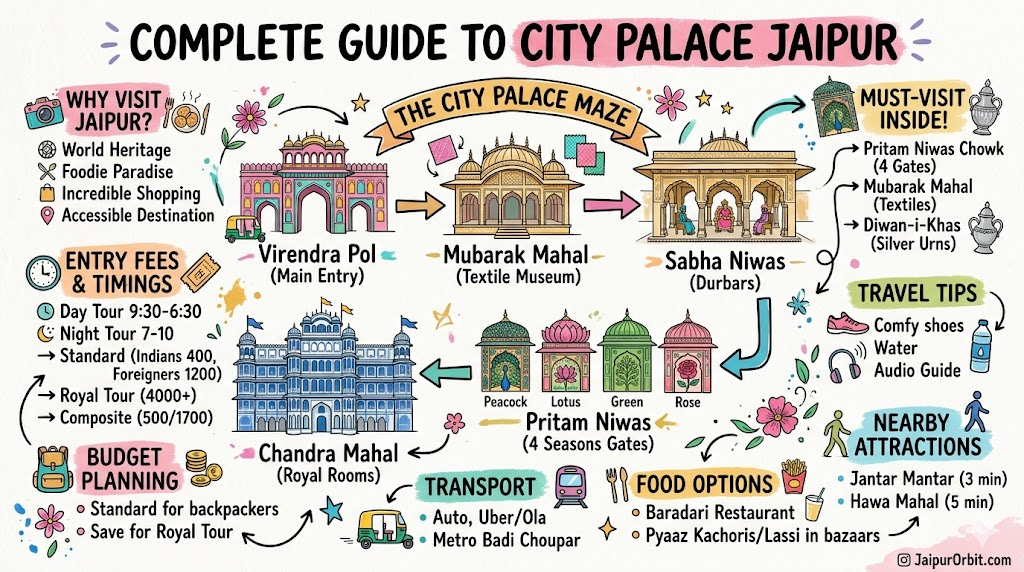
   ┌────────────────────────────────────────────────────────┐
   │                  THE CITY PALACE MAZE                  │
   │                                                        │
   │  [Virendra Pol] ──► [Mubarak Mahal] ──► [Sabha Niwas]  │
   │   (Main Entry)       (Textile Museum)    (Durbars)     │
   │                                             │          │
   │  [Chandra Mahal] ◄── [Pritam Niwas] ◄───────┘          │
   │   (Royal Rooms)       (4 Seasons Gates)                │
   └────────────────────────────────────────────────────────┘
The City Palace stands as a testament to this richness. Stepping inside feels like walking through a portal to the 18th century, where every courtyard tells a story and every gateway is a masterpiece. It’s the ultimate anchor for any Jaipur trip planning.
Why Jaipur is a Must-Visit City
Jaipur effortlessly blends the old world with the new. It is an incredibly accessible, vibrant, and rewarding destination for every type of traveler. Here is why it deserves a top spot on your bucket list:
- World Heritage Architecture: The entire old city is a painted pink masterpiece, laid out on a grid system that was centuries ahead of its time.
- A Paradise for Foodies: From rich Dal Baati Churma in local dhabas to sweet, syrupy Ghewar from heritage sweet shops, the culinary scene is legendary.
- Incredible Shopping: The bustling bazaars surrounding the palace are filled with block-printed textiles, blue pottery, and silver jewelry.
- Diverse Travel Dynamics: It caters perfectly to backpackers watching their budget, families looking for comfortable historic tours, and couples seeking high-end heritage luxury.
Complete Overview of City Palace Jaipur
To ensure you don’t feel overwhelmed when you arrive at the ticket counter, here is a quick-glance breakdown of everything you need to know about one of the most iconic Jaipur tourist places.
Best Places to Visit Inside
The complex is massive. Make sure to visit the Mubarak Mahal (the Islamic-Rajput-European fusion reception pavilion), the grand Sabha Niwas (Hall of Public Audience), the Sarvato Bhadra (a stunning pink-walled courtyard housing two gigantic silver urns), and the famous Pritam Niwas Chowk featuring the four intricately decorated seasonal gates.
Things to Do
- Photograph the iconic Peacock Gate.
- Marvel at the world’s largest sterling silver vessels in the Diwan-i-Khas.
- Upgrade to the Royal Tour to walk through the breathtaking blue-and-white rooms of the private Chandra Mahal.
- Watch local artisans practice traditional painting and embroidery in the inner courtyards.
Entry Fees & Timings
- Timings: 9:30 AM to 6:30 PM daily (Day Tour) | 7:00 PM to 10:00 PM (Night Tour). Note: The palace is closed only on the festival of Holi.
- Standard Museum Ticket (Courtyards & Public Galleries): ₹400 for Indian Adults, ₹200 for Children/Students. ₹1,200 for Foreign Tourists, ₹600 for Foreign Children/Students.
- Chandra Mahal Royal Tour (Access to Private Rooms): ₹4,000 for Indians and ₹5,000 for Foreigners.
- Composite Tickets: ₹500 (Indians) / ₹1,700 (Foreigners) — Highly recommended if you also plan to visit Amber Fort, Hawa Mahal, and Jantar Mantar within two days.
Travel Tips
Wear incredibly comfortable walking shoes, as you’ll be on your feet on stone floors for at least 2 to 3 hours. Carry a water bottle to beat the Rajasthani sun, and hire an officially certified guide at the entrance or opt for the audio guide to truly understand the history behind what you’re seeing.
Nearby Attractions
Because of its central location in the old city, you can literally walk to Jantar Mantar (the ancient astronomical observatory) and the iconic Hawa Mahal (Palace of Winds) in less than 5 minutes from the palace exit gates.
Food Options
Inside the palace, you can stop by the premium Baradari Restaurant for an upscale fusion meal or a refreshing iced coffee in a gorgeous restored courtyard. If you’re on a budget, step just outside into the markets to find local street vendors selling hot Pyaaz Kachoris and cold Lassi.
Budget Planning
If you are backpacking, stick to the standard museum ticket (₹400) and use a free mobile audio guide app instead of hiring a personal guide. If you want a luxury experience, save your budget for the ₹4,000 Royal Tour—it is expensive, but the visual of the famous “Blue Room” is worth it for design and photography lovers.
Safety Tips
The palace complex is highly secure, monitored, and very safe for solo female travelers and families. Just keep an eye on your personal belongings in crowded gallery spaces, and politely decline overly aggressive independent photographers offering print-out services at the gates.
Local Transport Options
The easiest way to reach the palace is by booking an app-based cab (Uber or Ola) or an auto-rickshaw. If you are adventurous, take the Jaipur Metro to the Badi Choupar station, which drops you a short, fascinating walk away through the historic markets.
Family-Friendly Suggestions
If you are traveling with toddlers or elderly relatives, you can rent a golf cart inside the complex for ₹150 per person to skip the longer walks between courtyards. There is also a dedicated nursing room available for mothers near the main gallery.
Couple-Friendly Suggestions
Book the Museum at Night tour. The crowds completely vanish, the palace structures are illuminated beautifully by soft yellow lights, and the atmosphere becomes incredibly romantic and peaceful.
Hidden or Less-Crowded Options
Most tourists rush straight to the seasonal gates and leave. Spend some extra time in the Painting and Photography Museum. It houses rare, historic cameras and original portraits shot by Maharaja Sawai Ram Singh II (an avid 19th-century photographer)—a quiet nook that most massive tour groups skip completely.
Best Places or Experiences Within the Complex
To get the absolute most out of your ticket, make sure you consciously stop and explore these primary zones inside the palace.
1. Pritam Niwas Chowk (The Court of the Beloved)
- Location: The inner courtyard leading directly to the base of the seven-story Chandra Mahal.
- Why it is worth visiting: This is arguably the most famous courtyard in Rajasthan. It features four spectacular, small doorways, each dedicated to a different Hindu deity and a specific season of the year. The craftsmanship of the gemstone-colored relief work is mind-blowing.
- Best things to do: Stand back and admire the Peacock Gate (representing autumn and Lord Vishnu), the Lotus Gate (representing summer and Shiva-Parvati), the Green Gate (representing spring and Lord Ganesha), and the Rose Gate (representing winter and Goddess Devi).
- Best time to visit: Early morning (around 9:45 AM), right after the gates open. The morning light hits the courtyards perfectly, and you can get clear photos before the crowds arrive.
- Ideal for whom: Photographers, couples, and Instagram enthusiasts looking for that quintessential Pink City shot.
- Travel tip: Look closely at the details on the Peacock Gate—the 3D effect of the peacock feathers is achieved entirely through natural stone pigments and master-level clay styling.
2. Mubarak Mahal (The Welcome Pavilion)
- Location: The first major open courtyard you enter through the Virendra Pol gate.
- Why it is worth visiting: Built in the late 19th century by Maharaja Madho Singh II, this architectural marvel is a seamless blend of Islamic architectural arches, intricate Rajput carvings, and structural European symmetry. Today, it serves as a textile museum.
- Best things to do: Go inside to explore the royal garments on display, including massive, heavy royal robes, delicate Kashmiri Pashmina shawls, and rare Banarasi silk saris decorated with real silver threadwork (Zari).
- Best time to visit: Mid-day, as the indoor galleries offer an air-conditioned escape from the afternoon outdoor heat.
- Ideal for whom: History buffs, fashion students, and families looking to see how kings and queens actually dressed.
- Travel tip: Look for the impossibly large, wide outfit belonging to Maharaja Sawai Madho Singh I—historical logs note he was over 7 feet tall and weighed nearly 250 kilograms!
3. Diwan-i-Khas (Sarvato Bhadra)
- Location: The central, open-sided pink sandstone pavilion between the outer courtyards and the inner residential areas.
- Why it is worth visiting: This pavilion houses two massive, sterling silver urns known as the Gangajajis. Standing over 5 feet tall, they hold the official Guinness World Record as the largest single silver objects on earth.
- Best things to do: Inspect the immense silver craftsmanship of the urns and read the fascinating historical story behind them. Maharaja Madho Singh II used them to carry holy Ganges water all the way to London in 1902 because he refused to drink foreign tap water during the coronation of King Edward VII.
- Best time to visit: Late afternoon, when the low sun casts a warm, golden glow against the pink sandstone walls of the pavilion.
- Ideal for whom: Curiosity seekers, family groups, and solo travelers exploring general Jaipur tourist places.
- Travel tip: Photography is allowed around the silver urns, but make sure your camera flash is turned off out of respect for the museum guidelines.
Travel Planning Tips for Jaipur
To execute a smooth, stress-free Jaipur trip planning experience, keep these practical, boots-on-the-ground tips in mind:
- Book stays early during peak season: The ideal weather window runs from October to March. Hotels, heritage stays, and boutique hostels fill up months in advance, so don’t leave booking to the last minute.
- Rent scooters only with proper documents: Renting a scooter is a great way to explore areas outside the central core, but local traffic police are strict. Always carry a physical driver’s license, wear a helmet, and check the vehicle’s registration papers before driving off.
- Carry cash for local markets: While digital payments (like UPI) are accepted almost everywhere in modern shops, small street vendors, rickshaw drivers, and market stalls in Tripolia Bazar still heavily prefer physical cash.
- Respect local culture and environment: Keep your shoulders and knees covered when entering operating religious spaces or temples near the palace. Avoid throwing trash in the historic alleys.
- Check weather before planning outdoor fort visits: If you plan to head up to Nahargarh or Jaigarh Fort on the same weekend, check for heavy rain forecasts, as the steep, winding mountain roads can get slick and foggy.
Common Mistakes to Avoid
- Poor Itinerary Planning: Don’t try to cram Amber Fort, City Palace, Nahargarh, and shopping all into a single afternoon. You will end up exhausted and won’t enjoy any of it.
- Visiting Only Crowded Spots: Tourists often visit the main courtyard and leave. Don’t skip the quiet inner craft quarters or the painting museums.
- Not Checking Transport Options: Hopping into an unmetered auto-rickshaw right outside the palace gates without negotiating a price beforehand will almost always result in overpaying. Always set a price before sitting down, or use ride-hailing apps for transparent pricing.
- Skipping Local Street Food: Relying solely on continental hotel buffets means missing out on the culinary soul of Rajasthan. Try authentic spots like LMB in Johari Bazar or Rawat Mishthan Bhandar for the real deal.
- Overpaying for Souvenirs: The shops immediately adjacent to the main palace exits carry premium price tags. Walk a couple of blocks down into the local side lanes of the bazaars to find identical items for a fraction of the cost.
How This Topic Fits Into Your Jaipur Itinerary
Depending on how much time you have allocated for your trip, here is how you can easily slot a visit to the City Palace into a seamless Jaipur itinerary:
The 1-Day Power Plan
If you only have 24 hours, focus strictly on the historic walled core. Start your morning at 8:00 AM with a photo stop outside Hawa Mahal, head directly to City Palace at 9:30 AM when it opens, spend 2.5 hours exploring, cross the street to see Jantar Mantar, and spend your evening eating street food and shopping in Johari Bazar.
The 2-Day Cultural Explorer Plan
- Day 1: Dedicate this day to the grand hillside forts. Explore the sprawling Amber Fort in the morning, stop by Jal Mahal (the Water Palace) on your way back down, and catch the sunset over the entire pink city from the ramparts of Nahargarh Fort.
- Day 2: Dive deep into the royal heritage. Spend a slow morning exploring the public and private rooms of the City Palace, visit the Albert Hall Museum in the afternoon, and end your trip with an authentic Rajasthani dinner.
The Weekend Travel Plan (2.5 Days)
Arrive on Friday evening and head straight to a rooftop cafe overlooking the illuminated old city. Spend Saturday exploring the hillside forts (Amber and Jaigarh). On Sunday morning, utilize our comprehensive Jaipur vacation tips to conquer the City Palace and Jantar Mantar early, leaving your final afternoon free for textile shopping and grabbing souvenirs before heading home.
Frequently Asked Questions
1. Is City Palace Jaipur still a royal residence?
Yes. While a major portion of the complex has been converted into the public Maharaja Sawai Man Singh II Museum, the current titular royal family of Jaipur still resides in the private wings of the beautiful, seven-story Chandra Mahal.
2. What is the difference between the standard ticket and the Royal Tour ticket?
The standard ticket (₹400 for Indians / ₹1,200 for Foreigners) grants access to all the open courtyards, the seasonal gates, the textile museum, the arms gallery, and the public assembly halls. The Royal Tour (₹4,000+) includes an expert private guide and exclusive access to the upper residential floors of the Chandra Mahal, including the famous blue-and-white Chhavi Niwas.
3. How much time should I allocate for a visit to the City Palace?
To explore the public courtyards, view the museum galleries, and take photographs without rushing, you should plan to spend roughly 2 to 3 hours inside the complex.
4. Is photography allowed inside the City Palace?
Yes, photography is permitted in all the open courtyards and public spaces (a small camera fee of ₹50 may apply at the ticket booth). However, photography is strictly prohibited inside the indoor museum galleries and select private rooms of the Chandra Mahal to protect the historic artifacts.
5. Which gate should tourists use to enter the palace?
While the majestic Tripolia Gate is reserved exclusively for the royal family’s entries, regular tourists can enter through Virendra Pol (conveniently located near Jantar Mantar) or Udai Pol (near the Jaleb Chowk vehicle parking area).
6. Is the palace wheelchair accessible?
Yes, the palace is highly accessible. Most of the main courtyards, assembly halls, and ground-floor galleries feature flat surfaces or smooth ramps. Additionally, golf carts are available for rent inside to assist those with limited mobility.
7. Can I book City Palace Jaipur tickets online?
Yes, you can easily purchase your entry tickets online through the official City Palace museum portal to skip the long ticket counter lines, especially on busy winter weekends.
8. When is the absolute best time of year to visit Jaipur?
The ideal season runs from October to March. The weather during these months is pleasant and cool, making outdoor exploration comfortable. Summers (April to June) can be intensely hot, with temperatures frequently crossing 40°C.
9. What are the top things to buy near the City Palace?
The surrounding bazaars are famous for authentic Rajasthani goods. Look for hand-block printed quilts and shirts, traditional Jutir leather shoes, blue pottery items, tie-dye (Leheriya) sarees, and local silver jewelry.
10. Is a guide necessary for exploring the City Palace?
While not mandatory, having a guide dramatically improves your experience. The palace layout is a complex maze of history. If you don’t want to hire a local guide, renting an audio device or downloading an official audio tour app at the entrance is a budget-friendly alternative.
Conclusion
The City Palace isn’t just another checklist location to run through; it is the beating heart of Jaipur’s grand historical narrative. By planning your day intelligently, choosing the right ticket tier for your budget, and taking the time to look past the main courtyards, you can experience this monument like a traveler rather than just a tourist.
For more hyper-local insider advice, curated routes, and practical Jaipur trip planning toolkits, make sure to bookmark Jaipurorbit.com as your trusted companion for exploring the Pink City. Have an incredible journey, and take in every bit of the royal magic!
